

Moving heavy materials safely and quickly matters in almost every industrial space. Warehouses, factories, shipyards, and production plants all need equipment that can handle heavy loads without slowing work. That’s where overhead cranes come in.
Overhead cranes help businesses move materials throughout a facility with greater control and reduced physical strain on workers. Instead of relying on forklifts or manual lifting, companies use these systems to carry heavy items through the air. The result feels smoother, safer, and far more efficient.
Many industries also choose overhead cranes because they save floor space and support faster operations. For businesses that deal with large equipment or bulky materials every day, the right crane system can make a huge difference.
What Is an Overhead Crane?
An overhead crane is a lifting system used to transport heavy materials within a building or on industrial premises. These cranes are commonly employed in steel yards, shipyards, manufacturing factories, and warehouses.
Unlike ground-based equipment, overhead cranes operate from an elevated structure, allowing unobstructed movement of materials across the facility. This type of configuration provides workers with greater mobility along with control over heavy loads, ensuring safety.
They are widely used to handle heavy industrial loads that cannot be moved safely by hand. Some companies move machinery parts, while others install steel beams or transport ship components and production equipment.
Overhead cranes can also minimise delays during the day-to-day operations. Workers can transport loads more quickly and get them to their desired locations more accurately.
How Does an Overhead Crane Work?
An overhead crane works through a combination of moving parts that lift and transport loads across a fixed area. The crane runs along a support structure while the hoist lifts the material up and down.
These components work together to ensure controlled and efficient lifting operations.
The Bridge
The bridge acts as the main horizontal beam of the crane. It stretches across the workspace and supports the lifting equipment. The bridge moves along the runway system to carry materials from one side of the building to the other.
The Hoist
The hoist handles the lifting and lowering process. It uses chains or wire ropes to safely raise heavy loads. Operators control the hoist carefully to keep materials stable during movement.
The Trolley
The trolley crosses the bridge, carrying the hoist. This movement allows workers to position loads more precisely. It also helps improve efficiency during loading and unloading tasks.
The Runway
The runway supports the crane’s movement throughout the facility. It gives the bridge a fixed path to travel on, allowing the crane to cover large working areas smoothly.
Types of Overhead Cranes
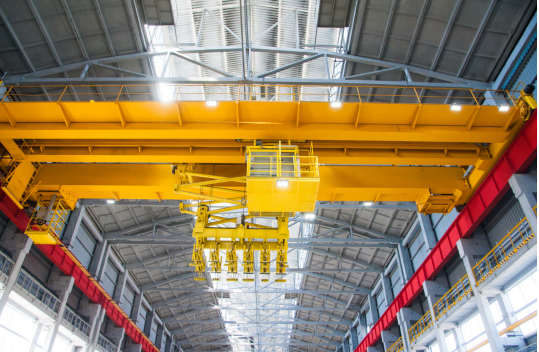
Different workplaces need different crane systems. The two most common options are single- and double-girder overhead cranes.
Single Girder Overhead Cranes
Single-girder cranes use a single main beam to support the hoist and trolley. These cranes usually suit lighter lifting tasks and smaller workspaces.
Many warehouses and smaller production facilities choose this setup because it offers a practical and cost-effective solution.
Double Girder Overhead Cranes
Double girder cranes use two bridge beams instead of one. This design supports heavier loads and larger spans, making it ideal for demanding industrial work.
Factories, marine facilities, and steel plants often choose double-girder cranes because they handle high-capacity loads more efficiently. Businesses that need reliable heavy-duty performance often turn to Jenmon’s double girder overhead crane solutions for this reason.
Benefits of Using Overhead Cranes
One of the greatest benefits of overhead cranes is their efficiency. Heavy materials can be moved more quickly, thereby reducing downtime during operations.
Safety is also greatly enhanced. Rather than having workers perform dangerous lifting activities manually, companies can utilise a controlled mechanical system that minimises strain and helps to prevent injuries on the job.
In addition, overhead cranes can lift very large, heavy loads with greater accuracy. Industries that require a high degree of control, such as manufacturing, will benefit from this approach. Another advantage is the space saving. Because the crane is above the work space, it allows companies to maintain clear floors for workers, vehicles and equipment.
Choosing the Right Overhead Crane Solution
Not every crane suits every facility. Businesses should look at load capacity, building size, and daily operating demands before choosing a system. A smaller warehouse may benefit from a single-girder crane, while larger industrial facilities often require double-girder systems for higher lifting capacity.
Companies should also consider how often the crane will operate. Heavy-duty environments usually require stronger, more durable systems that can withstand continuous use. Jenmon provides engineered overhead crane solutions tailored to diverse industrial requirements, including high-capacity double-girder systems designed for heavy-duty and continuous operations.
Final Thoughts
Overhead cranes play a major role in modern industrial work. They help businesses move heavy materials more safely, use space more effectively, and improve overall productivity.
From warehouses to marine facilities, these systems enable faster, more controlled operations every day. Choosing the right crane setup also helps businesses maintain safer workplaces while confidently handling large loads.
For companies that need reliable heavy-lifting solutions, Jenmon’s overhead crane systems deliver dependable performance in industrial environments.