
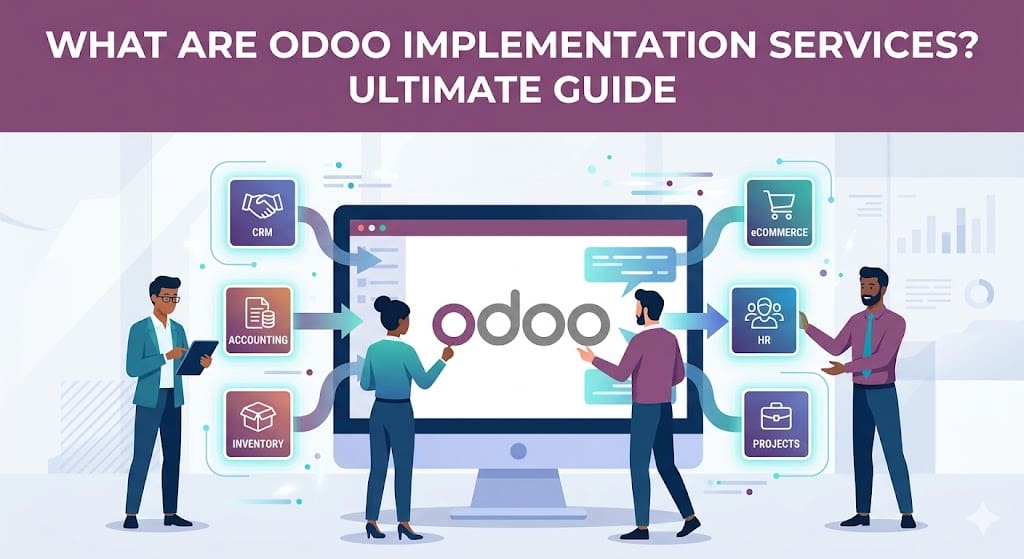
Enterprise resource planning (ERP) systems act as the digital backbone of modern organizations, systematically dismantling data silos and integrating fragmented departments into a unified ecosystem. Within the highly competitive enterprise software marketplace, Odoo is widely recognized for its open-source modularity, cost-effectiveness, and extensive application suite. However, acquiring an Odoo license is merely the starting point of a much larger, complex digital transformation journey.
Raw software alone cannot resolve deep-rooted operational inefficiencies. Transforming a blank software environment into a finely tuned operational engine requires strategic planning, profound technical expertise, and meticulous execution. This comprehensive guide explores the exact nature of these deployment strategies, breaking down the core components, the step-by-step methodology, and the strategic importance of professional execution.
What Are Odoo Implementation Services?
At its core, Odoo implementation is far more than a standard IT installation; it is a comprehensive business process engineering exercise. Implementation services encompass the entire lifecycle of transitioning an organization from legacy systems, fragmented software stacks, or manual spreadsheets into a centralized, fully integrated Odoo environment.
These specialized services bridge the critical gap between Odoo’s out-of-the-box capabilities and a company’s unique operational requirements. Certified developers, solution architects, and functional consultants work collaboratively to align the software with actual daily workflows. Instead of forcing a business to change its successful processes to fit rigid software, implementation services tailor the software to enhance and scale the business’s existing operational strengths.
Core Components of Odoo Implementation Services
A robust deployment strategy relies on several foundational pillars. Each component addresses a specific technical or operational hurdle, ensuring the platform functions cohesively across all organizational levels.
- Business Process Consulting: Before any technical work begins, experts analyze current workflows to identify bottlenecks, redundancies, and opportunities for automation. This ensures the technology serves a distinct business purpose.
- Custom Module Development: While Odoo boasts over forty core applications, unique business models often require specialized features. Implementation includes writing clean, update-safe code to build bespoke modules that standard out-of-the-box software cannot provide.
- Third-Party Integrations: Modern enterprises rely on a complex ecosystem of applications. Implementation services utilize robust APIs to connect Odoo with external payment gateways, specialized marketing automation tools, legacy HR systems, and third-party logistics (3PL) providers, creating a single source of truth.
- Data Migration and Sanitization: Transitioning historical data from legacy databases is a highly delicate operation. This component involves extracting, cleaning, and securely mapping years of historical data into the new Odoo architecture without losing structural integrity.
- Change Management and Training: An ERP is only as powerful as the employees utilizing it. Comprehensive implementation includes creating standard operating procedures (SOPs) and delivering role-based training to guarantee high user adoption rates and minimize workflow disruptions.
How to Implement Odoo ERP Step-by-Step
A successful ERP rollout follows a highly structured, agile methodology. Bypassing any of these critical phases dramatically increases the risk of scope creep, budget overruns, and total project failure.
Step 1: Process Discovery and Gap Analysis
The project initiates with exhaustive requirement-gathering workshops. Consultants map out every departmental workflow—from procurement to final delivery. A gap analysis is then conducted to determine where standard Odoo features satisfy the requirements and where custom development is mandatory.
Step 2: System Architecture and Prototyping
Following the discovery phase, solution architects design the system’s blueprint. This involves selecting the optimal applications (such as CRM, Accounting, or Manufacturing) and determining the foundational configuration. A sandbox prototype is often built to give stakeholders a visual understanding of the proposed data flows.
Step 3: Customization and Integration
Once the architecture is approved, the technical execution begins. Engaging expert Odoo ERP implementation services during this phase is crucial to ensure that any custom code is written securely and does not conflict with core system functions. External tools and legacy databases are integrated bidirectionally, establishing seamless communication across the entire tech stack.
Step 4: Data Cleansing and Migration
Data is extracted from the old systems, rigorously cleansed to remove duplicates or obsolete files, and formatted to match Odoo’s specific database requirements. Flawless migration ensures that executive leadership has immediate, accurate access to historical reporting from the moment the system goes live.
Step 5: Rigorous Quality Assurance (QA) and Staging
Before the official launch, the fully configured system undergoes intense stress testing in a staging environment. QA teams simulate peak transaction volumes, verify role-based access permissions, and ensure automated triggers fire correctly. This prevents critical system failures during active business hours.
Step 6: Go-Live and Post-Launch Support
After successful QA testing and comprehensive user training, the system is pushed to the live production environment. However, implementation does not end at the launch. Continuous post-go-live support is provided to resolve immediate user queries, monitor server stability, and fine-tune system performance as the workforce adapts to the new technology.
Why Professional Execution is Strategically Important
Many organizations attempt to execute DIY implementations to reduce upfront capital expenditure. Unfortunately, this approach frequently results in disjointed systems, fragmented data silos, and severe operational disruptions. Partnering with seasoned deployment experts provides unmatched strategic advantages.
First, professional execution accelerates the time-to-value. Experienced consultants utilize proven deployment frameworks, ensuring the software is launched efficiently so the organization can begin realizing a rapid return on investment. Second, experts understand how to minimize technical debt. By prioritizing configuration over heavy, unnecessary customization, they build a system that remains stable and cost-effective to upgrade when newer versions of Odoo are released.
Finally, transitioning to a new ERP introduces significant risk to supply chains and financial reporting. Professional partners mitigate this operational risk, preventing critical data loss and minimizing costly downtime during the transition phase.
Final Thoughts
Deploying an open-source ERP platform should never be viewed as a standard IT expense; it is a profound strategic investment in the future scalability of the organization. When executed correctly, Odoo transforms from a blank software canvas into a powerful catalyst for operational excellence. By prioritizing structured implementation, organizations can successfully eliminate inefficiencies, empower their workforce, and establish a distinct competitive advantage in the modern marketplace.