
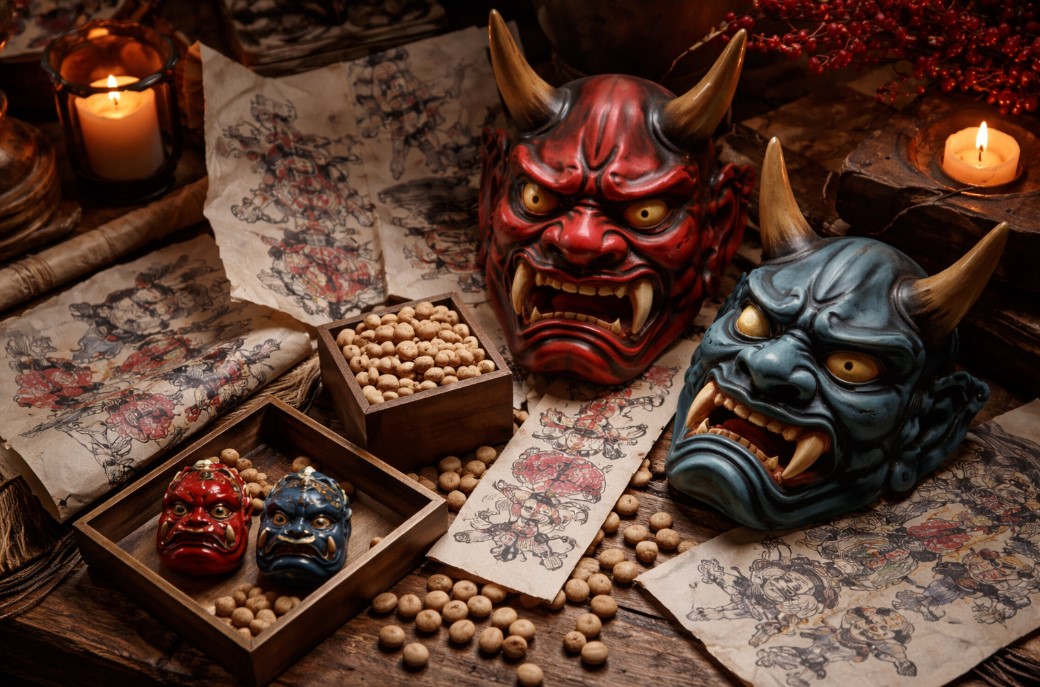
When people search for the Japanese word for demon, they usually expect a single translation. The truth is more layered. Japanese culture does not rely on one uniform term. Instead, several words describe different kinds of malevolent or supernatural beings, each rooted in religion, folklore, or literature. Understanding these distinctions opens a window into Japanese spirituality, theatre, art, and even contemporary anime. What appears at first glance as a simple question reveals an intricate tapestry woven from Buddhism, Shinto beliefs, and centuries of storytelling. Much like lifting the lid of an old lacquered box, each layer reveals another shade of meaning. If you want to know precisely how demons are named in Japanese culture, you need to explore the key terms that define them and the contexts in which they appear.
Oni: the most recognisable Japanese demon
The term most commonly translated as “demon” in Japanese is oni. When English speakers think about Japanese demons, they usually picture horned, red or blue-skinned figures wielding iron clubs. That image comes directly from the cultural representation of oni in folklore and religious art. In classical literature, oni are fearsome beings associated with punishment, chaos, and misfortune. They appear in Buddhist cosmology as tormentors in hell realms, where they carry out punishments on the damned.
Yet the meaning of oni extends beyond pure evil. In older folklore, oni sometimes function as embodiments of natural disasters, plagues, or human vices. They represent uncontrolled forces rather than a single moral category. Over time, their depiction softened in certain contexts. In festivals such as Setsubun, people symbolically drive away oni by throwing roasted soybeans while chanting to expel misfortune. The ritual reveals how oni embody negative influences that can be repelled rather than worshipped or feared absolutely.
The popularity of oni in contemporary culture remains strong. Modern series such as Demon Slayer have revitalised interest in these creatures, inspiring collectors to seek items like Demon Slayer figures, where stylised demon characters blend horror with striking visual design. This modern reinterpretation demonstrates how oni have evolved from religious punishers to complex fictional antagonists. Understanding oni clarifies why the word is often used as the default translation for demon in Japanese. However, it does not encompass every supernatural being considered demonic in tone.
Yōkai: spirits that blur the line between demon and monster
Another essential term is yōkai. Unlike oni, yōkai do not strictly mean demons. The word refers to a broad category of supernatural entities that include spirits, monsters, shapeshifters, and strange phenomena. Some yōkai behave maliciously, while others are mischievous or even protective. The concept emerged from folklore rather than formal religious doctrine. Yōkai inhabit forests, rivers, abandoned houses, and shadowed mountain paths. They explain the unexplainable: eerie sounds at night, sudden illness, mysterious disappearances. While Western translations often label them as demons, the classification oversimplifies their nature.
Within the vast yōkai family, some beings carry genuinely demonic traits, feeding on humans or spreading disease. Others merely play tricks. This flexible category reflects how Japanese culture historically interpreted the unseen world. Instead of dividing spirits into rigid categories of good and evil, folklore allowed for ambiguity.
Collectors of anime figures frequently encounter yōkai-inspired characters, especially in series rooted in traditional mythology. These portrayals keep ancient names alive while adapting them for modern storytelling. When someone asks what demons are called in Japanese culture, yōkai must be mentioned. Still, the term represents a spectrum rather than a direct equivalent to the Western concept of demon.
Akuma and ma: the linguistic roots of evil spirits
The word akuma translates more directly as “devil” or “evil spirit.” It carries a stronger moral implication than oni. In many contexts, akuma refers to a being aligned with pure malevolence. The term gained prominence through Buddhist influence, linking it to temptations and destructive forces.
Closely related is the character ma, which conveys notions of evil, demonic influence, or negative spiritual energy. Rather than describing a specific creature, ma expresses a state of corruption or hostility. It appears in compound words and religious texts, shaping how evil is conceptualised linguistically. The nuance between oni, yōkai, and akuma highlights how Japanese demon terminology depends heavily on context. Translation alone cannot capture the full cultural depth behind these names.
Demons in religion: Buddhist and Shinto perspectives
In Japanese Buddhism, demons often symbolise obstacles to enlightenment. Figures such as Mara represent temptation and spiritual hindrance. These beings may not resemble horned oni yet fulfil similar symbolic roles.
Shinto beliefs approach harmful spirits differently. Instead of fixed demons, Shinto recognises kami, which can manifest benevolently or destructively depending on circumstance. A destructive force might resemble a demon in action without fitting the Western definition. This religious diversity explains why Japan does not possess a single word encompassing all demonic beings. Each term reflects a distinct spiritual framework.
How modern culture reshapes traditional demon names?
Contemporary manga, anime, and video games reinterpret traditional demon terminology. Oni become tragic anti-heroes, yōkai transform into charming companions, and akuma appear as stylised villains. These creative adaptations maintain the original vocabulary while altering emotional tone.
Today, the word “demon” in Japanese culture evokes folklore, religion, seasonal rituals, theatre masks, and global pop culture simultaneously. The terminology survives because it adapts. Like a shadow shifting shape at sunset, its outline changes while its presence remains unmistakable.
Understanding Japanese demon terminology today
Knowing what demons are called in Japanese culture requires more than memorising one word. Oni, yōkai, akuma, and ma each reveal a different facet of how Japan interprets evil and the supernatural. Exploring these distinctions transforms a simple translation question into a richer understanding of history, belief, and storytelling. Which of these names resonates most with the image you had in mind?