

Of all the decisions that come with planning a wedding, choosing what to wear is one the groom actually controls from start to finish.
Wedding tuxedos in 2026 offer more range than they used to. The classic black tuxedo remains a reliable, timeless choice, but grooms now have real options in color, fabric, and construction that let the outfit reflect the couple’s specific wedding without straying from what’s appropriate for the occasion.
The challenge isn’t a lack of options. It’s knowing which ones actually apply to your wedding. A tuxedo that looks sharp at an evening ballroom event can feel entirely wrong at an outdoor afternoon ceremony. A rental that fits reasonably well in the showroom can look noticeably different once you’re standing under real lighting for six hours.
This guide walks through everything a groom needs to know: how to choose the right tuxedo style for your specific wedding, which colors and fabrics are worth considering in 2026, the buy-versus-rent decision, fit essentials, and the accessories that complete the look.
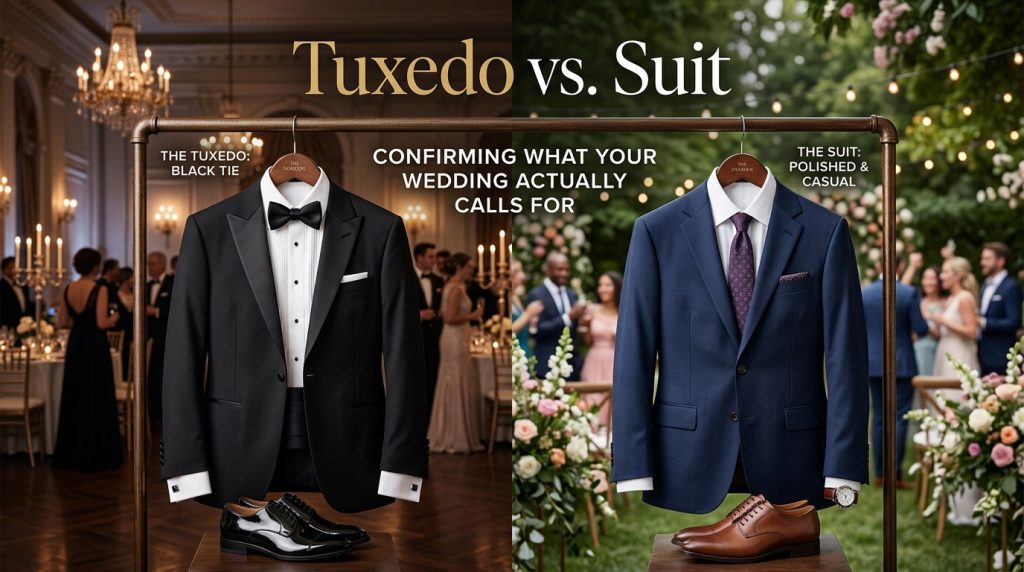
Tuxedo vs. Suit: Confirming What Your Wedding Actually Calls For
Before diving into style choices, confirm that a tuxedo is actually the right call for your wedding.
A tuxedo is traditionally reserved for evening events with a formal or black-tie dress code. It features satin lapels, a satin stripe down the trouser leg, and is paired with a formal shirt and bow tie.
If your wedding is:
- Evening, formal, black-tie or black-tie optional → a tuxedo is the correct and often expected choice
- Daytime, outdoor, or less formal → a well-fitted suit in navy or charcoal is typically more appropriate
This guide focuses on weddings where a tuxedo is the right call. If you’re unsure which category your wedding falls into, the general rule is straightforward: evening formality favors the tuxedo, and daytime or casual settings favor the suit.
Classic Black Tuxedos: Still the Reliable Standard in 2026
The black tuxedo remains the most requested option for grooms, and it hasn’t lost any relevance heading into 2026.
Why it still works: Black is universally formal, photographs cleanly against nearly any wedding color palette, and never risks looking dated in years to come when the wedding photos are revisited.
Lapel options within black tuxedos:
Peak lapel The most formal and traditional choice. The lapels point sharply upward and outward, creating a strong, expansive chest line. This is the standard choice for black-tie weddings.
Shawl collar A rounded, continuous lapel with no break between the collar and jacket front. Reads as slightly softer and more elegant than a peak lapel, popular for weddings with a refined, classic aesthetic.
Notch lapel Less traditional for formal tuxedos but increasingly common in modern interpretations, particularly for grooms who want a slightly less rigid formal look.
A black tuxedo works at nearly every formal evening wedding regardless of venue, season, or color scheme, which is why it remains the default choice for most grooms.
Midnight Navy: The Modern Groom’s Alternative
Midnight navy tuxedos have steadily grown in popularity, and 2026 continues that trend.
Under most lighting, midnight navy can appear nearly identical to black. But under the specific lighting of an evening reception string lights, candlelight, warm venue lighting navy holds a subtle depth and richness that pure black sometimes loses, reading as slightly softer and more sophisticated in photographs.
For grooms who want something that feels distinct from the standard black tuxedo without straying from formal tradition, midnight navy is the safest and most popular alternative. It pairs well with nearly the same accessories as black white formal shirts, black bow ties, and black patent leather shoes all work equally well.
White Tuxedos: For Warm-Weather and Destination Weddings
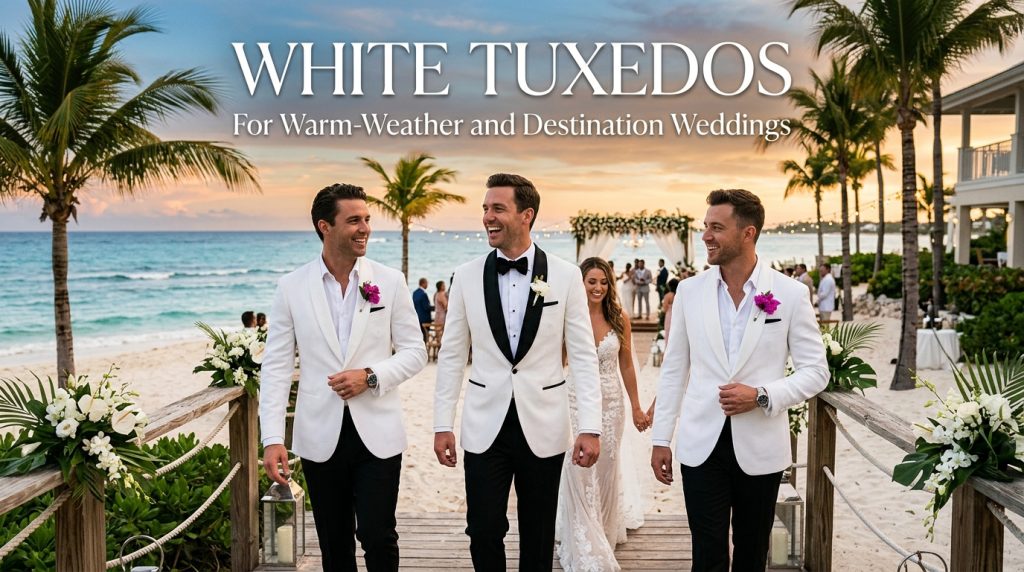
White tuxedos specifically a white or ivory dinner jacket paired with black formal trousers have become a defining choice for warm-weather and destination weddings in recent years.
This combination works exceptionally well for:
- Summer evening weddings
- Destination and resort weddings
- Weddings at coastal or tropical venues
- Any formal outdoor evening event in warm climates
A white tuxedo jacket photographs strikingly against greenery, ocean backdrops, and string-lit outdoor receptions. It’s a distinctive choice that still reads as formal and intentional, rather than casual.
The trade-off is context-specificity. A white tuxedo at a traditional indoor winter wedding looks out of place. Match the choice to the season and setting, not just personal preference.
Fabric Considerations for 2026 Wedding Tuxedos
Fabric affects how the tuxedo looks, feels, and holds up across a long wedding day.
Fine wool remains the standard for tuxedo jackets. It drapes cleanly, holds its shape through hours of standing, dancing, and photographs, and provides the structured silhouette that formal tailoring depends on.
Wool-blend fabrics offer a practical middle ground slightly more wrinkle-resistant than pure wool and often more budget-friendly, without sacrificing much in terms of appearance.
Lightweight wool is worth prioritizing for warm-weather or destination weddings. A tuxedo in a heavier wool weight can become genuinely uncomfortable during an outdoor ceremony in summer heat, regardless of how sharp it looks.
Regardless of fabric choice, the satin detailing lapels, trouser stripe, buttons should be consistent in sheen and quality. Mismatched or overly shiny synthetic satin is one of the more common indicators of a lower-quality tuxedo.
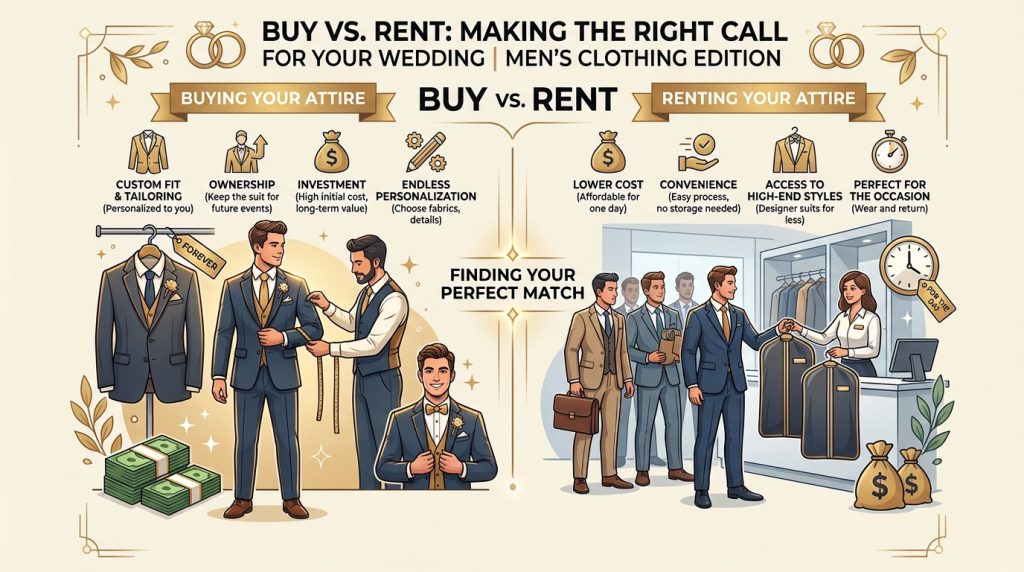
Buy vs. Rent: Making the Right Call for Your Wedding
This decision comes up for nearly every groom, and the right answer depends on a few specific factors.
When Renting Makes Sense
Tuxedos for rent are a practical choice if:
- You’re unlikely to wear a tuxedo again in the near future
- Your wedding party is coordinating matching rentals for cost consistency
- Budget constraints make purchasing less practical right now
Searching tuxedos near me or rent a tux near me connects you with local formalwear shops that can handle fitting and alterations in person, which some grooms prefer for the reassurance of trying before committing.
The downside of renting: fit inconsistency. Rental inventory is shared across many customers, and rental tuxedos often fit imperfectly at the shoulders the one area that can’t be corrected through quick alterations. Book rental fittings early enough to request a different size or professional adjustments if needed.
When Buying Makes Sense
Purchasing a tuxedo makes more financial and practical sense if:
- You attend multiple formal events annually (galas, formal work events, other weddings)
- You want a tuxedo tailored precisely to your body rather than a shared rental garment
- You’re planning to keep the tuxedo as part of your permanent wardrobe
Mens tuxedos purchased outright typically cost more upfront than a single rental, but the cost evens out quickly if you’ll wear it more than two or three times over the coming years. A purchased tuxedo can also be tailored with far more precision than a rental, since it’s yours to alter permanently rather than temporarily.
For many grooms, buying has become the more practical option as online tuxedo shopping has improved detailed size charts, transparent fabric information, and manageable return policies have reduced much of the risk that once made renting the default choice.
Getting the Fit Right
Fit is what separates a tuxedo that looks sharp from one that looks merely acceptable and it matters more at a wedding than almost any other occasion, given how extensively the day gets photographed.
Shoulders must sit exactly at the edge of your natural shoulder line. This is the one measurement that cannot be corrected through alteration, whether the tuxedo is purchased or rented.
Jacket length should cover the seat of the trousers, with the classic guideline being that the hem aligns roughly with your knuckles when your arms hang naturally at your sides.
Sleeve length should reveal about half an inch of your dress shirt cuff. Too much or too little disrupts the formal silhouette.
Trouser break a clean, minimal break at the shoe, without excessive bunching completes the tailored look modern formal wear favors.
Order or arrange your tuxedo at least six to eight weeks before the wedding, allowing time for delivery and a final alteration appointment closer to the date, particularly if your weight or build shifts at all during the engagement period.
Accessories That Complete the Wedding Tuxedo
The tuxedo itself is only part of the look. A few key accessories finish it correctly.
Formal dress shirt. A pleated-front or bib-front shirt with covered buttons is the traditional choice. Some modern interpretations use a clean, plain-front formal shirt for a slightly more contemporary look both are acceptable depending on the overall aesthetic.
Bow tie. Self-tied is the traditional and preferred choice. It carries a subtle, natural asymmetry that a pre-tied bow tie can’t replicate, and most grooms find it’s a simple skill to learn well before the wedding.
Cummerbund or waistcoat. Either fills the space at the waist where a jacket would otherwise reveal the shirt when unbuttoned. Waistcoats offer a slightly more structured, formal look; cummerbunds are traditional with peak lapel styles.
Shoes. Black patent leather Oxford shoes are the traditional standard. Black leather dress shoes work as a slightly less formal but still appropriate alternative.
Boutonniere. Typically coordinated with the wedding’s floral palette, pinned to the left lapel. This is usually the final detail addressed alongside the florist rather than the formalwear shop.
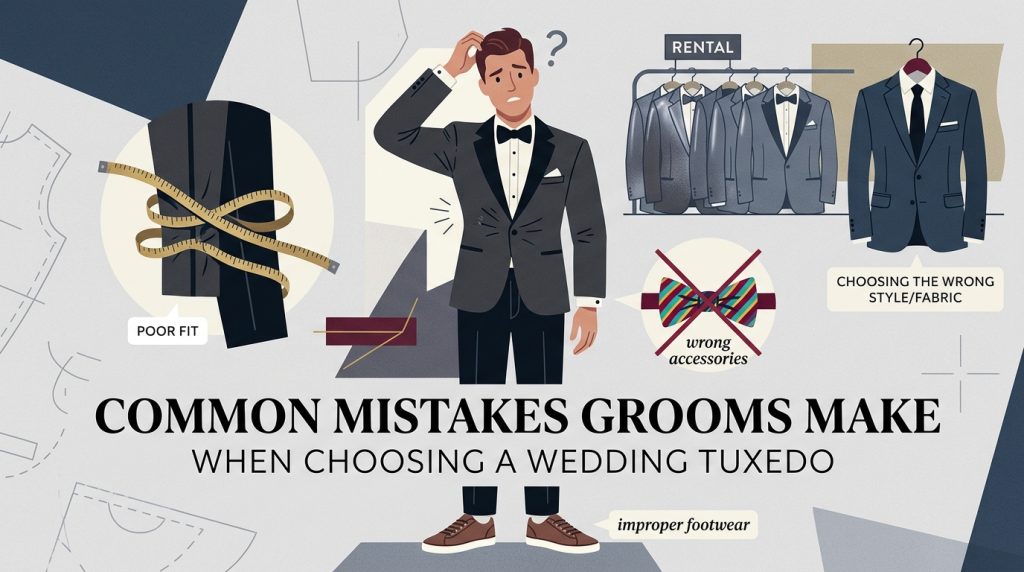
Common Mistakes Grooms Make When Choosing a Wedding Tuxedo
Waiting too long to order or book a fitting. Both purchased and rented tuxedos need lead time at least six to eight weeks for buying, and rental bookings should happen even earlier during peak wedding season.
Choosing a heavy fabric for a summer outdoor wedding. Comfort matters across a full day of standing, dancing, and photographs. Lightweight wool is worth prioritizing for warm-weather ceremonies.
Skipping the final fitting. Weight and build can shift slightly during a long engagement. A final fitting closer to the wedding date catches any changes before the day itself.
Using a pre-tied bow tie. It’s visible up close, and wedding photography gets very close. Learning to self-tie takes minimal effort and elevates the entire look.
Not coordinating with the wedding party in advance. Whether groomsmen are matching the groom or wearing a complementary but distinct look, confirm this early so orders and fittings stay aligned with the wedding timeline.
Ignoring the venue and season when choosing color. A black tuxedo works almost everywhere, but white and lighter options are specifically suited to warm-weather and destination settings not universal choices.
FAQ: Wedding Tuxedos for Grooms in 2026
Q: What’s the most popular wedding tuxedo color in 2026?
Black remains the most requested option, with midnight navy as the second most popular choice for grooms wanting a subtle variation that still reads as formal and timeless.
Q: Should I buy or rent my wedding tuxedo?
Rent if you’re unlikely to wear a tuxedo again soon or need to coordinate with a group on a budget. Buy if you attend formal events regularly or want a tuxedo tailored precisely to your body long-term.
Q: When should I order or book my wedding tuxedo?
At least six to eight weeks before the wedding, whether buying or renting. This allows time for alterations and a final fitting closer to the date.
Q: Are white tuxedos appropriate for all weddings?
No. White tuxedos suit warm-weather, destination, and resort weddings specifically. They’re less appropriate for traditional indoor or winter formal weddings, where black or midnight navy is the better choice.
Q: What shoes go with a wedding tuxedo?
Black patent leather Oxford shoes are the traditional choice. Black leather dress shoes are an appropriate, slightly less formal alternative.
Q: How do I find tuxedos near me for a fitting?
Searching tuxedos near me connects you with local formalwear shops offering in-person fittings, which can be useful for confirming fit before a wedding, whether you ultimately buy or rent.
Q: Can I wear a long tie instead of a bow tie with a tuxedo?
Traditionally, a bow tie is expected with a tuxedo. A long tie is a more casual substitution that most formal dressing conventions don’t fully support for black-tie weddings.
Q: What’s the difference between a cummerbund and a waistcoat?
Both cover the waist area where a shirt would otherwise show. A waistcoat offers a more structured, formal look, while a cummerbund is traditionally paired with peak lapel tuxedos for a sleeker silhouette.
Conclusion
Choosing the right wedding tuxedo in 2026 comes down to matching the style to your specific wedding its formality, season, venue, and time of day rather than defaulting to whatever feels familiar.
A classic black tuxedo remains the safest, most universally appropriate choice. Midnight navy offers a modern, subtly distinct alternative. White tuxedos suit warm-weather and destination settings specifically. Whichever direction you choose, prioritize fit above all else, decide early whether buying or renting suits your situation, and finish the look with accessories that match the tuxedo’s formality.
Whether you’re searching for mens tuxedos to purchase, exploring tuxedos for rent, or simply comparing your options before deciding, getting the details right ensures you’ll look every bit as sharp as the occasion deserves.
For a professional selection of wedding tuxedos built around quality fabric and precise fit, visit MensUSA.