
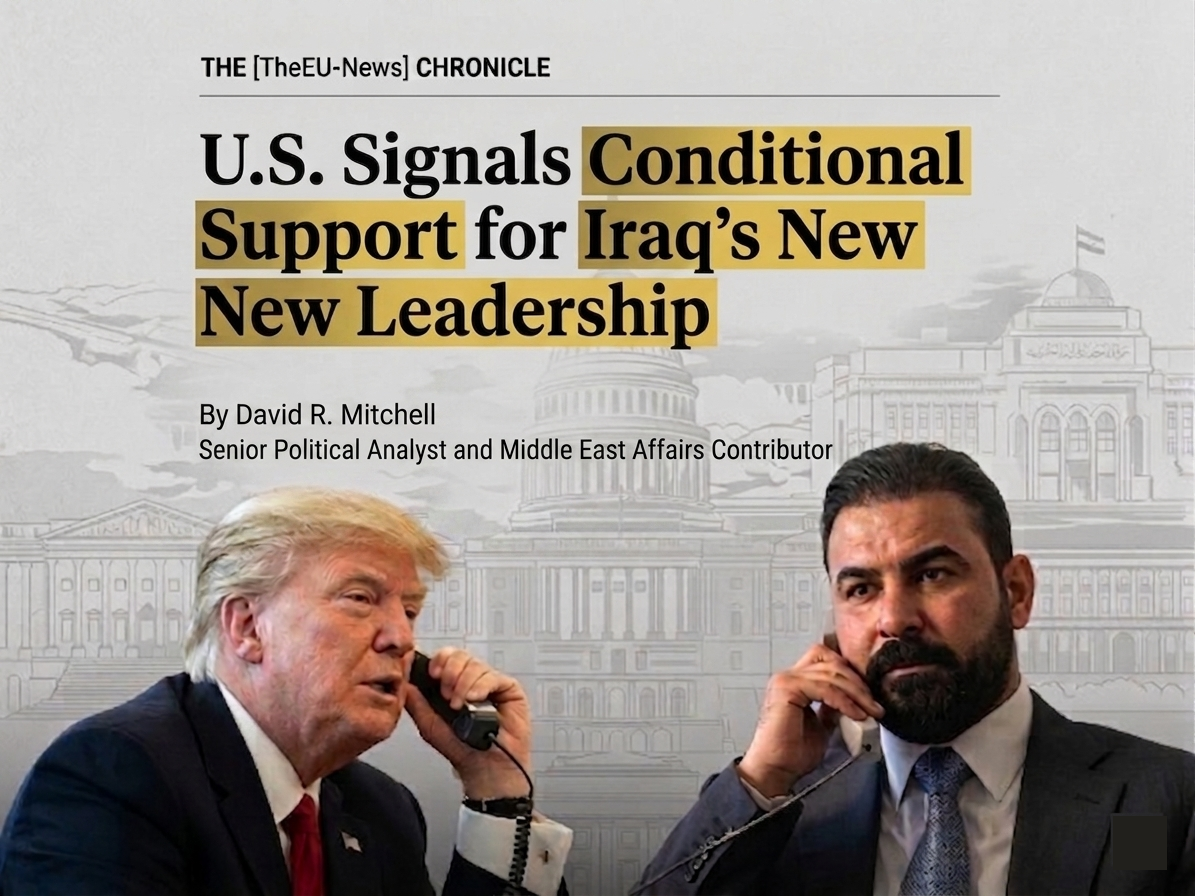
By David R. Mitchell
Senior Political Analyst and Middle East Affairs Contributor
WASHINGTON, May 2, 2026
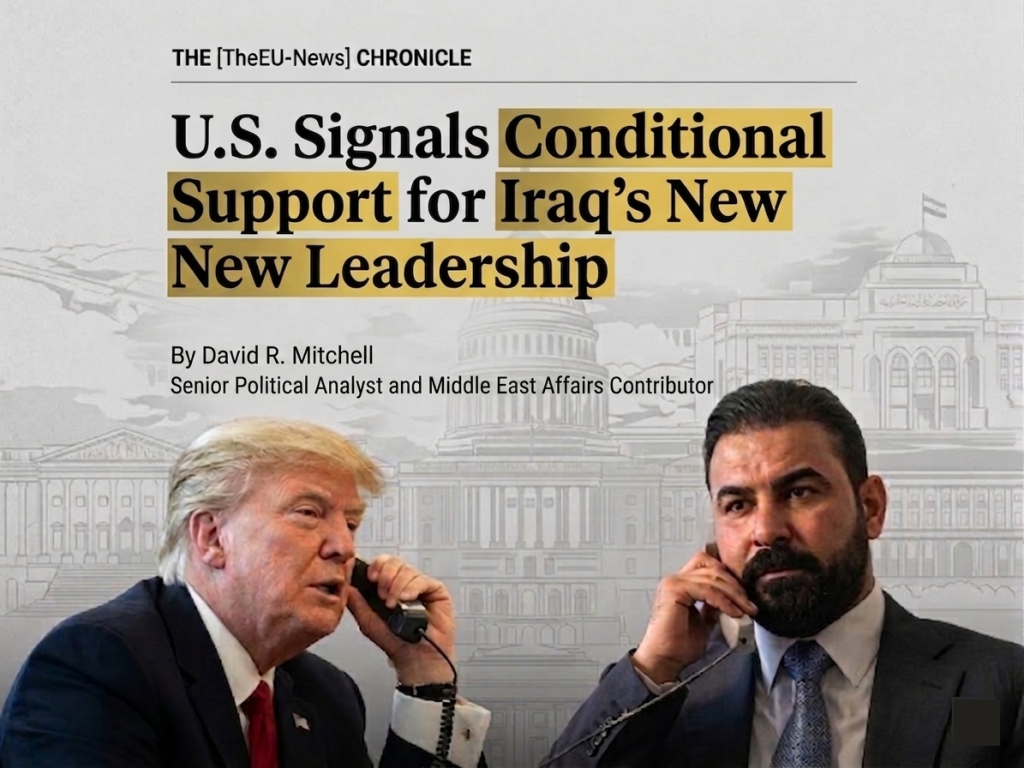
Washington links future cooperation with Iraq to the formation of a qualified and performance-driven cabinet. 2026
WASHINGTON/BAGHDAD President Donald Trump and Iraq’s Prime Minister-designate Ali al-Zaidi, reported by Reuters, U.S. officials have privately conveyed what diplomats describe as a clear advisory from the administration: Washington’s support for Iraq’s incoming government will be directly tied to the quality and composition of its ministerial cabinet.
According to signals relayed through the United States Department of State, the U.S. has urged that the next government include Iraqi figures with internationally recognized credentials in senior leadership, crisis management, and proven expertise in decision-making under complex national challenges, as well as in global economic governance—profiles typically associated with advanced economies. The message, officials say, is that Iraq must move beyond political quota considerations and instead recruit high-caliber talent capable of managing systemic challenges.
The guidance effectively frames U.S. backing as conditional: the scale of cooperation, financial engagement, and political support will hinge on whether Baghdad demonstrates a credible shift toward competence-driven governance. Any deviation toward politically driven or underqualified appointments, officials indicated, could directly impact the trajectory of bilateral relations.
While Trump publicly welcomed al-Zaidi and spoke of a “strong and highly productive” partnership, diplomats note that the underlying policy position is more explicit—support will be calibrated against performance, with cabinet formation serving as the first and most critical test.
By David R. Mitchell
Senior Political Analyst and Middle East Affairs Contributor
About the Author:
David R. Mitchell is a senior political analyst and independent contributor on international and Middle East affairs, focusing on policy analysis and geopolitical developments.