
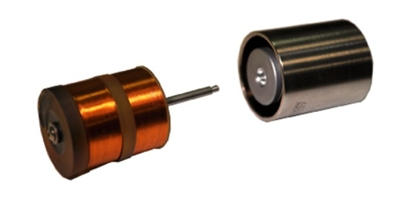
Voice coil actuators are widely used in precision motion systems where smooth, fast, and highly accurate linear movement is required. Their design is based on electromagnetic principles that allow direct conversion of electrical energy into controlled mechanical force. Because of their simplicity and responsiveness, they are commonly found in industries such as semiconductor manufacturing, medical equipment, and advanced automation systems.
Modern motion control solutions increasingly rely on compact and efficient actuation technologies to achieve higher levels of accuracy and repeatability. In this context, a voice coil actuator provides a highly effective solution due to its frictionless operation and ability to deliver instantaneous force response. Unlike traditional motor systems that depend on gears or mechanical transmission, this actuator type operates through direct electromagnetic interaction, reducing mechanical complexity and improving long-term reliability.
Design of a Voice Coil Actuator
The design of a voice coil actuator is relatively simple compared to other electromechanical systems, yet it is highly optimized for performance. It typically consists of a coil assembly, a permanent magnet, a moving shaft or carriage, and a supporting housing structure.
The coil is placed within a magnetic field generated by permanent magnets. When current flows through the coil, a Lorentz force is produced, creating linear motion. The absence of mechanical contact between moving and stationary parts (except for guidance bearings) ensures minimal wear and smooth operation.
This compact structure allows engineers to design actuators with varying stroke lengths and force outputs depending on application requirements.
Key Performance Characteristics
The performance of a voice coil actuator is defined by several critical parameters that determine its suitability for precision applications. These include force output, response speed, stroke length, and thermal behavior.
One of the most important characteristics is the force constant, which describes how much force is generated per unit of current. A higher force constant results in more efficient energy conversion and better control precision.
Other important performance aspects include:
- Linear force response: Force is directly proportional to current input
- Fast dynamic response: Minimal delay between input signal and motion output
- High positioning accuracy: Suitable for micron and sub-micron control tasks
- Low hysteresis: Ensures repeatable motion behavior across cycles
- Thermal stability: Maintains performance under continuous operation
Because of these characteristics, voice coil systems are often used in closed-loop control environments where feedback sensors ensure exact positioning.
Materials and Engineering Considerations
The materials used in voice coil actuator construction play a significant role in overall performance and durability. High-grade copper is commonly used for the coil windings due to its excellent electrical conductivity. Permanent magnets are typically made from rare-earth materials such as neodymium, which provide strong and stable magnetic fields.
Thermal management is another important design factor. Since continuous current flow generates heat, efficient heat dissipation structures are integrated into the housing to maintain consistent performance. In high-precision applications, even small temperature variations can affect positioning accuracy.
Engineers also focus on minimizing moving mass to improve acceleration and responsiveness. Lightweight components allow the actuator to achieve faster cycle times without sacrificing control stability.
Applications in Precision Systems
Voice coil actuators are used in a wide range of industries that require controlled linear motion with high speed and accuracy. Their non-contact operation and smooth performance make them ideal for sensitive environments.
Common applications include:
- Semiconductor wafer alignment and inspection systems
- Optical lens focusing and camera stabilization systems
- Medical imaging equipment and surgical positioning devices
- Industrial automation requiring rapid pick-and-place motion
- Aerospace and laboratory instrumentation systems
In each of these applications, the ability to achieve precise and repeatable motion is critical to system performance and output quality.
Conclusion
The voice coil actuator is a highly efficient and precise motion control device that stands out for its simple structure and advanced performance capabilities. Its direct-drive electromagnetic design eliminates mechanical complexities while delivering fast, accurate, and repeatable motion. As industries continue to demand higher levels of precision and reliability, this technology will remain a key component in modern engineering and automation systems.