
Problem: You may be taking calcium and vitamin D but still worry about weak bones or heart health.
Agitation: Calcium can unintentionally end up in arteries instead of bones, contributing to stiffness and cardiovascular risk.
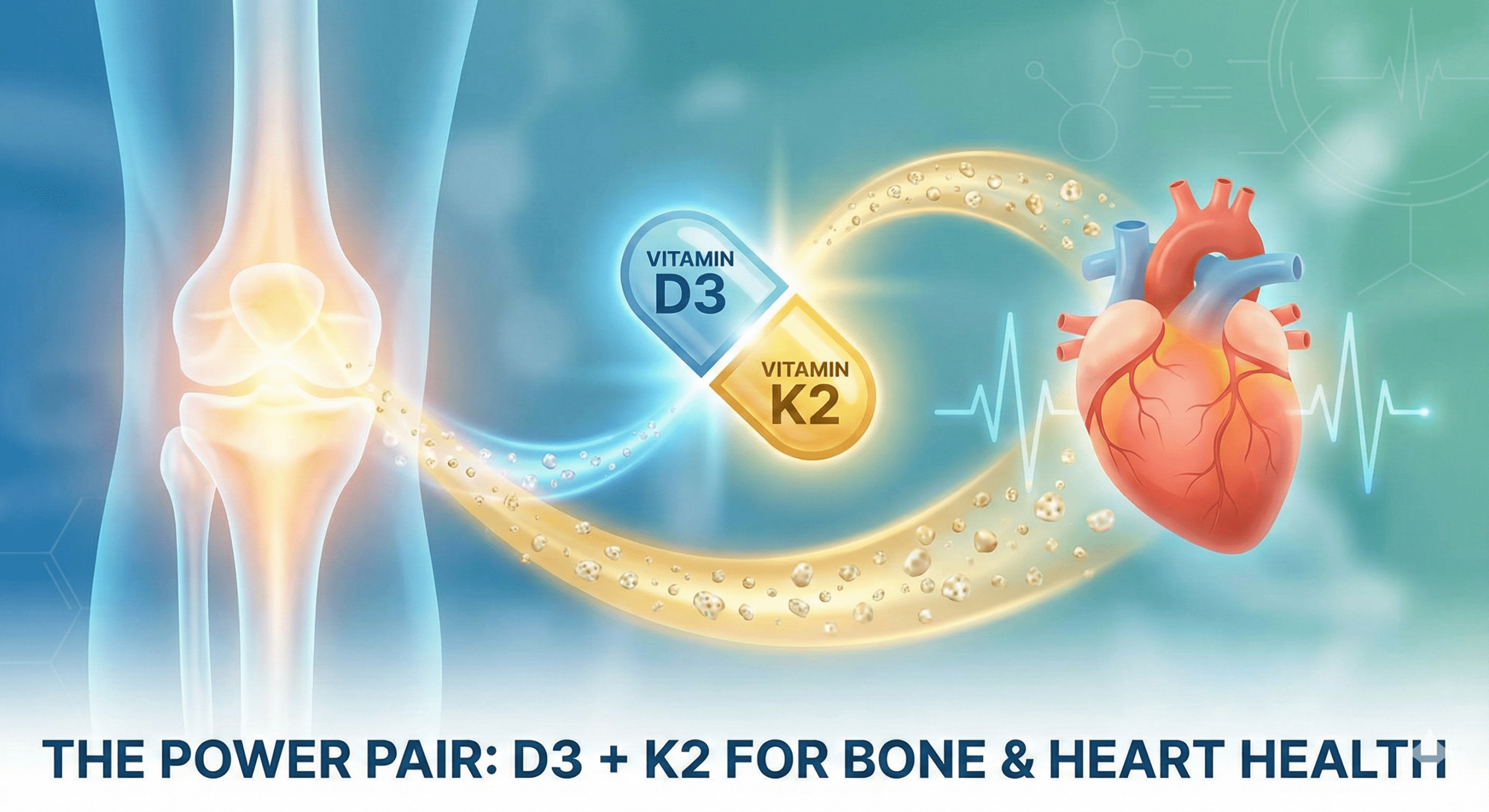
Solution: The combination of vitamin D3 and vitamin K2 directs calcium where it belongs — into bone tissue and away from blood vessels.
This article explains how this synergy works and how it supports both bone strength and heart health.
shop now: https://zenvitaco.com/shop/supplement/vitamin-d3-k2-for-bone-heart-support/
What Are Vitamin D3 and K2?
Vitamin D3 and vitamin K2 are essential fat‑soluble vitamins that play connected, complementary roles in calcium metabolism.
What Vitamin D3 Does in the Body
Vitamin D3 (cholecalciferol) increases calcium absorption from the gut into the bloodstream.
Key functions:
- Improves intestinal calcium uptake
- Supports bone mineralization
- Activates vitamin D receptors (VDR) that regulate calcium transport
What Vitamin K2 Does in the Body
Vitamin K2 controls where calcium goes after it’s absorbed.
Key functions:
- Activates osteocalcin to bind calcium into bone
- Activates Matrix Gla Protein (MGP) to prevent calcium buildup in arteries
- Supports vascular flexibility and tissue health
The Calcium Paradox Explained
The calcium paradox refers to a harmful mismatch: calcium is needed for bone health, yet it often ends up deposited in artery walls instead of bones.
Why Calcium Alone Isn’t the Solution
Taking calcium supplements increases calcium levels in the body but doesn’t control how it’s used.
How Calcium Ends Up in Arteries
When vitamin D3 increases absorption and vitamin K2 is insufficient, calcium circulates without direction.
The result:
- Calcium deposits in arterial walls
- Arteries stiffen
- Heart and vascular health risk increases
How Vitamin D3 Increases Calcium Absorption
Vitamin D3 is crucial for moving calcium from food into the bloodstream.
How Vitamin D Activates Calcium Transport
- Binds to vitamin D receptors (VDR)
- Enhances production of calcium transport proteins
- Raises blood calcium levels for use in the body
This process is essential but incomplete without proper calcium placement.
Risks of High‑Dose D3 Without K2
High levels of vitamin D3 without vitamin K2 may:
- Increase circulating calcium
- Elevate the risk of arterial calcification
- Stress vascular tissue if calcium isn’t regulated
Vitamin D3 opens the door. Vitamin K2 guides the traffic.
Vitamin K2: The Calcium Traffic Director
Vitamin K2 is the control system that decides where calcium goes.
Vitamin K2 ensures calcium is directed into bones and out of arteries by activating specific binding proteins.
Osteocalcin and Bone Mineralization
Osteocalcin is a protein that binds calcium into bone structures.
It becomes active only when vitamin K2 is present.
Outcomes:
- Increased bone mineral density
- Stronger skeletal support
- Lower fracture risk
MGP and Arterial Protection
Matrix Gla Protein (MGP) prevents calcium deposits from forming in the walls of blood vessels.
K2 activates MGP.
Outcomes:
- Reduced arterial calcification
- Maintained vascular flexibility
- Better cardiovascular health
Why Vitamin D3 and K2 Work Better Together
Alone, neither vitamin is enough to manage calcium safely and effectively.
What Happens When You Take D3 Without K2
- Calcium absorption increases
- No system guides calcium into bone
- Higher risk of soft tissue calcification
How the Synergy Solves the Calcium Paradox
- Vitamin D3 increases calcium availability
- Vitamin K2 ensures proper calcium placement
Combined, they:
- Strengthen bone structure
- Protect blood vessels
- Balance calcium metabolism holistically
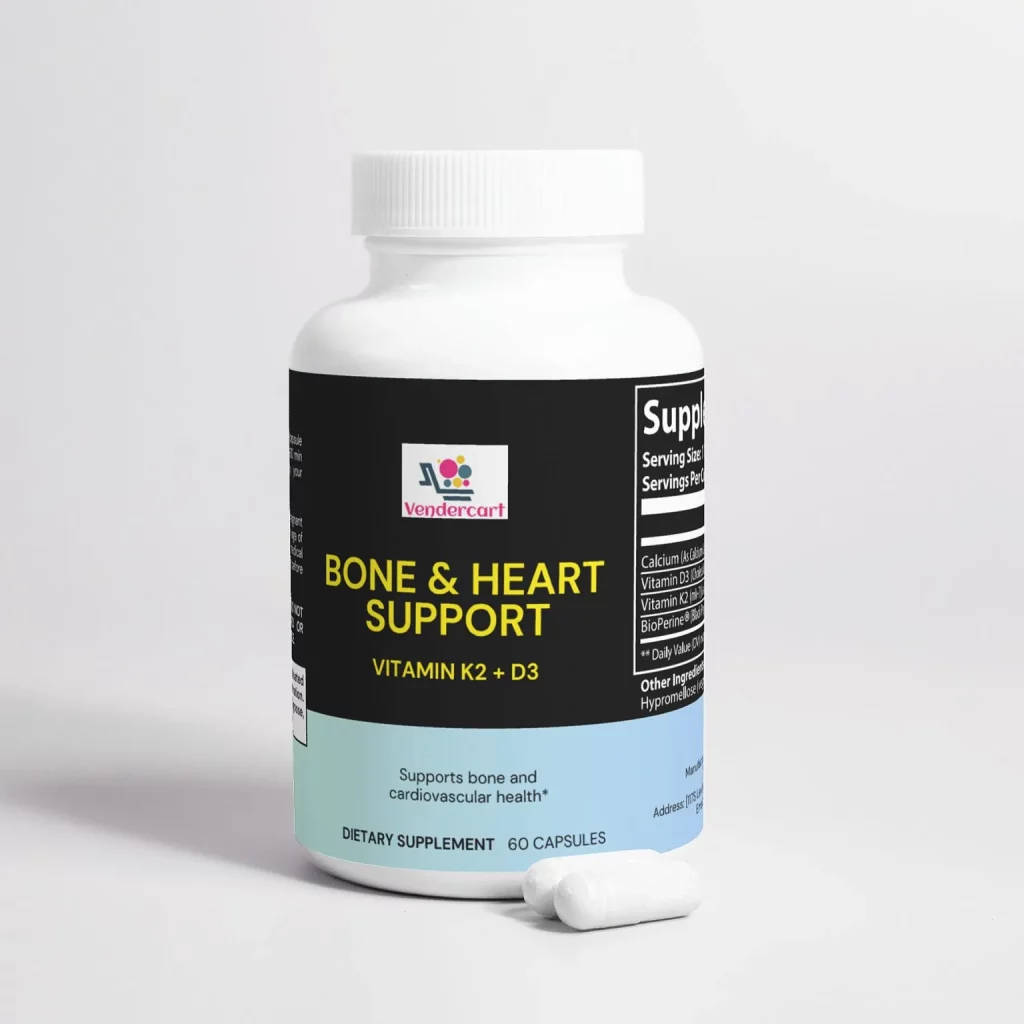
If you want a carefully formulated product to support this synergy, consider Vitamin D3 + K2 for Bone & Heart Support by Zenvitaco.
Bone Health Benefits of D3 and K2
Healthy bones depend on how well calcium is used — not just how much calcium you take.
Improved Calcium Utilization in Bones
Activated osteocalcin binds calcium into bone tissue.
This improves density and durability.
Long‑Term Bone Density Support
Regular, balanced intake of D3 and K2 supports:
- Aging bone health
- Postmenopausal bone maintenance
- Reduced osteoporosis risk
Heart Health Benefits of Vitamin K2 and D3
Misplaced calcium in blood vessels is a risk factor for heart disease.
Preventing Calcium Buildup in Arteries
When vitamin K2 activates MGP, calcium is blocked from collecting in vessel walls.
Arteries remain flexible.
Supporting Flexible, Healthy Blood Vessels
Benefits include:
- Better vascular elasticity
- Lower arterial stiffness
- Reduced cardiovascular strain
Dosage, Safety, and Who Should Be Careful
Proper supplementation should be informed and balanced.
Recommended Daily Dosage (General Guidance)
| Nutrient | Typical Daily Range |
|---|---|
| Vitamin D3 | 1,000–4,000 IU |
| Vitamin K2 (MK‑7) | 90–200 mcg |
Note: Dosages vary based on age, baseline levels, and health status.
Who Should Consult a Doctor First
Consult before supplementation if you:
- Are taking blood thinners
- Have kidney disease
- Already have high blood calcium levels
Quality matters. For a formula designed for bone and heart health, check out Vitamin D3 + K2 for Bone & Heart Support.
Final Takeaway: Solving the Calcium Paradox Naturally
Calcium alone isn’t enough.
Vitamin D3 without K2 is incomplete.
The real solution is balanced interaction:
- D3 increases calcium absorption
- K2 directs calcium into bone and away from arteries
This support system helps:
- Strengthen bones
- Protect cardiovascular health
- Maintain healthy calcium metabolism
FAQ: Vitamin D3 and K2 Explained
What is the calcium paradox?
The calcium paradox occurs when calcium strengthens bones but also accumulates in arteries if not properly regulated by vitamin K2.
Vitamin D3 increases calcium absorption, but without K2 to direct it, calcium may lodge in soft tissues.
Why should vitamin D3 be taken with K2?
Vitamin D3 helps your body absorb calcium, while vitamin K2 ensures calcium goes into bones and not arteries.
Together, they balance calcium use and support both bone and cardiovascular health.
Can vitamin D cause arterial calcification?
Vitamin D alone may increase arterial calcification risk if K2 is lacking, because unregulated calcium can deposit in blood vessels.
Vitamin K2 activates proteins that reduce this risk.
What does vitamin K2 do for the heart?
Vitamin K2 helps protect heart health by activating Matrix Gla Protein, which prevents calcium buildup in arteries.
This supports vascular flexibility and lowers cardiovascular risk.
Is it safe to take vitamin D3 and K2 daily?
For most people, daily D3 and K2 supplementation is safe when taken within recommended ranges.
Consult a healthcare professional for personalized guidance.
