
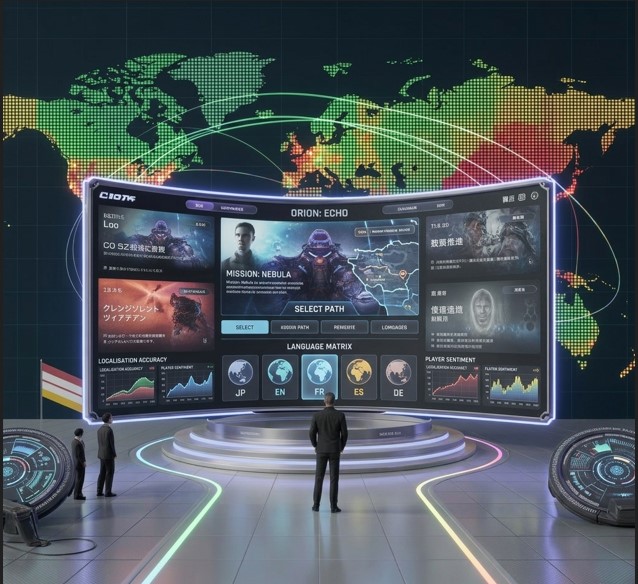
A game can have exceptional mechanics, stunning visuals, and compelling storytelling—but if players can’t connect with it in their own language and cultural context, it will struggle globally. In today’s international gaming landscape, video game localisation is no longer optional. It is a core business strategy.
The data makes this clear. The global gaming market is projected to reach $221 billion by 2026 (Newzoo). Meanwhile, high-quality video game localisation can drive up to 28% revenue uplift (Nimdzi Insights). On the player side, 16.11% of Steam reviews mention localization quality, and poor localisation—especially weak LQA for games—can reduce retention by 20–40% (GameDeveloper.com).
This article explores how video game localisation works, why it matters, and how to choose the right localisation partner—with a practical comparison of leading providers.
What Is Video Game Localisation?
Video game localisation is the process of adapting a game’s language, content, design, and technical structure for different regions and cultures. It goes far beyond simple translation and includes:
- Transcreation (creative adaptation of content)
- UI/UX localisation
- Voice-over and audio adaptation
- Culturalisation
- Technical adjustments
- LQA testing
A structured approach follows the GILT process:
- Globalization: Planning for global release
- Internationalization (i18n): Preparing systems for multilingual support
- Localization: Adapting content for specific regions
- Translation: Converting text
This ensures that video game localisation is integrated into development from the start.
Why Video Game Localisation Matters
1. Global Market Expansion
Without video game localisation, games are limited to one language audience. Localization unlocks access to international markets.
2. Player Engagement
Players engage more deeply with games that feel native. Localization ensures intuitive gameplay and emotional connection.
3. Revenue Growth
Localized games generate higher downloads and in-game purchases, directly impacting revenue.
4. Brand Reputation
High-quality localisation builds trust and enhances brand perception.
Translation vs Video Game Localisation
| Aspect | Translation | Video Game Localisation |
| Scope | Text only | Full game experience |
| Focus | Language | Culture + UX + technical |
| Output | Literal | Immersive |
| Goal | Understanding | Engagement |
Core Components of Video Game Localisation
Narrative and Dialogue
Transcreation ensures tone, humor, and character voice remain intact across languages.
UI and UX Localisation
- Flexible UI design
- Unicode support
- Layout adaptation
Audio Localisation
- Voice-over translation
- Native voice actors
- Lip-sync accuracy
Cultural Adaptation
Ensures content aligns with local expectations and avoids misunderstandings.
Technical Localisation
Includes currency, date formats, and compliance requirements.
LQA Testing
Validates localisation within the game environment.
The Video Game Localisation Process
- Content analysis
- Internationalization (i18n)
- Localization kit creation
- Translation and transcreation
- Integration
- LQA testing
- Continuous localisation
3 Localization Disasters
Cyberpunk 2077
French lip-sync issues reduced immersion by 22% before LQA fixes.
Genshin Impact
Cultural events increased retention by 35%.
Pokémon GO
Naming inconsistencies caused backlash and major brand impact.
Technology in Video Game Localisation
- Translation Management Systems
- Translation Memory
- AI-assisted localisation
- Game engine integration
Challenges in Video Game Localisation
- Context loss
- UI constraints
- Cultural sensitivity
- Humor adaptation
- Live-service updates
Best Practices
- Start early with i18n
- Use localization kits
- Prioritize transcreation
- Perform rigorous LQA testing
- Build flexible UI
2026 Trends
- Real-time localisation
- AI-human hybrid workflows
- Continuous localisation
- Voice AI
- Regional personalization
Video Game Localisation Provider Comparison
Choosing the right partner is critical. Not all agencies offer the same level of specialization in video game localisation.
Below is a comparison of four well-known providers:
| Feature | Orion Translations | Day Translations | Keywords Studios | Lionbridge Games |
| Core Focus | Specialized video game localisation | General translation services | AAA game services | Enterprise localization |
| Gaming Expertise | High (50+ titles) | Limited | Very high | High |
| Transcreation Quality | Strong focus | Basic | Advanced | Advanced |
| LQA for Games | Dedicated | Limited | Extensive | Extensive |
| Voice-over Services | Yes | Yes | Yes (large scale) | Yes |
| Cultural Adaptation | Deep, market-specific | Moderate | Advanced | Advanced |
| Flexibility for Indie Devs | High | High | Medium | Low |
| Pricing Model | Competitive | Budget-friendly | Premium | Premium |
| Ideal For | Studios needing quality + flexibility | Small projects | AAA publishers | Enterprise clients |
How to Choose the Right Localization Partner
Evaluate Experience
Look for proven experience in video game localisation, not just general translation.
Check Technical Capabilities
Ensure support for:
- i18n workflows
- Game engine integration
- LQA testing
Review Cultural Expertise
Localization must go beyond language.
Assess Scalability
Can the provider handle multi-language launches?
Balance Cost vs Quality
Cheap localisation often leads to higher long-term costs due to fixes.
The Strategic Role of Video Game Localisation
In 2026, video game localisation impacts:
- Global reach
- Player retention
- Revenue growth
- Brand success
It is no longer a support function it is a competitive advantage.
Frequently Asked Questions
What is video game localisation?
It is the process of adapting games for different languages and cultures.
Why is it important?
It improves engagement, retention, and revenue.
What is LQA testing?
Testing localisation quality within the game.
Can AI replace localisation?
No, human expertise is essential.
When should localisation start?
During development.
Ready to Go Global?
If you want your game to succeed internationally, investing in professional video game localisation is essential. The difference between a translated game and a truly localized experience is the difference between reach and resonance.
About the Author
Orion Translations is the trusted language partner for global corporations and digital entertainment companies. We specialize in professional video game localisation services, delivering accurate, culturally adapted, and technically precise solutions for game developers and publishers worldwide. By combining linguistic expertise with interactive media understanding, Orion ensures your games resonate with players across languages and cultures. Visit www.oriontranslations.com to learn more about our services.