
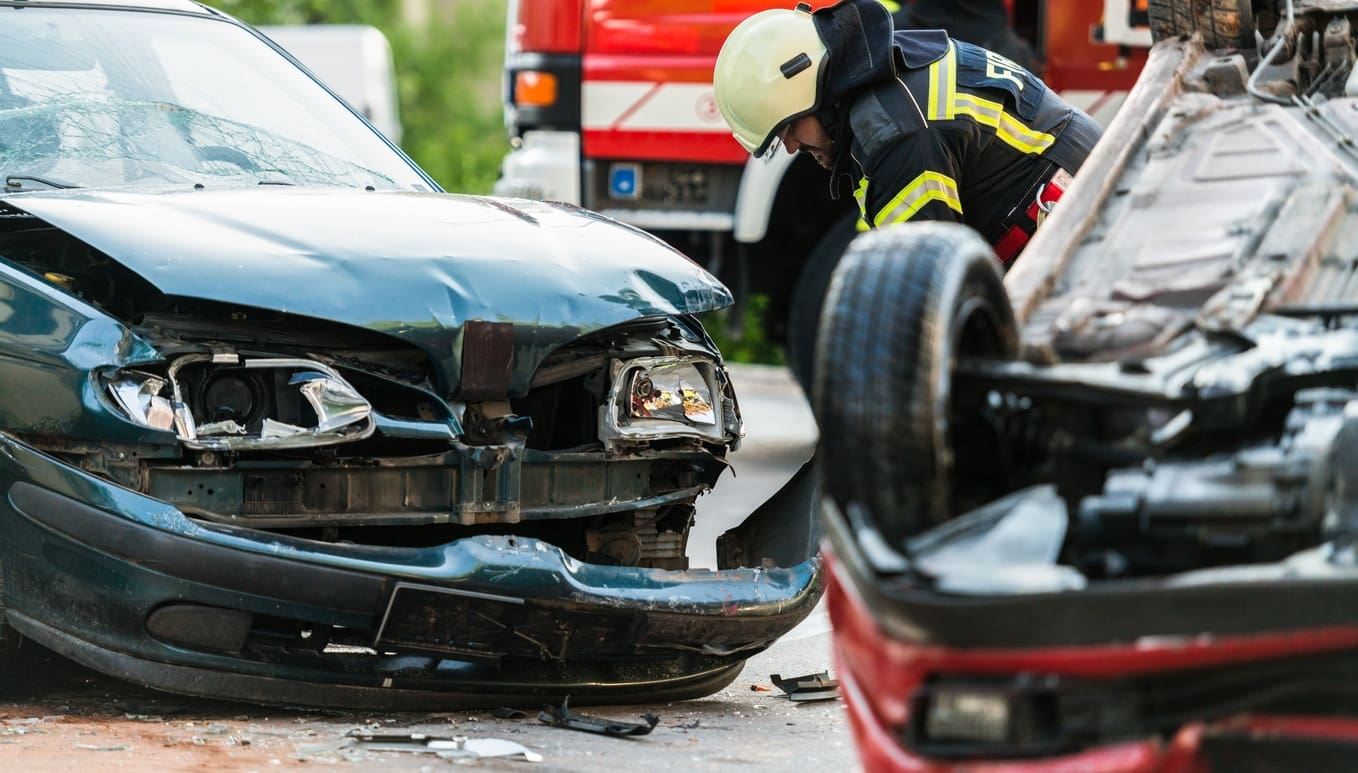
Every day on America’s roadways, thousands of vehicles navigate through traffic, and despite technological advances in vehicle safety, car accidents remain a persistent threat to drivers, passengers, and pedestrians alike. Understanding why these collisions occur is essential for anyone who gets behind the wheel, as the vast majority of accidents stem from preventable causes rooted in human behavior.
The Scope of the Problem
The statistics surrounding car accidents in the United States paint a sobering picture of road safety. According to preliminary estimates from the National Highway Traffic Safety Administration, approximately 39,345 people died in traffic crashes during 2024, representing a 3.8 percent decrease from the previous year. While this decline marks the first time since 2020 that fatalities dropped below 40,000, the numbers remain significantly higher than a decade ago. The fatality rate for 2024 decreased to 1.20 deaths per 100 million vehicle miles traveled, the lowest since 2019, yet still above the pre-pandemic average.
Beyond the fatalities, injuries from car accidents create an enormous burden on individuals and society. The Centers for Disease Control and Prevention reports that approximately 2.1 million people visit emergency rooms each year due to car crash injuries. These incidents range from minor scrapes to life-altering conditions including spinal cord damage, traumatic brain injuries, and chronic pain disorders. The economic impact is staggering, with the American Traffic Safety Services Association estimating that serious car accidents generate around $460 billion in direct economic costs and $1.4 trillion in quality of life costs annually.
Human Error: The Leading Cause
Research consistently demonstrates that human error accounts for approximately 90 to 94 percent of all motor vehicle accidents. This overwhelming statistic reveals that mechanical failures, weather conditions, and road defects play relatively minor roles compared to the decisions and behaviors of drivers themselves. Recognition of this fact is crucial because it means that most accidents are preventable if drivers modify their behavior and remain vigilant behind the wheel.
Distracted Driving: A Modern Epidemic
Distracted driving has emerged as one of the most prevalent causes of traffic collisions in recent years. In 2023, distraction played a role in 3,275 traffic fatalities across the United States. The problem extends beyond deaths to encompass roughly 20 percent of all injuries occurring in car accidents. What makes distracted driving particularly dangerous is that it encompasses multiple forms of impairment simultaneously.
Experts identify three categories of distraction that affect drivers. Manual distraction occurs when drivers take their hands off the wheel to adjust controls, reach for objects, or handle items in the vehicle. Visual distraction happens when drivers take their eyes off the road to look at passengers, check their phones, or observe events outside their vehicle. Cognitive distraction involves taking one’s mind off the task of driving to daydream, worry about problems, or engage in intense conversations.
Cell phone use while driving represents one of the most dangerous forms of distraction because it incorporates all three types simultaneously. Research from the AAA Foundation for Traffic Safety indicates that taking your eyes off the road for more than two seconds doubles your risk of a crash. Yet at typical highway speeds of 55 miles per hour, sending or reading a text message takes about five seconds, equivalent to driving the length of an entire football field with your eyes closed. Despite widespread awareness of these dangers, studies show that more than 25 percent of drivers still use their phones frequently while driving.
The scope of distracted driving extends far beyond cell phones. Approximately 31 percent of drivers report being distracted by pets in their vehicles, according to the American Automobile Association, yet only 17 percent use pet restraints. Eating while driving, adjusting entertainment systems, applying makeup, and tending to children all divert attention from the primary task of operating a vehicle safely. One study found that reaching for an object while driving increases crash risk by 800 percent.
Driving Under the Influence
Driving while impaired by alcohol or drugs remains a persistent killer on American roads. Nearly 30 percent of fatal accidents in some states involve a driver under the influence. Research examining pre-crash data from instrumented vehicles found that alcohol and drug impairment is associated with a substantial 34 percent increase in crash risk. The impairment affects multiple critical driving functions including reaction time, coordination, decision-making ability, and judgment.
Speeding and Aggressive Driving
Excessive speed consistently ranks among the top contributors to serious and fatal crashes. Speeding accounts for approximately 16 percent of the societal cost of traffic crashes when both direct economic costs and quality of life impacts are considered. “According to data analysis, speeding reduces a driver’s ability to respond to sudden hazards and dramatically increases the force of impact during collisions”, says a Decatur accident lawyer at Terance Madden.
Aggressive driving behaviors compound the dangers of speeding. Tailgating eliminates the safe following distance needed to react to sudden stops or obstacles. More than 20 percent of all car accidents involve rear-end collisions caused by following too closely. Rear-end collisions account for approximately 28.4 percent of all traffic crashes, making them the most frequently occurring type of collision. Weaving between lanes, running red lights, and failing to yield create dangerous situations where split-second timing determines whether an accident occurs.
Inexperienced and Young Drivers
Age and experience significantly influence accident rates. Nationwide, 43 percent of first-year drivers and 37 percent of second-year drivers are involved in car crashes. The risk peaks during the initial three months after a driver receives their license to drive unsupervised. Young drivers between ages 15 and 20 show higher rates of distraction in fatal crashes compared to drivers age 21 and older. This inexperience manifests in multiple ways including misjudging distances and speeds, overcorrecting steering inputs, delayed reactions to hazards, and failing to recognize dangerous situations before they escalate.
Weather and Environmental Conditions
While human error dominates accident causation, environmental factors do contribute to approximately 21 percent of the six million vehicular crashes that occur annually in the United States. Weather-related accidents increase during snow, sleet, and rain when road surfaces become slippery. Winter months see elevated collision rates, particularly in regions where untreated roads and black ice create treacherous driving conditions. Roads become most dangerous during early morning or late night hours when temperatures drop below freezing, causing patches of ice to form that often go undetected by drivers.
Gender Differences in Accident Rates
Statistical analysis reveals significant differences in crash involvement between male and female drivers. In 2022, 43,582 men were drivers in fatal crashes, nearly three times the number of women at 14,719. Men die in motor vehicle crashes at a rate more than twice that of women. These disparities stem from various factors including men typically driving more miles, engaging more frequently in risky behaviors such as speeding and impaired driving, and showing lower rates of seat belt usage.
Geographic Variations
Accident rates vary considerably across different states and regions. In 2024, Massachusetts had the highest crash rate at 6.07 percent of drivers, while Michigan had the lowest at 1.68 percent. Texas consistently leads in the absolute number of crashes due to its extensive highway system and large population. California experienced 3,998 fatal crashes in 2024, with the state’s fatality rate of 5.3 deaths per 100,000 residents exceeding the national average of 4.4. Urban areas, particularly major metropolitan regions, account for disproportionate shares of their state’s accidents due to traffic density and complex intersection configurations.
The Path Forward
Understanding the causes of car accidents provides a foundation for prevention. Since human error accounts for the vast majority of crashes, solutions must focus on changing driver behavior through education, enforcement, and awareness campaigns. Some states have adopted the Safe System Approach, which focuses on five key elements: safer roads, safer speeds, safer vehicles, safer people, and better post-crash care. This holistic framework has successfully reduced fatalities in multiple jurisdictions.
Technology offers promising avenues for reducing accidents. Advanced Driver Assistance Systems in commercial trucks reduce crash frequency by approximately 50 percent according to federal data. Features like automatic emergency braking, lane departure warnings, and blind spot detection help compensate for human limitations and errors. Looking further into the future, autonomous vehicles may address the human error factor that dominates current accident statistics.
Individual drivers can make immediate differences by committing to fundamental safe driving practices. Eliminating distractions by putting phones away, planning routes before departing, and avoiding eating or other activities while driving removes major risk factors. Never driving while impaired by alcohol or drugs, obeying posted speed limits, maintaining safe following distances, and using seat belts consistently are proven strategies that save lives.
Regular vehicle maintenance ensures that brakes, tires, lights, and other critical systems function properly when needed. Adjusting driving behavior to match conditions during adverse weather, reducing speed when visibility decreases, and increasing following distances on wet or icy roads all reduce accident risk.
Final Word
Car accidents remain a leading cause of death and injury in the United States, claiming tens of thousands of lives annually and sending millions more to emergency rooms. The overwhelming majority of these crashes result from preventable human errors including distracted driving, impairment, speeding, and aggressive behavior. While factors like weather and inexperience contribute to some crashes, the fundamental responsibility rests with drivers to make safe choices every time they get behind the wheel. Understanding these causes empowers individuals to modify their behavior and create safer conditions for everyone who uses our roadways. Through a combination of personal responsibility, technological advancement, improved infrastructure, and effective enforcement of traffic laws, the vision of significantly reducing traffic fatalities and injuries remains achievable.