
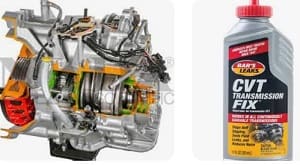
Modern vehicles are becoming more efficient, and one of the key innovations contributing to this improvement is the Continuously Variable Transmission (CVT). Unlike traditional automatic or manual gearboxes, CVT offers a smoother driving experience by eliminating the need for fixed gear shifts. It is widely used in cars, scooters, and hybrid vehicles due to its ability to balance performance and fuel economy.
What is a CVT Transmission?
A Continuously Variable Transmission (CVT) is a type of automatic transmission that provides an infinite range of gear ratios between the lowest and highest gear. Instead of using traditional gears, a CVT employs a belt and pulley system that adjusts seamlessly as you accelerate or decelerate. This makes the ride smoother and improves fuel efficiency because the engine can always run at its most efficient RPM (revolutions per minute).
How Does a CVT Transmission Work?
The CVT consists of two pulleys connected by a metal or rubber belt.
- One pulley connects to the engine (drive pulley).
- The other connects to the wheels (driven pulley).
As the car accelerates, the pulleys adjust their diameters—one gets larger while the other gets smaller. This continuous adjustment allows the transmission to provide an optimal gear ratio at all times, unlike conventional transmissions that shift between a fixed number of gears.
Some CVTs also include computer controls and hydraulic systems to enhance efficiency and power delivery, making them more responsive to driving conditions.
Advantages of CVT Transmission
- Fuel Efficiency: CVTs keep the engine in its optimal power range, improving fuel economy.
- Smooth Acceleration: There are no noticeable gear shifts, resulting in a seamless driving experience.
- Lightweight Design: CVTs are usually lighter than traditional automatic transmissions, which helps enhance overall vehicle performance.
- Better Performance on Inclines: CVTs can instantly adjust to maintain power when climbing hills or overtaking.
- Lower Emissions: By running efficiently, CVT-equipped vehicles often produce fewer emissions.
Common Problems with CVT Transmission
While CVTs have many advantages, they also have certain drawbacks:
- Overheating: CVTs can overheat under heavy loads or prolonged use.
- Sluggish Response: Some drivers feel CVTs lack the “kick” of traditional gear changes.
- Higher Maintenance Costs: Repairing or replacing a CVT can be more expensive than fixing a regular automatic transmission.
- Belt Wear: The belt or chain can wear out over time, leading to reduced performance.
Maintenance Tips for CVT Transmission
To ensure the longevity of your CVT:
- Use the recommended CVT fluid only.
- Regularly check fluid levels and change it as per the manufacturer’s schedule.
- Avoid aggressive driving or towing heavy loads.
- Keep the transmission cool by ensuring your cooling system works properly.
- Listen for unusual noises such as whining or shuddering, which can indicate early issues.
FAQ about CVT Transmission
Q1: Is CVT better than automatic transmission?
A: CVTs offer smoother operation and better fuel efficiency than traditional automatics, though some drivers prefer the feel of gear shifts in standard automatics.
Q2: How long does a CVT transmission last?
A: With proper maintenance, a CVT can last up to 150,000–200,000 miles or more.
Q3: Can CVT transmissions handle high performance?
A: While not ideal for sports driving, newer CVT designs in brands like Subaru and Nissan handle moderate performance quite well.
Q4: What happens if CVT fluid is not changed?
A: Old or dirty CVT fluid can cause overheating, slippage, and eventual transmission failure.
Q5: Are CVT transmissions noisy?
A: Some CVTs produce a high-pitched noise under acceleration, which is normal, but excessive noise may indicate a problem.
Conclusion
The CVT Transmission represents a significant leap in automotive technology, offering fuel efficiency, smooth driving, and lower emissions. Although it requires careful maintenance and can be costly to repair, its advantages often outweigh its limitations. For daily drivers seeking comfort and economy, a CVT-equipped vehicle can be an excellent choice for modern driving needs.