

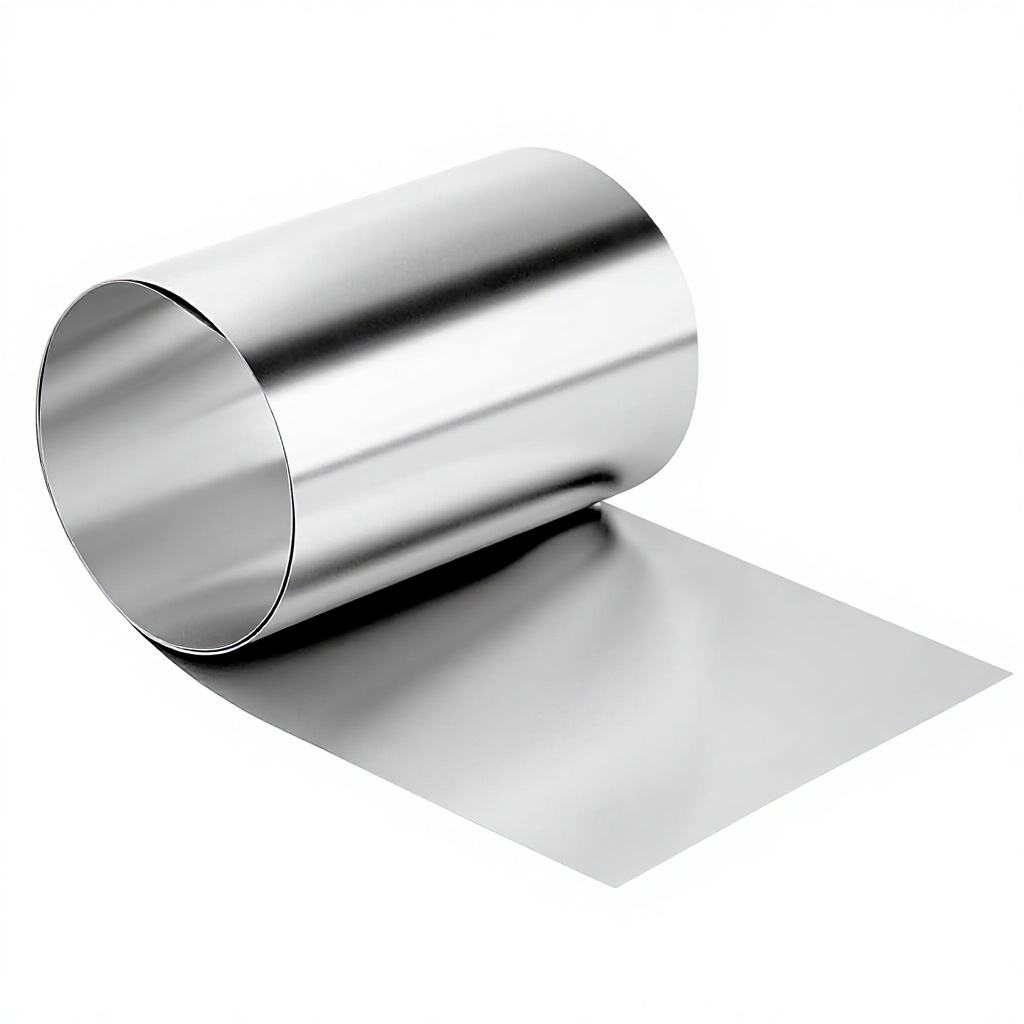
In the landscape of modern engineering, precision has shifted from a luxury to a baseline requirement. Ultra-thin stainless steel foil for precision industries has emerged as a cornerstone material for sectors demanding high performance within compact architectures. From the intricate layers of microelectronics to life-saving medical devices, this material excels where space and weight are strictly limited.
As global innovation moves toward miniaturization, the demand for thinner, more resilient materials is accelerating. Ultra-thin stainless steel foil meets these rigorous standards by blending structural durability and flexibility with unmatched corrosion resistance. To understand the metallurgical foundation of these alloys, you can explore this technical overview of stainless steel and its unique environmental resistances.
Defining Ultra-Thin Stainless Steel Foil
Technically, ultra-thin stainless steel foil refers to metal that has been precision cold-rolled to thicknesses below 0.05 mm. In cutting-edge laboratories and manufacturing hubs, we frequently produce foil as thin as 0.01 mm—reaching gauges that are nearly invisible to the naked eye.
Unlike traditional steel plates, ultra-thin foil offers:
- Extreme Flexibility: Can be folded or wrapped without structural failure.
- High-Fidelity Precision: Tight tolerances essential for micro-components.
- Lightweight Durability: Reduces mass while maintaining high tensile strength.
If you are beginning your material research, our comprehensive guide on what is stainless steel foil provides a solid foundational perspective.
The Thickness Spectrum: Understanding Microns
When sourcing ultra-thin stainless steel foil, thickness is the most critical variable. Even a deviation of a few microns can alter the mechanical response of the final product.
Standard Gauge Reference Table
| Thickness (mm) | Microns (µm) | Primary Application |
| 0.05 mm | 50 µm | Industrial shims and gaskets |
| 0.02 mm | 20 µm | Advanced battery collectors |
| 0.01 mm | 10 µm | High-precision diaphragms |
| 0.005 mm | 5 µm | Semiconductors and microelectronics |
| 0.003 mm | 3 µm | Aerospace R&D and nanotechnology |
For context, a human hair is roughly 70 microns thick. Our 316L stainless steel foil ultrathin 0.01mm is seven times thinner than a hair, yet it provides a formidable barrier against corrosion.
The Precision Manufacturing Cycle
Achieving such extreme dimensions requires a highly sophisticated production cycle. It begins with hot-rolled coils which are subjected to sequential cold-rolling stages to reduce the gauge gradually.
During this process, annealing is vital; this heat treatment restores the metal’s ductility and prevents it from becoming brittle. You can follow the full technical journey in our breakdown of the ultra thin stainless steel foil manufacturing process. Effectively, stainless steel foil is made from hot rolled coil and transformed through meticulous engineering to reach its final precision state.
Grade Selection for Precision Tasks
The chemical makeup of the foil determines its longevity in specialized environments.
- Grade 301: Favored for its high strength and fatigue resistance. It is the premier choice for 301 stainless steel foil used in precision springs.
- Grade 304: The most versatile option, offering excellent workability and standard corrosion resistance. Explore 304 stainless steel foil for general high-tech use.
- Grade 316L: Engineered for the most hostile environments, including marine applications and surgical implants, due to its superior resistance to pitting.
Cross-Industry Applications
- Electronics: Crucial for EMI/RFI shielding and flexible printed circuits.
- Healthcare: Used in surgical instruments, diagnostic equipment, and sterile packaging.
- Aerospace: Provides thermal insulation blankets and heat shields that don’t add significant weight to the airframe.
- Renewable Energy: A key component in hydrogen fuel cells and the backing for solar arrays.
Explore our full catalog of available materials in the stainless steel foil products section.
Sourcing & Expert Consultation
Choosing the right ultra-thin stainless steel foil for precision industries involves balancing gauge, grade, and surface finish. If you need a tailored solution or custom slitting, visit our contact page or explore our products page for more details.
Summary FAQ
- How thin can these foils be? Commercial production can go as low as 0.005 mm.
- Is it durable? Yes, the chromium content creates a self-healing oxide layer that prevents rust even at microscopic thicknesses.
- Which grade should I choose? 304 is the general-purpose king, but 316L is essential for chemical or medical exposure.
A Note from Ewan: After three decades in the industry, I’ve seen how the right material choice can revolutionize a product’s performance. As a specialized Chinese supplier, we combine volume efficiency with micro-level precision. I look forward to helping you innovate.