
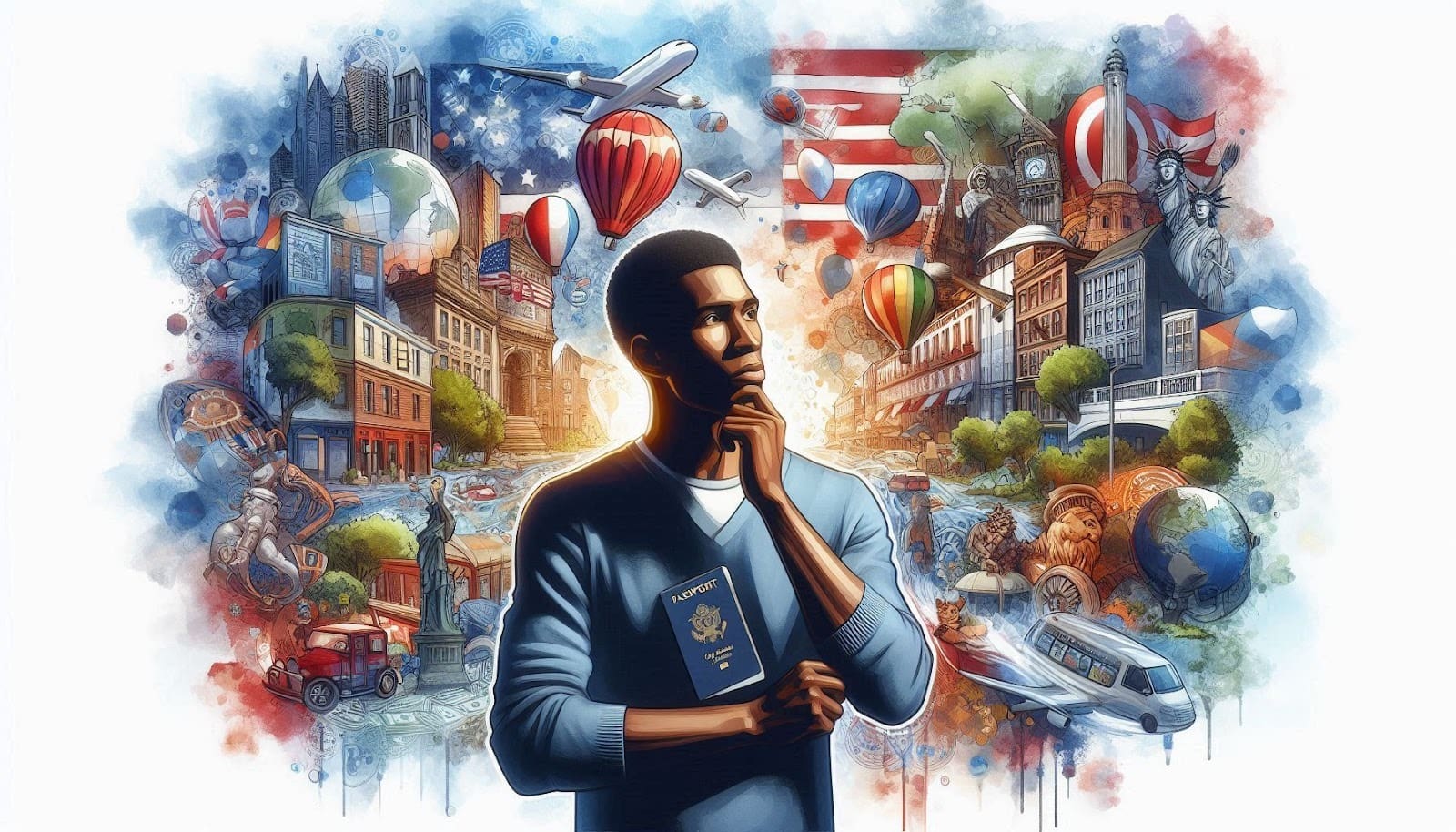
More Americans are considering alternative nationality options as electoral tension and policy reversals shape long-term decisions.
WASHINGTON, DC. For a growing number of Americans, citizenship planning is no longer a niche conversation for tax exiles, libertarian fantasists, or globe-trotting billionaires. It is entering the mainstream of family and wealth planning.
That is a significant change.
For most of modern American life, the idea of securing a second citizenship lived at the edge of the national imagination. It sounded exotic, unnecessary, or faintly disloyal. The U.S. passport was powerful, the country was vast, and most people assumed that even if politics became ugly from time to time, the basic structure of life would remain stable enough that one nationality was enough.
That assumption has weakened.
In 2026, more Americans are asking a different question. What happens if one passport, one legal system, and one political climate no longer feel like enough to carry every major family decision over the next decade?
That is the real story behind the rise of citizenship planning in the United States. It is not just about travel. It is not even mainly about travel. It is about optionality.
Families want to know where their children could live and work if the country becomes harder to navigate. Entrepreneurs want to know whether future policy swings could affect how and where they position themselves. Investors want to know how much personal risk comes from being fully tied to one jurisdiction in an era of deeper electoral stress, sharper policy reversals, and less confidence that today’s rules will still feel familiar five years from now.
That shift has become visible enough to show up in mainstream reporting. In one recent example, Reuters reported that more Americans were exploring moves to Europe after political tension at home made long-term planning feel more urgent. The significance of that trend is not that millions are packing their bags tomorrow. It is that legal mobility has become a serious part of the national mood.
Citizenship planning is moving from fantasy to contingency
The emotional tone of this market has changed first.
The older version of second citizenship sounded aspirational. It was about freedom, prestige, perhaps a cleaner tax future, perhaps a better place to retire. It often sounded like something for “someday,” or for someone richer, stranger, or more internationally minded than the average American household.
The current version sounds more defensive.
That matters because defensive planning tends to be more durable than aspirational shopping. A family browsing villas in another country can change its mind quickly. A family building legal optionality because it no longer trusts the stability of its domestic environment is responding to something deeper.
More Americans now think in terms of backup systems. They want a backup place to land. A backup route for their children. A backup legal framework if their own country becomes more polarized, more administratively difficult, or less aligned with the way they want to live.
This is why citizenship planning has widened beyond the ultra-wealthy. The new buyer is often not trying to escape America in any dramatic or ideological sense. The new buyer is trying to reduce concentration risk.
That phrase may sound cold, but it captures the logic perfectly.
In finance, no prudent person wants every asset in one place. In family planning, a growing number of Americans no longer want every right, every residency option, and every future work or study pathway tied to one country alone.
The political cycle now feels personal
One reason this trend has accelerated is that American politics no longer feels confined to Washington.
It reaches into schools, taxes, healthcare, business regulation, personal safety, social climate, and the practical assumptions families make about the future. Every election now arrives with a wider sense that something foundational may change. The language of ordinary planning has become infused with institutional uncertainty.
That changes how people behave.
A new administration can alter tax priorities, migration attitudes, regulatory posture, foreign policy, education funding, enforcement culture, and the social tone surrounding business and wealth. Even when those changes do not affect every household directly, they shape perception. They create a sense that the country is becoming harder to read.
And once people start to feel that the domestic environment is difficult to read, they begin looking for ways to widen their options before those options are needed.
That is why alternative nationality planning no longer sounds eccentric to many Americans. It sounds practical.
It is not always about leaving. Often, it is about refusing to be cornered.
One passport now feels like a single point of failure to some families
The phrase “single point of failure” once belonged more naturally to banking, cybersecurity, and logistics. It now belongs increasingly to citizenship planning as well.
Families with international exposure, or simply with a strong desire to preserve future choice, are beginning to ask whether a single passport creates more vulnerability than they once believed. If policy turns sharply. If the tax climate worsens. If civil tension rises. If a child wants to build a life elsewhere. If a spouse wants the right to relocate without starting from zero. If the family wants to shift its center of gravity for lifestyle, education, or business reasons.
These are not speculative questions in the abstract. They are the kind of questions people ask when they no longer assume the future will remain smooth.
The American passport remains one of the world’s most useful. That is not the issue.
The issue is that strong does not always mean sufficient.
A strong passport is excellent in normal conditions. It offers broad travel power and substantial flexibility. But travel power is not the same thing as long-term rights. The right to visit is not the same as the right to live. The right to land is not the same as the right to stay, work, or integrate a family over time.
That distinction is becoming much more visible in American planning conversations.
The legal barrier is lower than many Americans think
Another reason this market is broadening is that many Americans are discovering the idea is less radical than they assumed.
A surprising number still believe that obtaining another nationality automatically means surrendering their U.S. citizenship. That is not how the law generally works. The U.S. State Department explains that American law does not require a citizen to choose between U.S. citizenship and another nationality, even though dual nationals still need to understand the obligations and legal consequences that come with holding more than one status.
That clarity changes the emotional landscape.
Once Americans realize that another nationality can often sit alongside their U.S. one, the conversation becomes less dramatic. It stops sounding like a national break and starts sounding like strategic planning. That does not make it simple. It does make it more thinkable.
And that is exactly what has happened. Citizenship planning has become thinkable for people who would have dismissed it a few years ago as something reserved for the ultra-rich or permanently uprooted.
Now it is entering the same mental category as trust planning, offshore diversification, retirement positioning, and family governance. It is one more tool for households trying to keep future choices open.
The buyer profile is broadening
The most telling sign that citizenship planning is going mainstream is the buyer profile itself.
There are still wealthy families, founders, and private investors in the market. There always will be. They think in terms of jurisdictions, time horizons, and downside protection. They were early to this logic.
But the profile now extends well beyond them.
It includes parents of teenagers who want future work and study rights preserved. It includes professionals whose jobs are portable but whose legal status is not. It includes couples who do not have an immediate plan to relocate, but who dislike the idea that every major family decision depends on one increasingly polarized political system. It includes internationally connected households that may have ancestry routes available and now see them in a new light.
That widening audience is what makes the trend mainstream.
It is no longer just the people with yachts. It is the people with spreadsheets, calendars, and children nearing adulthood.
They are not necessarily buying escape. They are buying breathing room.
Policy reversals changed the emotional math
The American system has always included policy swings. What feels different now is the scale and speed with which the atmosphere can change.
A shift in government can mean one direction on taxes, disclosure, reproductive rights, education, immigration, and business regulation, then another direction after the next cycle. That creates a kind of rolling uncertainty. Families and investors begin to feel that each election threatens to rewrite some part of the long-term map.
That emotional math is powerful.
A second citizenship or alternative nationality route does not solve every problem. It does not eliminate obligations. It does not make a family invisible to regulators or immune from complexity. But it can reduce the force of the next reversal. It can soften the feeling that one election alone determines every major option for the household.
That is why more Americans now see citizenship planning as a form of resilience rather than indulgence. They are not only asking what rights they have today. They are asking what rights they may wish they had later.
The market is maturing around structure, not fantasy
As this demand grows, the serious end of the market is also becoming more sober.
The older, more theatrical sales language around second passports focused on prestige, speed, secrecy, and the glamour of having options other people did not. The mature market talks differently. It talks about compliance, timeline, family fit, tax implications, banking consistency, and whether the route makes sense alongside the rest of a person’s life.
That is a healthier conversation.
A second citizenship that does not fit residency planning, disclosure obligations, school decisions, family composition, or long-term tax strategy is not really a solution. It is just an expensive symbol. Serious clients increasingly understand this. They are looking for durable legal pathways, not fantasies.
That is also why advisers such as Amicus International Consulting increasingly describe second passport demand as part of a broader mobility and family resilience strategy rather than a luxury purchase. That framing matches the mood of 2026. The strongest demand is no longer for a trophy. It is for a backup system that can hold up under scrutiny and still make sense years later.
For many Americans, this is now ordinary long-term planning
Perhaps the most important development is how ordinary the reasoning now sounds.
People are not always talking about citizenship planning in dramatic language. They are talking about children. About where a future job might be. About whether retirement needs to remain domestic. About how to respond if the political environment becomes harsher. About whether their wealth, their business, and their family rights are too concentrated in one place.
That tone is what makes the shift so important.
Once a topic becomes ordinary, it becomes durable.
And citizenship planning is starting to sound ordinary in exactly that way. Not casual. Not universal. But ordinary enough that it now sits comfortably inside mainstream conversations about risk, family continuity, and personal optionality.
That does not mean America is emptying out. It means Americans are becoming more strategic.
They are beginning to think as globally mobile families in other parts of the world have thought for years. One passport may still be strong. One country may still be home. But in a more fragmented political era, many people no longer want all their rights and all their future choices tied to a single system.
That is why citizenship planning has moved into the mainstream.
It is not because Americans suddenly became more cosmopolitan. It is because they became less certain that one political climate, one electoral cycle, and one passport can safely carry all the weight of the future.
