
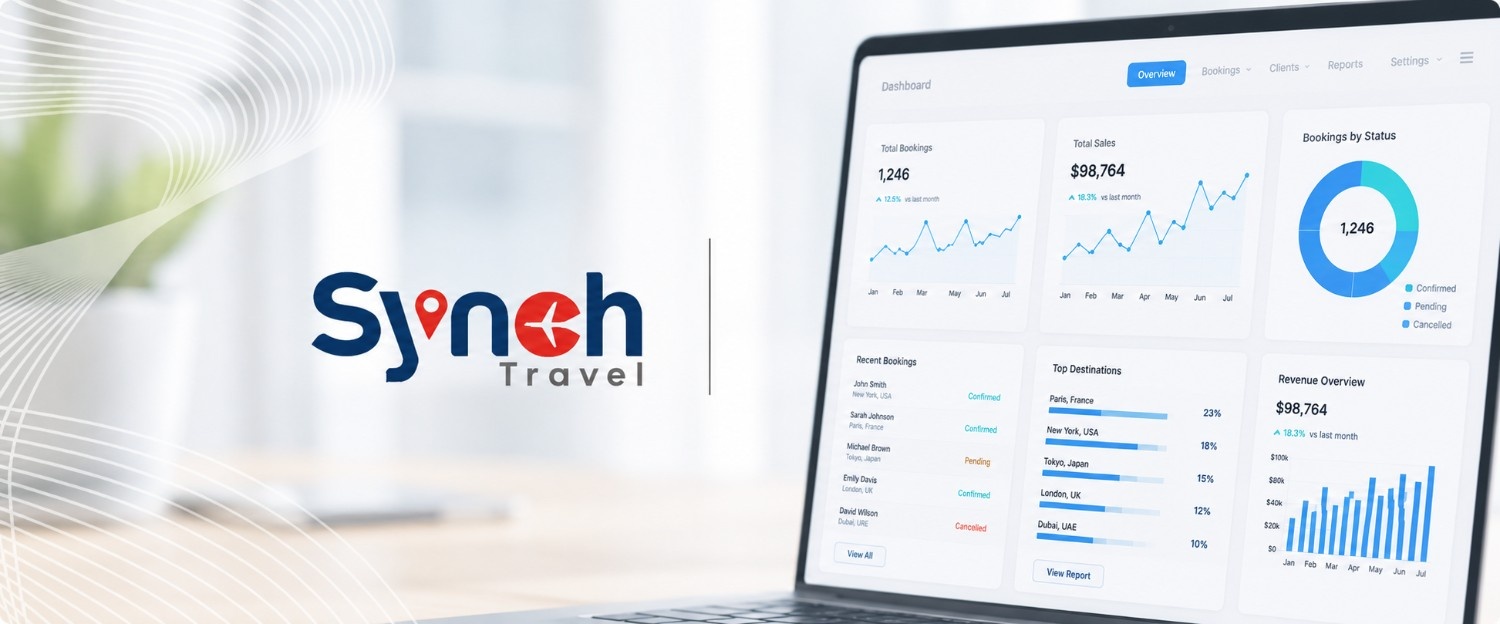
The travel industry has changed dramatically in the last few years. Travelers now expect instant responses, personalized itineraries, flexible booking options, and seamless communication across every stage of their journey. For travel agencies and tour operators, managing these expectations manually is becoming almost impossible. This is where Travel CRM Software becomes a game-changing solution.
From handling customer inquiries to automating bookings and follow-ups, modern CRM platforms help businesses stay competitive in a fast-moving digital marketplace. Agencies that still rely on spreadsheets, scattered emails, and disconnected systems often struggle with missed leads, delayed responses, and operational inefficiencies.
Today, successful travel companies in the United States are investing in intelligent technology that simplifies operations and improves customer satisfaction. Whether it is lead management, booking automation, itinerary management, or customer communication, a powerful CRM system helps agencies create a better experience for travelers while increasing revenue.
Synch Travel is redefining modern tourism technology with advanced automation tools and scalable travel solutions designed specifically for travel businesses. Through smart integrations, analytics, and workflow automation, Synch Travel empowers agencies and tour operators to build efficient digital ecosystems that support long-term growth.
What Is Travel CRM Software?
A travel CRM is a specialized customer relationship management platform designed specifically for travel agencies, tour operators, and tourism businesses. Unlike generic CRM systems, travel-focused solutions combine customer management with booking workflows, itinerary planning, payment tracking, and travel automation.
How Travel CRM Works
A travel CRM centralizes all customer information into one platform. Every inquiry, booking request, follow-up conversation, payment update, and itinerary detail can be managed through a unified dashboard.
Instead of switching between multiple systems, agents can:
- Track customer journeys
- Manage reservations
- Send automated emails
- Monitor booking status
- Analyze sales performance
- Coordinate with suppliers and vendors
This streamlined approach saves time and reduces human error.
Difference Between Generic CRM and Travel CRM
A standard CRM focuses mainly on sales and customer relationships. A travel-focused CRM includes industry-specific capabilities such as booking engines, itinerary builders, vendor coordination, and travel analytics.
For example, a regular CRM may store contact information, while a travel CRM can also manage hotel bookings, visa processing, flight integration, and customized tour schedules.
Who Needs a Travel CRM?
A CRM platform is valuable for:
- Travel agencies
- Tour operators
- Destination management companies
- Online travel businesses
- Corporate travel planners
- Religious tourism companies
- Visa consultants
- Holiday planners
Businesses looking for scalable automation often choose CRM for travel agencies to improve operational efficiency and customer engagement.
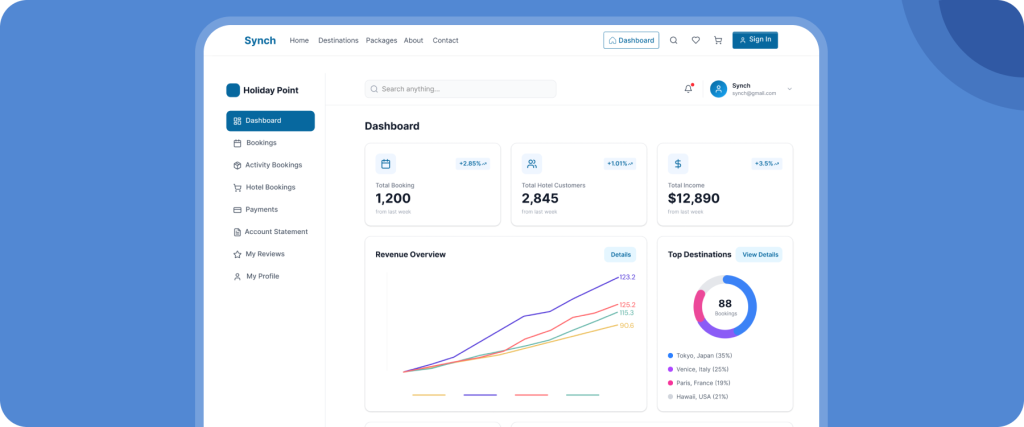
Key Features of Travel CRM Software
Modern travel businesses require much more than customer databases. Advanced CRM systems now function as complete business management platforms.
B2B Travel Portal
A B2B travel portal is designed to connect travel agencies, wholesalers, and sub-agents through a centralized booking system that provides real-time access to flight, hotel, and tour inventories. It helps streamline operations by enabling agents to compare prices, manage bookings, and confirm reservations instantly. With features like automated invoicing, supplier management, and API integration, B2B portals improve efficiency, reduce manual work, and enhance collaboration across the travel distribution network.
B2C Travel Solutions
B2C travel solutions are built for travel agents or tour operators to manage direct bookings for flights, hotels, holiday packages, and other travel services directly with end customers. These platforms provide a user-friendly interface where travelers can search, compare, and book services in real time with secure payment options. By using B2C systems, travel businesses can increase direct sales, offer personalized travel experiences, and strengthen their brand presence in the competitive online travel market.
Lead Management
One of the most valuable features is lead management. Agencies receive inquiries through websites, WhatsApp, social media, email campaigns, and referral channels. Without proper organization, valuable leads can easily be lost.
A modern CRM automatically captures inquiries, assigns leads to agents, and tracks every interaction. Businesses using travel lead management software can respond faster and improve conversion rates.
Booking Management
Booking workflows can quickly become complicated when handling flights, hotels, transfers, and activities. CRM systems simplify this process by centralizing reservation details.
Integrated booking systems reduce errors while improving coordination between agents, suppliers, and customers.
Itinerary Builder
Travelers expect personalized experiences. An integrated itinerary builder allows agencies to create professional travel plans with real-time updates.
Many businesses now search for crm with itinerary builder functionality to simplify travel planning and improve customer satisfaction.
WhatsApp Integration
Customers increasingly prefer instant messaging over emails. A CRM with WhatsApp integration enables agencies to:
- Send booking confirmations
- Share itinerary updates
- Deliver payment reminders
- Provide customer support
Businesses using whatsapp crm for travel business solutions often experience higher engagement and faster response times.
Email Automation
Email automation improves customer retention and follow-up consistency. Agencies can automatically send:
- Welcome emails
- Travel reminders
- Promotional offers
- Feedback requests
- Payment notifications
This makes email marketing for travel agencies far more effective and scalable.
Customer Database Management
A centralized customer database allows agencies to store traveler preferences, previous bookings, and communication history.
This helps businesses personalize future recommendations and strengthen long-term relationships.
Invoice and Payment Tracking
Financial tracking is essential for every travel business. CRM systems simplify invoicing, payment collection, and transaction monitoring.
Integrated payment workflows reduce manual accounting work and improve financial transparency.
Reporting and Analytics
Travel companies rely heavily on performance data. Advanced dashboards provide insights into:
- Sales performance
- Booking trends
- Lead conversion rates
- Revenue tracking
- Customer behavior
This data helps agencies make informed business decisions.
Multi-Agent Access
Large agencies often require collaboration between multiple teams. Multi-agent access allows staff members to work together efficiently without data duplication.
Mobile CRM Access
Mobile accessibility allows agents to manage bookings and customer communication from anywhere.
This flexibility is particularly important for businesses operating remotely or handling international travel clients.
Benefits of Using Travel CRM Software
The biggest advantage of CRM adoption is operational efficiency. Travel companies can automate repetitive tasks while improving customer experiences.
Faster Lead Response
Speed matters in the travel industry. Customers often contact multiple agencies before making a decision.
Automated lead assignment ensures inquiries are handled immediately, helping businesses capture more bookings.
Better Customer Retention
Travelers are more likely to return when they receive personalized communication and timely support.
Using customer communication software helps agencies maintain stronger relationships with existing clients.
Increased Bookings
Automation improves consistency in sales follow-ups. Agencies no longer lose leads because of delayed responses or forgotten inquiries.
Businesses implementing CRM automation for travel agencies often see noticeable increases in booking conversions.
Improved Productivity
Manual processes slow down operations. Automation allows teams to focus on customer service instead of administrative tasks.
Tasks like invoice creation, itinerary sharing, and follow-up emails can all be automated.
Better Team Collaboration
A centralized system improves communication between departments.
Sales teams, support staff, and operations managers can access the same customer information in real time.
Enhanced Customer Experience
Travelers appreciate smooth communication, quick updates, and organized booking processes.
A professional CRM system creates a more reliable and trustworthy customer journey.
Best Travel CRM Software Solutions for Modern Agencies
The market offers many CRM solutions, but travel businesses require platforms designed specifically for tourism operations.
Cloud-Based CRM Platforms
Cloud technology has transformed how agencies manage operations.
Many companies now prefer cloud travel crm software because it provides:
- Remote access
- Better scalability
- Lower infrastructure costs
- Real-time synchronization
- Improved data security
Cloud platforms also support mobile workforces and distributed teams.
All-in-One Travel Management Platforms
Businesses increasingly seek systems that combine CRM, booking engines, itinerary management, and analytics in one solution.
This reduces the need for multiple disconnected tools.
AI-Powered CRM Solutions
Artificial intelligence is becoming an important part of travel technology.
Modern agencies now use ai powered travel crm tools to automate customer interactions, analyze traveler behavior, and improve personalization.
How Travel Agencies Use CRM Software
Travel agencies use CRM systems differently depending on their business model and customer base.
Lead Tracking and Sales Pipelines
A CRM helps agencies organize leads into structured pipelines.
Agents can track inquiries from first contact to final booking confirmation.
This improves visibility into the entire travel sales pipeline.
Package Management
Many agencies offer customized vacation packages.
CRM systems simplify package management by combining:
- Flights
- Hotels
- Tours
- Transfers
- Activities
into a single workflow.
Visa Process Handling
International travel often requires documentation support.
Agencies can track visa application stages, customer documents, and approval deadlines through CRM workflows.
Follow-Up Automation
Consistent communication improves customer trust.
Automated reminders ensure travelers receive updates about:
- Payments
- Travel documents
- Schedule changes
- Upcoming departures
Customer Support
Integrated communication systems allow support teams to respond faster and maintain better service quality.
Businesses using client management software for travel agents often improve customer satisfaction significantly.
Travel CRM Software for Tour Operators
Tour operators face unique operational challenges.
They manage group bookings, transportation logistics, supplier coordination, and itinerary scheduling simultaneously.
Group Booking Management
Group tours involve multiple travelers with different preferences and payment schedules.
A dedicated group tour crm helps operators organize participant information and automate communication.
Tour Scheduling
Tour operators must coordinate departure dates, accommodations, guides, and transportation.
CRM platforms simplify these workflows through centralized scheduling tools.
Vendor Coordination
Tour businesses work with hotels, transport providers, restaurants, and local guides.
A CRM improves coordination with suppliers and helps prevent operational delays.
Payment Tracking
Payment management becomes easier when invoices, deposits, and balances are tracked within one platform.
This is especially valuable for businesses offering installment payment options.
Specialized Travel Segments
Some agencies serve niche markets such as religious tourism.
Businesses searching for crm for umrah travel agency solutions often require features for group management, visa tracking, and itinerary coordination.
Travel CRM Software vs Generic CRM Platforms
Many businesses compare travel-specific CRM systems with general platforms like Salesforce, HubSpot, or Zoho.
Industry-Specific Features
Generic CRMs are flexible but usually require extensive customization.
Travel-focused solutions already include:
- Booking integration
- Itinerary tools
- Reservation management
- Supplier workflows
- Travel analytics
Ease of Use
Travel businesses often prefer platforms designed specifically for tourism operations because they reduce onboarding complexity.
Automation Capabilities
Travel CRMs support specialized workflows such as automated itineraries, booking reminders, and traveler communication.
Cost Considerations
Generic CRMs may initially appear affordable but often require additional integrations and custom development.
A dedicated travel CRM usually delivers better long-term value for agencies.
AI in Travel CRM Software
Artificial intelligence is reshaping the travel industry.
AI-powered systems improve customer service, automate operations, and provide predictive insights.
AI Chatbots
Chatbots can answer common customer questions instantly.
This improves response speed and reduces support workload.
Predictive Analytics
Advanced CRM systems analyze booking behavior and customer preferences.
Businesses using predictive analytics travel crm tools can identify trends and optimize marketing strategies.
Smart Lead Scoring
AI can automatically rank leads based on conversion potential.
This helps sales teams prioritize high-value prospects.
Automated Customer Responses
AI-driven automation improves communication efficiency by sending personalized recommendations and reminders.
Agencies investing in AI travel CRM technology are preparing for the future of digital tourism.
How to Choose the Best Travel CRM Software
Choosing the right CRM depends on business goals, operational needs, and scalability requirements.
Consider Agency Size
Small agencies may prioritize affordability and ease of use.
Larger enterprises often require advanced customization and multi-agent support.
Businesses searching for the Best Travel CRM Software for Travel Agencies should focus on platforms with flexible pricing and essential automation features.
Evaluate Integration Options
A CRM should integrate smoothly with:
- Booking engines
- Payment gateways
- Email systems
- WhatsApp communication
- Accounting software
Strong API integration capabilities are essential for long-term scalability.
Assess Automation Features
Automation is one of the biggest reasons agencies invest in CRM technology.
Look for features such as:
- Workflow automation
- Automated emails
- Lead assignment
- Booking confirmations
- Reminder systems
Check Scalability
A growing business needs software that can expand alongside operations.
Cloud-based platforms are often the best option for long-term growth.
Review Customer Support
Reliable support is critical when managing time-sensitive travel operations.
Businesses should evaluate onboarding assistance, technical support availability, and training resources.
Pricing of Travel CRM Software
CRM pricing varies depending on features, scalability, and deployment models.
Subscription-Based Pricing
Most platforms operate on monthly or annual SaaS subscriptions.
This allows businesses to scale without large upfront investments.
Feature-Based Pricing
Pricing often increases based on:
- Number of users
- Automation features
- API access
- Reporting tools
- Storage capacity
Hidden Costs to Consider
Businesses should also evaluate:
- Integration costs
- Training expenses
- Customization fees
- Support packages
Choosing an affordable crm for travel agents requires balancing functionality with long-term operational value.
Common Mistakes to Avoid When Choosing a CRM
Many agencies invest in software without evaluating long-term business needs.
Ignoring Automation Features
Manual processes reduce efficiency.
Businesses should prioritize automation capabilities from the beginning.
Choosing Generic Software
A generic CRM may not support travel-specific workflows.
Dedicated travel agency management software often delivers better operational results.
Overlooking Integration Needs
Disconnected systems create workflow inefficiencies.
Agencies should ensure the CRM supports booking engines, accounting systems, and communication tools.
Poor Staff Training
Even the best software can fail if employees do not understand how to use it effectively.
Proper onboarding and training are essential.
Why Choose Synch for This Service
Synch Travel provides a modern technology ecosystem built specifically for travel businesses.
Unlike traditional software providers, Synch Travel focuses on the real operational challenges faced by agencies and tour operators in today’s digital tourism landscape.
Built for the Travel Industry
Synch Travel understands the complexity of managing reservations, itineraries, customer communication, and supplier coordination.
Its platform combines multiple business functions into one connected environment.
Seamless Automation
Automation is at the core of the Synch Travel platform.
Businesses can simplify workflows related to:
- Booking management
- Lead nurturing
- Customer communication
- Payment tracking
- Reporting and analytics
Scalable Cloud Technology
The platform is designed for businesses of all sizes.
Whether a company is a startup agency or an enterprise tour operator, Synch Travel provides scalable cloud infrastructure that supports growth.
Real-Time Insights
Travel businesses need accurate data to make informed decisions.
Synch Travel offers advanced reporting dashboards and travel analytics that help agencies monitor performance and optimize operations.
Professional Digital Presence
The platform enables agencies to build professional online travel portals with integrated booking systems and automation tools.
This improves both operational efficiency and customer experience.
The Future of Travel CRM Technology
The travel industry is becoming increasingly digital.
Customers expect instant communication, personalized recommendations, and seamless booking experiences.
Future CRM systems will continue evolving with:
- AI automation
- Predictive analytics
- Voice search optimization
- Advanced mobile capabilities
- Hyper-personalization
Businesses investing in modern CRM solutions today will be better prepared for future market demands.
As mobile and voice search continue growing in the United States, local search intent and semantic search optimization will become even more important.
Travel companies that embrace automation, data analytics, and customer-centric technology will gain a strong competitive advantage.
FAQs About Travel CRM Software
What is the best CRM for travel agencies?
The best CRM depends on the size and needs of the business. Agencies should look for solutions that offer booking automation, itinerary management, customer communication, analytics, and scalable cloud infrastructure.
Can CRM software manage travel bookings?
Yes. Modern travel CRM systems can handle reservations, itinerary planning, invoices, payment tracking, and booking workflows through integrated management tools.
Is travel CRM suitable for small agencies?
Absolutely. Many cloud-based CRM platforms are designed specifically for small and medium-sized travel businesses, offering flexible pricing and automation features.
Does travel CRM support WhatsApp integration?
Many modern systems support WhatsApp integration for customer communication, booking confirmations, reminders, and follow-ups.
Final Thoughts
The modern tourism industry requires speed, personalization, and operational efficiency. Agencies that continue relying on outdated manual processes risk losing customers to more technologically advanced competitors.
Implementing Travel CRM Software helps travel businesses streamline operations, improve customer experiences, automate workflows, and increase profitability. From lead management and booking automation to analytics and AI-driven insights, CRM technology has become an essential investment for travel agencies and tour operators.
Synch Travel is helping shape the future of digital tourism with scalable software solutions designed specifically for modern travel businesses. By combining automation, cloud infrastructure, real-time analytics, and seamless integrations, Synch Travel empowers agencies to grow efficiently while delivering exceptional customer experiences.
For businesses looking to modernize operations and stay competitive in the evolving tourism landscape, investing in a powerful travel CRM platform is no longer optional—it is a strategic necessity.