

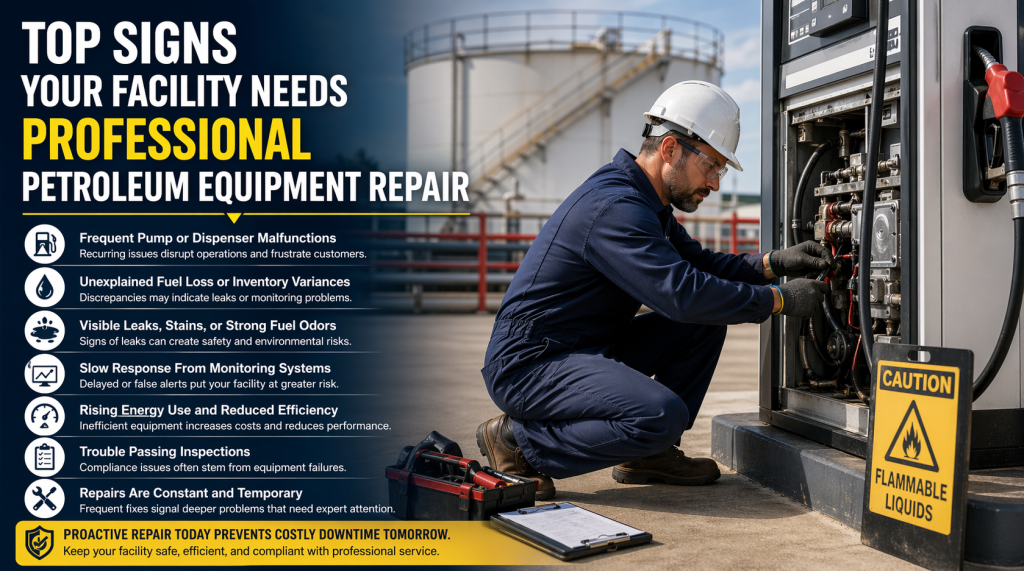
Why Early Warning Signs Matter
In any fuel handling operation, equipment performance affects safety, efficiency, compliance, and customer trust. When dispensers, pumps, tanks, piping, and monitoring systems begin to show signs of wear, the damage rarely stays small for long. Minor issues can quickly turn into environmental concerns, costly downtime, failed inspections, and frustrated staff. That is why facility owners and managers should know when it is time to stop patching problems and bring in a qualified specialist.
If your site handles petroleum products every day, regular maintenance is important, but maintenance alone is not always enough. Some problems point to deeper mechanical, electrical, or system-wide failures that need professional petroleum equipment repair. Recognizing these signals early can protect your investment and keep your operation running with fewer interruptions.
Frequent Fuel Pump or Dispenser Malfunctions
One of the most obvious warning signs is repeated trouble with fuel pumps or dispensers. A single minor glitch may not seem serious, but recurring shutoffs, inaccurate dispensing, slow fueling, frozen screens, or no-flow conditions usually suggest underlying issues that need more than a quick reset.
When dispensers fail regularly, staff often spend valuable time troubleshooting instead of serving customers and managing operations. This can also create long wait times and damage your reputation. If the same equipment keeps breaking down, it is usually more cost effective to schedule professional service before the issue affects multiple parts of your system.
Watch for problems such as:
- delayed fuel flow or inconsistent pressure
- error codes that keep returning
- transaction failures at the dispenser
- hoses, nozzles, or breakaways showing visible wear
- unusual noises during operation
These symptoms often indicate mechanical fatigue, electrical faults, calibration issues, or worn internal components.
Unexplained Fuel Loss or Inventory Variances
Inventory discrepancies are never something to ignore. If your fuel records do not match actual sales and storage levels, there may be a leak, a meter calibration issue, or a monitoring problem somewhere in the system. Even small unexplained losses can become serious if they continue undetected.
Accurate inventory tracking is essential in petroleum facilities because product loss affects both profitability and regulatory risk. A steady variance between recorded and actual volume often signals that something is wrong below the surface. In some cases, the cause may be a failing tank gauge, damaged piping, or a dispenser that is not measuring properly.
Professional technicians can inspect the full system, test components, and identify whether the issue is mechanical, electronic, or environmental. Fast action matters because delays can increase cleanup costs and lead to compliance trouble.
Visible Leaks, Stains, or Strong Fuel Odors
If you notice fuel stains near dispensers, wet spots around piping, or lingering petroleum odors on site, those are clear signals that your facility needs attention right away. Leaks are not just maintenance issues. They can create fire hazards, environmental liability, and workplace safety concerns.
Sometimes the signs are subtle at first. You may notice a light sheen near the fueling area, a damp patch near a sump, or a smell that appears only during busy hours. These clues often point to deteriorating seals, cracked connections, damaged hoses, or hidden line issues.
Ignoring these symptoms can turn a manageable repair into a major emergency. Experienced repair professionals know how to trace the source of a leak, test vulnerable components, and restore the system without guesswork. If your team has noticed recurring odors or residue, it is time to treat the issue as urgent.
Slow Response From Monitoring and Safety Systems
Modern petroleum facilities rely on monitoring equipment to detect problems early. Automatic tank gauges, leak detection systems, sensors, alarms, and emergency shutoff devices all play a critical role in keeping operations safe and compliant. If these systems stop responding quickly or begin generating inconsistent alerts, your site becomes more vulnerable.
A faulty monitoring system creates a dangerous false sense of security. You may believe everything is operating normally when important warnings are being missed or delayed. That can lead to unnoticed leaks, reporting gaps, and serious inspection issues.
Warning signs often include:
- alarms that trigger without a clear cause
- sensors failing to communicate with the main console
- delayed reporting or missing data
- displays showing inaccurate tank levels
- emergency controls that feel unreliable or untested
When these systems become erratic, professional petroleum equipment repair helps restore confidence in the parts of your operation that are designed to protect people and property.
Rising Energy Use and Reduced Efficiency
Higher utility costs and reduced fueling efficiency can also point to equipment trouble. Pumps that work harder than they should, motors that are beginning to fail, and clogged or aging components often use more energy while delivering poorer performance. This kind of decline can be easy to miss because it happens gradually.
Over time, inefficient equipment affects your bottom line in several ways. It can slow customer service, increase wear on connected systems, and raise operating expenses month after month. If your team has noticed that equipment is taking longer to perform routine tasks or consuming more power than usual, the issue may be larger than normal aging.
A professional inspection can reveal whether the problem involves motor strain, pressure imbalance, damaged seals, worn bearings, or electrical inefficiencies. Addressing these problems early helps extend equipment life and improve day to day reliability.
Trouble Passing Inspections or Meeting Compliance Standards
Facilities that store and dispense fuel operate under strict rules. If your location has recently failed an inspection, received a warning, or struggled to provide accurate maintenance records, that is a strong sign your equipment needs immediate attention.
Compliance issues rarely appear without warning. They are often connected to neglected repairs, outdated components, poor calibration, or malfunctioning monitoring equipment. Even if the problem seems administrative on the surface, the root cause may be physical equipment failure.
Bringing in a qualified repair team helps you do more than fix one visible issue. It allows you to assess the broader condition of your site, identify hidden risks, and address them before regulators return. This is especially important for older facilities where aging infrastructure may no longer meet current expectations.
Repairs Are Becoming Constant and Temporary
Every facility experiences occasional wear, but constant short term fixes are a warning sign. If your staff or contractors are repeatedly replacing the same small parts, restarting systems, or applying temporary workarounds, the equipment likely needs a deeper diagnostic review.
Temporary fixes can feel convenient in the moment, but they often cost more over time. Repeated service calls, lost productivity, inconsistent fueling, and emergency breakdowns add up quickly. At a certain point, repeated patch jobs stop being practical and start masking a bigger reliability problem.
This is where expert petroleum equipment repair matters. A trained technician can look beyond the symptom, identify the root cause, and recommend solutions that last. That may involve targeted component replacement, recalibration, wiring correction, or a broader system repair plan that prevents repeated failures.
What Smart Facility Managers Do Next
The most successful facility managers do not wait for a complete shutdown before acting. They pay attention to small changes, document recurring issues, and schedule professional evaluations before problems escalate. That proactive approach protects equipment, supports safer operations, and lowers long term costs.
If your site is showing any of these warning signs, now is the right time to act. Delaying service often turns repairable problems into expensive disruptions. Bringing in specialists for petroleum equipment repair can help you restore performance, maintain compliance, and reduce operational risk before the damage spreads.
A reliable facility is not built on quick fixes. It is built on early action, informed decisions, and expert care. When your equipment starts telling you something is wrong, listening early is the smartest move you can make.