
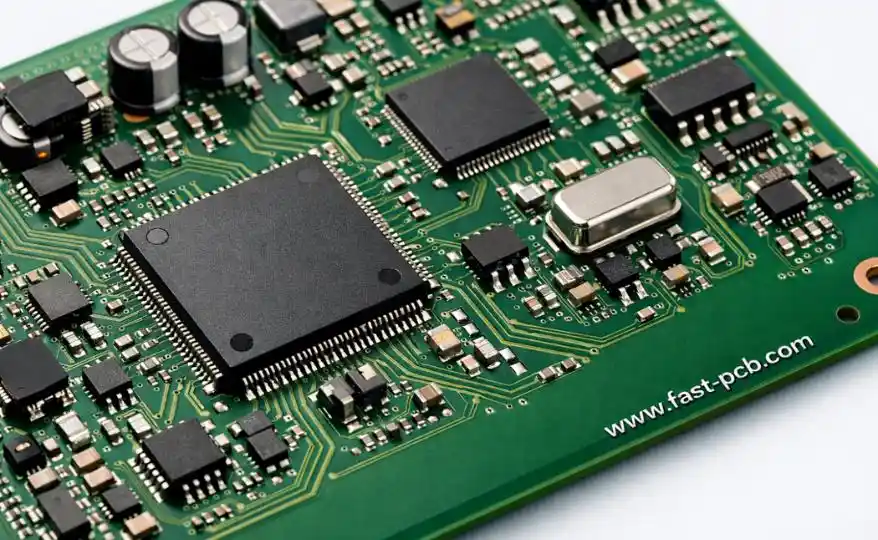
In the fast-paced world of electronics, speed to market is paramount. Engineers and product developers rely on rapid iteration to validate designs, and this is where the Quick-Turn PCB Prototype process becomes indispensable. A quick-turn prototype is not just a fast version of a standard board; it is a streamlined, optimized process designed to deliver functional test boards in a matter of days, significantly accelerating the product development lifecycle.
The Foundation: Expert PCB Design for Speed
The journey to a successful quick-turn board begins long before fabrication: it starts with meticulous PCB Design. To achieve the fastest turnaround times, the design must adhere strictly to Design for Manufacturing (DFM) principles. This involves optimizing trace widths, spacing, drill sizes, and component placement to match the manufacturer’s capabilities. A design that is easy to manufacture is a design that can be produced quickly.
Key considerations for a rapid design include:
- Layer Stack-up: Choosing a standard, readily available stack-up to avoid custom material lead times.
- Component Footprints: Ensuring all footprints are accurate and align with the manufacturer’s assembly equipment.
- Drill Optimization: Minimizing the number of different drill sizes and maintaining adequate annular rings to prevent manufacturing issues.
By integrating DFM checks early, designers can eliminate costly delays and ensure a smooth transition to production.
The Process: Rapid Manufacturing in Action
Rapid Manufacturing is the engine that drives the quick-turn process. It involves prioritizing the prototype order through every stage of the fabrication and assembly line. This expedited process typically includes:
- Priority Engineering Review: Immediate review of the design files (Gerbers, BOM) to catch any potential DFM issues within hours.
- Expedited Fabrication: Utilizing dedicated production slots and pre-stocked materials to minimize queue time.
- Fast Component Sourcing: Leveraging established supply chains to quickly acquire necessary components, often in parallel with fabrication.
- Accelerated Assembly and Testing: Using high-speed pick-and-place machines and rigorous, yet fast, quality control checks to ensure functionality.
This highly coordinated effort ensures that a complex design can be transformed into a physical, testable prototype in the shortest possible time.
The Solution: Leveraging Professional PCB Prototyping Services
For companies seeking to maximize efficiency, partnering with specialized PCB prototyping services is the most effective strategy. These services offer more than just speed; they provide the expertise and infrastructure required to handle the complexities of modern electronics.
A professional quick-turn service offers:
- Engineering Support: Direct access to engineers who can provide DFM feedback and resolve technical issues instantly.
- Advanced Technology: Access to state-of-the-art equipment for high-density interconnect (HDI) and complex multilayer boards.
- Quality Assurance: Comprehensive testing protocols (e.g., flying probe testing) to guarantee the prototype’s integrity before it reaches the designer’s bench.
By choosing a reliable partner, you transform the bottleneck of physical production into a competitive advantage, allowing your team to focus on innovation and design refinement. The right Quick-Turn PCB Prototype service is the critical link between a brilliant design and a successful product launch.
at end ,you can get PCB quote online from https://www.fast-pcb.com/onlineorder.html
