
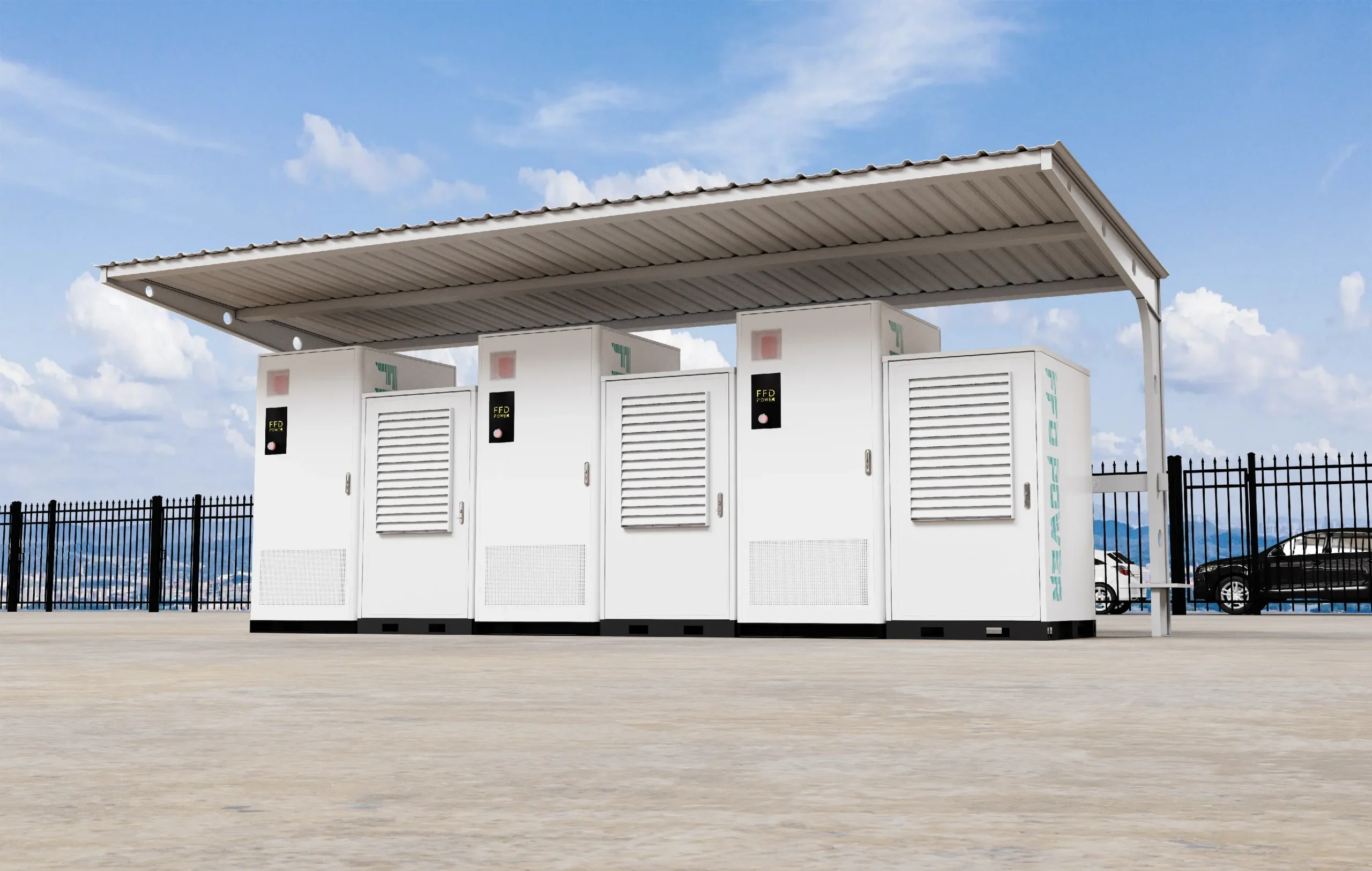
The global transition toward renewable energy has shifted from a visionary goal to an immediate industrial necessity. As solar and wind power become primary energy sources, the challenge of intermittency looms large. Enter the Battery Energy Storage System (BESS)—the critical link in the modern energy chain.
For commercial and industrial (C&I) sectors, selecting the right storage capacity is paramount. In this guide, we dive deep into the technical specifications, applications, and advantages of the 418kWh BESS Cabinet and the 261kWh/125kW BESS Cabinet, highlighting why FFDPower is leading the charge in energy resilience.
What is a BESS (Battery Energy Storage System)?
A Battery Energy Storage System (BESS) is an electrochemical device that captures energy from the grid or renewable sources (like solar) and stores it for later use. Unlike traditional generators, a BESS provides instantaneous response times, zero local emissions, and significant cost savings through “peak shaving.”
+1
The Anatomy of a BESS Cabinet
A BESS isn’t just a giant battery; it is a sophisticated ecosystem housed within a protective enclosure. Key components include:
- Battery Modules: Typically Lithium Iron Phosphate (LiFePO4) for safety and longevity.
- Battery Management System (BMS): The “brain” that monitors voltage, temperature, and State of Charge (SoC).
- Power Conversion System (PCS): The inverter that converts DC (from batteries) to AC (for the facility).
- Thermal Management: HVAC or liquid cooling systems to ensure stability.
- Fire Suppression: Integrated safety protocols to prevent thermal runaway.
Deep Dive: The 418kWh BESS Cabinet
The 418kWh BESS Cabinet is designed for high-energy applications where duration and capacity are prioritized.
Technical Specifications
- Nominal Capacity: 418kWh
- Battery Chemistry: LiFePO4 (LFP)
- Application: Long-duration storage, backup power for large facilities, and heavy-duty peak shaving.
Why Choose the 418kWh Model?
The 418kWh unit is ideal for businesses with high energy consumption but relatively stable power loads. By storing a massive amount of energy during off-peak hours (when electricity is cheap), a facility can run almost entirely on stored power during expensive peak periods. This is particularly effective for data centers, large-scale manufacturing, and microgrids.
Technical Analysis: The 261kWh/125kW BESS Cabinet
The 261kWh/125kW BESS Cabinet represents a high-power-density solution. It is often referred to as a “high-rate” system because of its 125kW power rating relative to its 261kWh capacity.
Key Performance Metrics
- Energy Capacity: 261kWh
- Power Output: 125kW
- C-Rating: Approximately 0.5C (Discharge/Charge rate)
- Application: Rapid response, frequency regulation, and EV charging station support.
The Advantage of the 125kW Inverter
The 125kW rating means this cabinet can discharge half of its total energy in just over two hours. This makes it perfect for “Demand Charge Management,” where businesses are penalized for sudden spikes in electricity usage. The 125kW output can instantly kick in to “flatten” that spike, saving thousands in utility fees.
Comparative Table: Which Cabinet Fits Your Needs?
| Feature | 418kWh Cabinet | 261kWh/125kW Cabinet |
| Primary Goal | Maximum Energy Duration | High Power Output/Rapid Response |
| Best For | Large Manufacturing/Microgrids | EV Charging/C&I Demand Management |
| Cooling Method | Liquid Cooling (Typically) | Air/Liquid Cooling Options |
| Footprint | High Energy Density | Optimized Power-to-Energy Ratio |
| Scalability | Modular Parallel Support | Modular Parallel Support |
Economic Benefits of BESS Integration
1. Peak Shaving (Demand Charge Reduction)
Utilities charge C&I customers based on their highest 15-minute window of usage. A BESS cabinet from FFDPower detects these spikes and discharges power to keep the grid draw low.
2. Time-of-Use (ToU) Optimization
By charging the BESS at 2:00 AM (lowest rates) and discharging at 2:00 PM (highest rates), the “price spread” goes directly back into your company’s bottom line.
3. Backup Power and UPS Functionality
In the event of a grid failure, the 125kW PCS in our cabinets can transition to “Island Mode” in milliseconds, ensuring critical machinery or servers never lose power.
4. Maximizing Solar ROI
Solar panels often produce more power than a facility can use at noon. Without a BESS, that energy is wasted or sold back to the grid for pennies. With an FFDPower BESS, that 418kWh of energy is saved for the night shift.
E-E-A-T and Safety: The FFDPower Standard
When dealing with high-voltage energy storage, Experience, Expertise, Authoritativeness, and Trustworthiness (E-E-A-T) are non-negotiable.
At FFDPower, our cabinets utilize Grade A LiFePO4 cells, which are inherently more stable than NCM (Nickel Cobalt Manganese) chemistries. Each cabinet features a three-level BMS architecture:
- BMU (Battery Module Unit): Monitors individual cells.
- CBMS (Cluster BMS): Manages the entire battery string.
- GBMS (Gateway BMS): Interface for remote monitoring and cloud-based analytics.
Installation and Maintenance of BESS Cabinets
Choosing an FFDPower BESS means selecting an “All-in-One” solution. Our cabinets are pre-configured and factory-tested, reducing on-site installation time by up to 40%.
- Outdoor Rating: NEMA 3R or IP55 enclosures ensure protection against dust and rain.
- Remote Monitoring: Real-time data access via mobile app or web portal.
- Predictive Maintenance: Our AI-driven software identifies potential cell imbalances before they lead to downtime.
15 Frequently Asked Questions (FAQ)
1. What is the lifespan of a 418kWh BESS Cabinet?
Our LiFePO4 systems are typically rated for 6,000 to 8,000 cycles at 80% Depth of Discharge (DoD), which equates to roughly 15-20 years of daily use.
2. Is the 261kWh/125kW BESS Cabinet safe for indoor use?
While designed primarily for outdoor installation to save floor space, they can be installed in dedicated, ventilated electrical rooms compliant with local fire codes.
3. Can I connect multiple BESS cabinets in parallel?
Yes. FFDPower systems are modular. You can parallel multiple 418kWh or 261kWh units to reach Megawatt-hour (MWh) capacities.
4. How does the BESS switch during a power outage?
With an integrated STS (Static Transfer Switch), the system can switch to backup mode in under 20ms, providing Uninterruptible Power Supply (UPS) quality performance.
5. What is the difference between “Energy” (kWh) and “Power” (kW)?
Think of it like a water tank: kWh is the size of the tank (how much water it holds), and kW is the size of the tap (how fast the water comes out).
6. Does the system require a specific temperature?
Ideally, batteries operate best between 15°C and 30°C. Our cabinets include internal thermal management to maintain this range regardless of external weather.
7. Can I use BESS for EV charging?
Absolutely. The 261kWh/125kW cabinet is specifically popular for EV stations to prevent the grid from overloading when multiple cars plug in simultaneously.
8. Is there a tax credit for BESS installation?
In many regions, including the US (via the Inflation Reduction Act), BESS installations qualify for significant Investment Tax Credits (ITC).
9. What happens if one battery cell fails?
The BMS will isolate that specific module or string, allowing the rest of the cabinet to function while alerting you for a simple modular replacement.
10. How do I monitor my FFDPower BESS?
We provide a comprehensive cloud-based dashboard that shows real-time energy flow, savings, and system health.
11. Is LiFePO4 better than Lithium-Ion for BESS?
LiFePO4 (LFP) is a type of Lithium-Ion. It is preferred for BESS because it has a longer life and a much higher thermal runaway temperature compared to NCM batteries.
12. How much space does a 418kWh cabinet take?
The footprint is remarkably compact, typically the size of two large refrigerators, making it easy to place in parking lots or beside warehouses.
13. Does the system come with a warranty?
FFDPower offers a standard 10-year performance warranty on the battery modules.
14. Can it work with wind turbines?
Yes, our PCS is compatible with various renewable inputs including solar, wind, and hydro.
15. How long does the installation take?
Once the pad is poured and electrical conduit is run, the cabinet can typically be commissioned in 2–3 days.
Conclusion: Powering Your Future with FFDPower
The transition to intelligent energy management is no longer optional for businesses looking to remain competitive and sustainable. Whether you require the high-energy density of our 418kWh BESS Cabinet for long-duration resilience or the rapid-response capabilities of the 261kWh/125kW BESS Cabinet for demand management, FFDPower provides the engineering excellence you need.
By integrating an Energy Storage System into your infrastructure, you aren’t just buying a battery; you are buying energy independence. Trust ffdpower.com to provide the reliable, safe, and efficient storage solutions that will power the next generation of industry.