
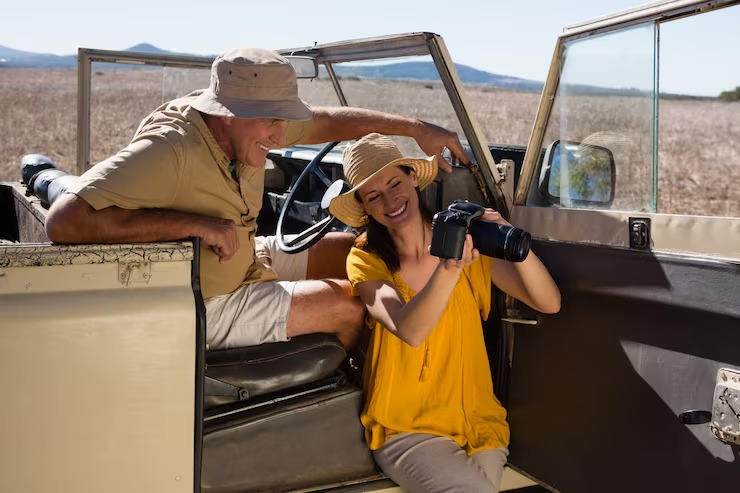
A frank guide for self-drive and FIT travelers navigating Kenya, Tanzania, Uganda, and Rwanda on their own terms
There is a certain romance to the idea of an East African independent safari without a guide. No fixed itinerary, no group van dictating when you leave camp, and no tour leader narrating every sunrise over the Mara. Just you, a 4×4, and a continent’s worth of wildlife. But in 2026, the realities of planning a self-drive safari in East Africa for first-time independent travelers are considerably more complex than the fantasy—and the gap between the two is precisely where most trips run into trouble.
This article is not here to discourage you. Independent safaris are among the most rewarding travel experiences on earth. It is here to make sure you walk in clear-eyed, with the logistical, financial, and safety challenges mapped out before you book a single flight.
1. The Rising Cost of Independent Safari Travel in East Africa 2026
Perhaps the most jarring discovery for independent planners is the true cost. The persistent myth that going solo is cheaper than booking with an operator has been thoroughly debunked by 2026 pricing structures across the region.
Tanzania, for instance, now applies daily conservation fees for self-drive visitors in the Serengeti that match or exceed those charged to agency-booked guests—currently running at $82 per person per day for non-resident adults, on top of vehicle entry fees. Kenya’s parks under the Kenya Wildlife Service have similarly restructured their pricing, with the cost of a private vehicle permit for Amboseli or Maasai Mara conservancies adding hundreds of dollars to a week-long itinerary before accommodation is factored in.
Budget-conscious travelers searching for affordable self-drive safaris in Rwanda and the rest of East Africa will also encounter a structural pricing paradox: the best mid-range and luxury tented camps have moved almost entirely to operator-rate contracting. Many will not accept direct bookings from FIT (fully independent traveler) guests, or charge significantly higher rack rates when they do. Effectively, you often pay more to go without an agency.
2. Self-Drive Safari Navigation Challenges Across Kenya and Tanzania
Driving yourself through a national park sounds straightforward until you are on an unmarked dirt track in the Ngorongoro Conservation Area at dusk, your offline map has three different routes shown, and the GPS signal is dropping in and out. This is a typical Tuesday for independent drivers in the region.
The road conditions for self-drive safaris in northern Tanzania and southern Kenya remain highly variable, particularly in the April–May and November–December rainy seasons. Unpaved access routes to parks like Tarangire, Lake Manyara, and the Tsavo ecosystem can become genuinely impassable for vehicles without high ground clearance and 4×4 capability. Hiring a standard sedan through a budget car rental company — a common mistake among first-timers — routinely leads to breakdowns, strandings, and costly recovery operations.
Navigation inside parks presents its own layer of difficulty. Most East African parks do not have well-signed internal roads. The best offline map apps for self-drive safari navigation in Kenya and Tanzania — including Maps.me, Tracks4Africa, and OSMAnd with downloaded regional data — are passable tools but require significant pre-trip preparation and local cross-referencing. Animals, by definition, do not stay near waypoints.
There is also the matter of rules. Each park operates under its own regulations governing where you may drive, whether off-road movement is permitted (it is banned almost everywhere and strictly enforced via ranger checkpoints in 2026), and what happens after the gates close. Getting caught inside a park after closing hours carries fines and potential vehicle impoundment.
3. Wildlife Tracking Without an Expert Guide: The Missed-Experience Problem
Independent travelers often underestimate what they cannot see because they do not know what to look for. A seasoned Kenyan guide notices the flick of a leopard’s tail through dense bush; an independent driver notices nothing and drives on. This is the most honest challenge of the self-drive safari experience for wildlife enthusiasts without local expertise: the park is full, but your experience is comparatively thin.
This is not a criticism of independent travelers’ intelligence—it is simply a reflection of accumulated local knowledge that takes years to build. Understanding animal behaviour, reading terrain, knowing which waterholes are productive in which months, recognising the alarm calls of birds that signal a predator nearby — these skills transform a good game drive into an extraordinary one.
For those committed to the independent model, one practical workaround gaining traction in 2026 is the hire of a local freelance wildlife guide for self-drive safaris in Kenya or Tanzania. These guides join you in your own vehicle for a daily rate, providing the expertise without the full-package commitment. It is an increasingly popular middle path, though quality varies considerably and vetting requires care.
4. Permit Systems, Park Booking Logistics, and the Gorilla Trekking Permit Problem
Uganda and Rwanda have built two of the most coveted wildlife experiences on earth—mountain gorilla trekking—and surrounded them with permit systems that punish poor planning. The gorilla trekking permit booking process for independent travelers in Uganda and Rwanda in 2026 requires months of advance planning, direct engagement with Uganda Wildlife Authority or Rwanda Development Board booking platforms, and an understanding that permits are non-refundable and date-specific.
Permits for Bwindi Impenetrable Forest in Uganda were running at $800 per person and those for Rwanda’s Volcanoes National Park at $1,500 per person as of early 2026 — both subject to revision. The permit alone is often the largest single line item in a budget. Independent travellers who arrive without one, or who book through unofficial third-party sites, frequently find themselves stranded.
Beyond gorillas, the broader challenge of navigating East Africa’s national park online booking systems without a tour operator is real. Tanzania’s TANAPA system, Kenya’s eTims platform, and Uganda’s UWA portal each function differently, crash periodically during peak booking windows, and require different payment methods. Operators have dedicated staff managing these portals daily; independent travellers are starting from scratch.
5. Health, Safety, and Emergency Evacuation Logistics for Independent Safaris
The romantic notion of remote wilderness travel meets its hardest test when something goes wrong. Medical facilities in the areas surrounding most East African game parks range from basic to non-existent. The nearest facility capable of handling serious trauma is typically several hours away, often on roads that become rivers in the rains.
The importance of AMREF Flying Doctors emergency evacuation insurance for independent safaris in East Africa cannot be overstated in 2026. This Nairobi-based service provides air evacuation coverage across the region for an annual membership fee that is genuinely modest against the alternative cost of a private medical flight. Most experienced independent travellers consider it non-negotiable.
Malaria prophylaxis, yellow fever vaccination requirements (mandatory for entry to Uganda and effectively required elsewhere), and the rising prevalence of traveler health preparation for East Africa safari trips as a planning category all add complexity. Independent travelers must self-manage what operators include as standard pre-departure briefing.
Vehicle breakdowns in remote areas carry their own risk profile. Having a roadside emergency plan for self-drive safaris in Kenya or Tanzania—including a charged satellite communicator, a reliable contact in Nairobi or Arusha who can dispatch help, and basic mechanical knowledge—separates manageable situations from dangerous ones.
6. Seasonal Timing, Accommodation Scarcity, and Booking Windows
The Great Migration’s peak crossing months in the Maasai Mara (roughly July to October) and the calving season in the southern Serengeti (January to March) represent the most sought-after windows for wildlife viewing in Africa. They are also the periods when last-minute accommodation for independent safaris in the Masai Mara or Serengeti essentially does not exist at any price point.
Well-positioned tented camps and lodges in both ecosystems are fully committed 12 to 18 months in advance during peak season. Independent travellers who plan on a shorter horizon either find themselves in inferior locations, paying extreme premium prices for last remaining beds, or missing the spectacle entirely. Operators, by contrast, hold contracted allocations throughout the year.
The best time to book an independent safari in East Africa for 2026 or 2027 is, for most prime destinations, now — or as close to now as possible. This is particularly true for the Mara, the Serengeti, Bwindi, and Rwanda’s gorilla habituation areas.
Conclusion: Independent Safari Is Possible—But Not Passive
The challenges outlined here are real, but they are not prohibitive for a thorough planner. The key differences between a successful and a failed independent safari in East Africa almost always come down to how seriously the preparation phase is taken. Months of logistics research, significant advance booking, correct insurance, a quality vehicle, and honest self-assessment about navigation and wildlife-tracking skills will resolve most of the issues described above.
East Africa in 2026 rewards the independent traveler who has done the work. It quietly humbles those who have not. The wildlife is extraordinary, the landscapes are transformative, and the freedom of a self-directed journey through this part of the world remains one of travel’s great privileges—provided you earn it with preparation.
