
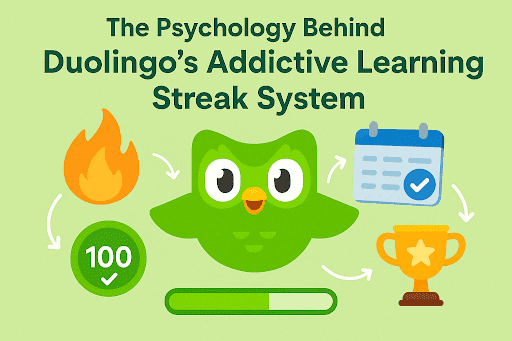
Duolingo has transformed the way millions approach language learning. One of the app’s most recognizable features is its “learning streak” system — a mechanism that encourages users to practice daily to maintain a continuous chain of activity. At first glance, it may seem like a simple reminder tool, but psychologically, it taps into deep-rooted human behaviors. The streak feature provides instant gratification, visible progress, and a sense of accomplishment — all powerful motivators in habit formation.
The streak system combines gamification and behavioral psychology to make learning feel rewarding rather than tedious. It leverages human psychology’s natural inclination toward consistency and achievement, making learners return daily.
How Duolingo Triggers the Habit Loop Through Gamification
The core of Duolingo’s success lies in its understanding of the “habit loop” — a cycle that includes cue, routine, and reward. When users receive notifications reminding them to continue their streak, the cue is activated. Completing a lesson becomes the routine, while the satisfaction of maintaining the streak acts as the reward.
This system ensures that users associate positive emotions with learning. Each day’s progress strengthens the habit, leading to long-term engagement. By transforming education into an enjoyable experience, Duolingo shows how gamification can increase retention and motivation. Developers building a Duolingo Clone often focus heavily on replicating this loop because it is the foundation of consistent user engagement.
The Role of Loss Aversion in Maintaining Streak Motivation
One of the strongest psychological motivators behind the streak system is “loss aversion.” People generally feel the pain of losing something more intensely than the pleasure of gaining something of equal value. In Duolingo, when learners see that their streak is about to break, it triggers a fear of loss, compelling them to complete a lesson — even if just to preserve the streak.
This strategy turns the streak into a personal investment. Users begin to associate the streak with their effort and commitment, which strengthens emotional attachment to the app. The possibility of losing that record pushes consistent learning behavior.
Social Validation and the Desire for Achievement
Beyond personal motivation, Duolingo integrates social validation elements such as leaderboards, achievements, and friend comparisons. Users can see their rank among peers or share their milestones on social media. This taps into another powerful psychological trigger — the need for recognition and belonging.
When learners see their friends maintaining longer streaks or earning more badges, it encourages healthy competition. This competitive yet supportive environment keeps users active and engaged. Developers studying clone app development for educational platforms often emphasize such social features because they amplify user motivation through community interaction.
The Dopamine Effect: Turning Learning into a Rewarding Habit
Each time users complete a lesson or extend their streak, the app provides immediate visual and auditory feedback — a bright animation, a happy mascot, or a congratulatory message. These small rewards trigger the release of dopamine, the brain’s “feel-good” chemical associated with pleasure and motivation.
The consistent flow of these micro-rewards keeps the brain craving more. As a result, users subconsciously look forward to returning to the app, not just for learning but for the rewarding experience itself. This emotional reinforcement forms a key pillar of Duolingo’s addictiveness.
For developers in educational app development, integrating dopamine-triggering mechanisms responsibly can make learning experiences both fun and sustainable.
Personalization and Adaptive Learning as Engagement Drivers
Duolingo’s streak system does not function in isolation. It works best when combined with adaptive learning techniques. The app adjusts lessons according to the user’s progress, performance, and weaknesses, ensuring the difficulty remains balanced — neither too easy nor too hard.
This balance is crucial because learners feel motivated when challenges are achievable but still stimulating. Personalization enhances the feeling of progress, keeping users connected to their learning journey. Apps built using mobile app development for kids often integrate similar adaptive models to sustain children’s interest through appropriate challenges and rewards.
Emotional Design and the Power of Visual Reinforcement
Duolingo’s design aesthetics play a critical psychological role in maintaining user attention. Bright colors, cheerful characters like Duo the owl, and positive feedback messages create an emotionally comforting environment. The use of progress bars, streak counters, and motivational notifications constantly reminds users of their journey and success.
These elements are not mere design choices but carefully crafted tools to reinforce motivation. Emotional design helps users form an emotional bond with the learning process, turning the streak into more than just a number — it becomes a symbol of persistence and self-growth.
What App Creators Can Learn from Duolingo’s Streak System
The psychology behind Duolingo’s addictive streak system offers valuable lessons for developers creating educational or gamified platforms. Here are some practical insights:
- Create meaningful feedback loops – Ensure every user action leads to an immediate, positive response.
- Incorporate small milestones – Frequent wins encourage continued participation.
- Use streaks wisely – A visible, progressive count motivates users without overwhelming them.
- Encourage social comparison – Leaderboards and sharing options increase engagement.
- Provide recovery options – Features like “streak freeze” help users stay committed without feeling punished.
- Adapt content dynamically – Keep the learning journey balanced and personalized.
- Celebrate consistency – Reinforce daily practice to nurture discipline and satisfaction.
Developers working on a Duolingo Clone or similar apps can apply these principles to create engaging learning platforms that encourage long-term use and personal achievement.
Ethical Considerations and Sustainable Learning Motivation
While Duolingo’s streak system effectively promotes daily learning, developers must consider ethical design practices. Over-reliance on addictive mechanics can create dependency rather than genuine interest in learning. The goal should be to encourage sustainable engagement, not compulsive behavior.
Ethical educational design focuses on balance — motivating users to learn while maintaining their well-being. By combining psychological triggers with meaningful content and progress-based rewards, developers can create platforms that educate, entertain, and empower learners in the long run.
In the rapidly evolving digital learning industry, understanding these psychological foundations is essential for developing successful apps that go beyond superficial engagement. Integrating psychological insight with innovative design ensures that learners benefit both cognitively and emotionally.
Conclusion
The success of Duolingo’s streak system lies not in complex technology but in its deep understanding of human psychology. By harnessing motivation, reward mechanisms, and emotional reinforcement, Duolingo turns language learning into a daily habit rather than a chore. Its approach demonstrates how design, behavior science, and personalization can combine to make education engaging and lasting.
For creators and educators, the lesson is clear — meaningful learning comes from balancing motivation with mindfulness. By applying these insights thoughtfully, developers can design tools that inspire lifelong learning and foster genuine progress.