
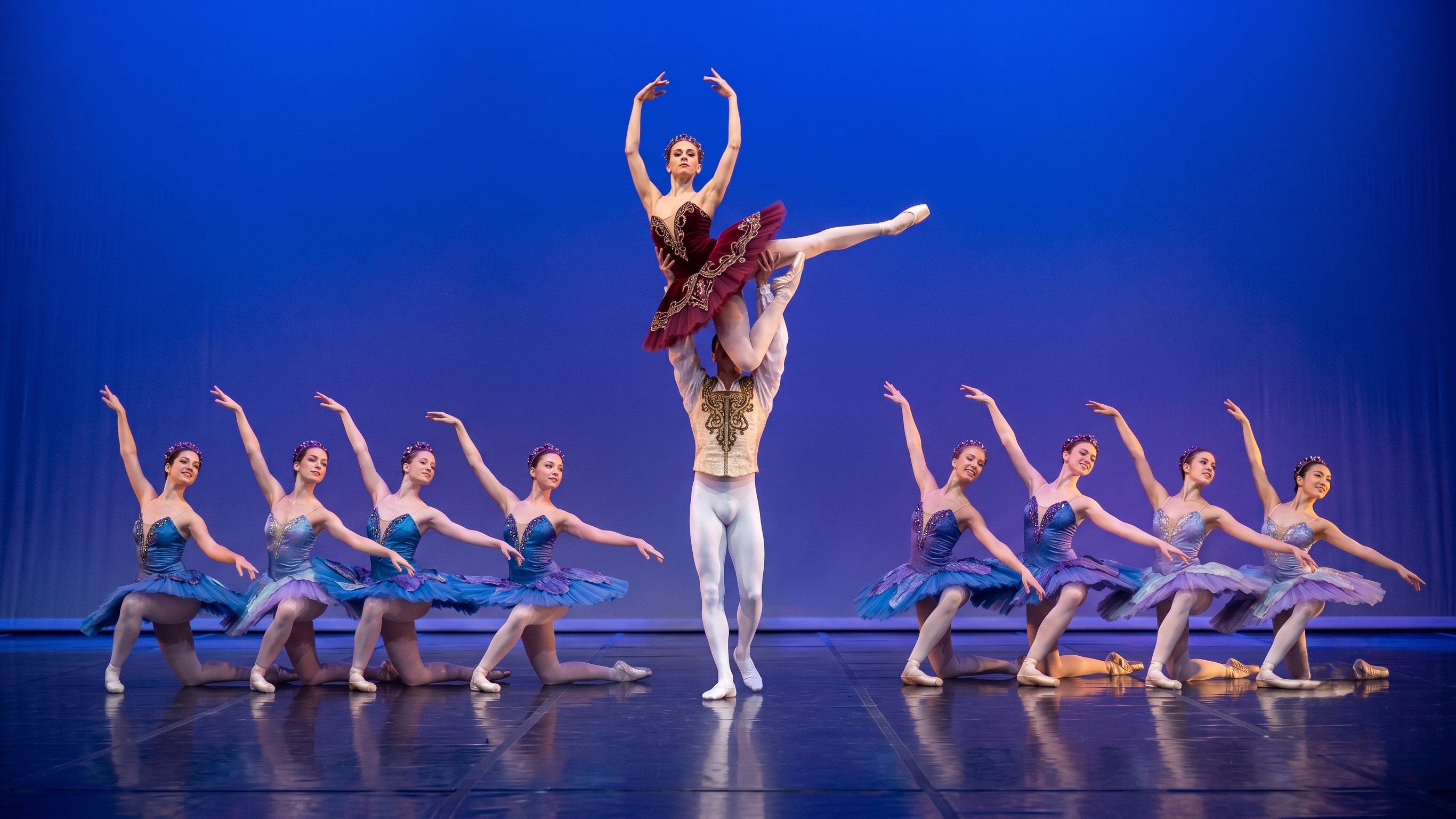
The modern landscape of adult health and fitness has experienced a distinct paradigm shift. While high-intensity interval training (HIIT) and repetitive weight lifting protocols have dominated the commercial wellness market for decades, a growing sector of adults is returning to a more historic, structurally comprehensive discipline: classical ballet. Long regarded as an elite artistic pursuit for youth, classical dance pedagogy is increasingly recognized by kinesiology professionals as an exceptional framework for adult musculoskeletal reconditioning.
When an adult steps up to the studio barre, they are not merely engaging in a recreational activity or learning theatrical choreography. They are introducing their nervous and muscular systems to a highly complex, scientifically sound regimen of functional movement. This comprehensive guide explores the structural, neurological, and physiological mechanisms behind classical training and demonstrates how adult ballet alters natural biomechanics to foster lifelong physical alignment.
1. The Kinetic Foundations of the Ballet Barre
Every authentic classical ballet session initiates at the studio barre, a fixed horizontal support that acts as a biomechanical anchor. Far from a passive handrest, the barre serves as a tool to isolate specific kinetic chains while temporarily minimizing the balance demands of total center work. This structural assistance allows adult dancers to systematically activate deep stabilizing systems without triggering protective, compensatory muscle tension.
The movements executed at the barre are sequential, progressing from small, controlled joint articulations to expansive, multi-planar extensions. This deliberate progression functions as a targeted warm-up that elevates synovial fluid circulation within the joints, priming the body for complex athletic movement.
The Mechanics of Internal Support
By placing a hand lightly on the barre, an adult learner can shift their focus inward, isolating the activation of the transverse abdominis and deep pelvic floor muscles. This mechanical stabilization isolates the lumbo-pelvic-hip complex, preventing the lumbar spine from arching excessively during leg extensions. Consequently, the barre acts as an educational aid, training the kinetic system to find balance and core integration prior to moving into unsupported floor work.
2. Postural Realignment and Core Architecture
Chronic sitting, computing, and screen utilization have led to widespread postural distortions in modern adults. The most prevalent structural deviations include upper crossed syndrome—characterized by forward head posture and rounded shoulders—and lower crossed syndrome, which manifests as an anterior pelvic tilt and deactivated gluteal systems. Classical ballet technique attacks these precise mechanical weaknesses through its foundational posture rules.
Postural Distortion (Sitting) –> Triggers Lower/Upper Crossed Syndrome
|
Classical Ballet Intervention –> Enforces Neutral Pelvis & Axial Elongation
|
Biomechanical Result –> Decompresses Spine & Activates Deep Core
Ballet demands a completely neutral pelvis, a position that requires the simultaneous coordination of the lower abdominals, deep hip rotators, and hamstring groups. This structural alignment alters the spine’s position, initiating a process known as axial elongation.
Decompressing the Axial Skeleton
Axial elongation is the active lengthening of the spine, which effectively maximizes the vertical space between individual vertebrae. By pulling upward through the crown of the head while anchoring down into the floor, the adult dancer decompresses the intervertebral discs. This constant opposition counters the compressive forces of gravity and sedentary lifestyles, restoring the natural shock-absorbing curves of the cervical, thoracic, and lumbar spine.
- Abdominal Activation: Deep transverse stabilizers are held in a continuous, low-threshold isometric contraction to support the elevated rib cage.
- Scapular Depressive Control: The shoulder blades are drawn downward and outward, stretching the pectoral region and reversing chronic shoulder internal rotation.
- Cervical Alignment: The head is balanced directly over the vertical axis of the spine, reducing the strain on the upper trapezius and levator scapulae muscles.
3. The Science of Turnout: Hip Rotation Mechanics
Perhaps the most distinct and misunderstood element of classical dance pedagogy is the concept of “turnout.” In anatomical terminology, turnout is the external rotation of the femurs within the acetabulum (the hip sockets). In an adult dancer, this external rotation must be carefully managed to avoid structural strain on the knee and ankle joints.
Incorrect Turnout  --> Forced from the Feet/Knees  --> Joint Strain & Lateral Instability
Correct Turnout    --> Initiated in Deep Rotators --> Activates External Gluteal Complex
Proper turnout is never achieved by twisting the feet outward against the friction of the floor. Instead, it must be generated at the hip joint through the precise activation of the deep external rotator muscle group. This group includes the piriformis, gemellus superior and inferior, obturator internus and externus, and the quadratus femoris.
Restoring Lateral Hip Stability
Because modern life focuses primarily on sagittal plane movements (such as walking, running, and cycling), the lateral rotators of the hip often become weak and tight. Enforcing safe, rotatory movement patterns within the limits of adult anatomy re-educates these neglected muscle groups. The continuous engagement of the deep rotators, balanced by the lengthening of the internal hip adductors, builds a highly supportive, stabilizing matrix around the hip joint. This lateral stability is critical for preventing age-related balance degeneration and reducing lateral joint wear.
4. Concentric and Eccentric Muscular Development
Conventional strength training routines heavily prioritize concentric muscle actions—movements where the muscle shortens under resistance, such as a traditional bicep curl or leg press. While effective for hypertrophy, this approach can occasionally lead to shortened, rigid muscle bellies that restrict joint range of motion if not balanced by flexibility protocols. Classical ballet balances muscle development by pairing concentric strength with elongated, eccentric contractions.
Every slow descent into a plié and every sustained extension of an attitude or arabesque demands that the active muscle groups generate force while simultaneously lengthening. This eccentric load creates a unique muscular adaptation, adding sarcomeres (the basic structural units of muscle tissue) in a series rather than in parallel.
Improving Functional Elasticity
The resulting structural change produces long, lean, and highly resilient muscle fibers capable of generating force across an expanded range of motion. This approach directly improves functional elasticity, allowing the adult body to react dynamically to sudden physical imbalances or stressors without sustaining muscle tears or tendon damage.
5. Proprioception and Neurological Adaptation
The benefits of adult ballet training extend far beyond physical architecture, driving significant adaptations within the central nervous system. Learning complex classical variations demands a high level of neuroplasticity, requiring the brain to map new, intricate motor pathways while processing multi-directional balance adjustments in real time.
This rapid neurological processing relies heavily on proprioception—the body’s internal network of sensory receptors located within muscles, tendons, and joints that communicate spatial orientation to the brain.
Enhancing Vestibular Processing
As an adult dancer coordinates head movements (épaulement) with rhythmic leg extensions and shifts in weight, the brain must continuously reconcile input from the visual field, the inner ear’s vestibular apparatus, and the body’s peripheral proprioceptors. Over time, this intense sensory synthesis sharpens spatial awareness, optimizes motor unit recruitment, and improves global balance mechanics. This neurological conditioning acts as a powerful defense against the natural cognitive and balance declines associated with aging.
6. Accessing the Structural Artistry of Classical Dance
For adults seeking to benefit from this complex biomechanical framework, selecting an educational environment rooted in authentic pedagogy is vital. Specialized environments like the Miami Royal Ballet focus intentionally on guiding adult learners through these exact structural principles with a focus on safety and technical accuracy.
Technical Foundations (The Barre) --> Biomechanical Realignment --> Neurological Mastery
By prioritizing precise posture setup, proper hip rotation mechanics, and anatomical safety over mere performance emulation, professional studios allow adult students to access the profound physical benefits of dance. Immersing oneself in this structured training environment ensures that every movement at the barre translates into real-world physical longevity, grace, and vitality.
7. Comparative Analysis: Ballet vs. Conventional Workouts
To better understand how classical dance pedagogy reshapes the adult body, it is helpful to contrast its mechanics with other popular fitness frameworks.
| Biomechanical Metric | Classical Ballet Pedagogy | Traditional Weight Training | High-Intensity Cardio (HIIT) |
| Primary Plane of Motion | Multi-planar (Sagittal, Frontal, Transverse) | Heavily Sagittal (Forward/Backward movements) | Sagittal with minimal lateral variation |
| Muscle Contraction Style | Balanced Concentric & Long Eccentric | Dominantly Concentric Hypertrophy | Rapid, repetitive concentric contractions |
| Spinal Alignment | Continuous Axial Elongation & Neutral Control | Often under compressive load (Squats, Presses) | High impact, repetitive vertical loading |
| Core Integration | Continuous, low-threshold global stabilization | Intermittent bracing under load | Passive stabilization |
| Neurological Demand | High neuroplasticity & complex proprioceptive mapping | Low-to-moderate repetitive motor patterns | Variable, speed-dependent motor response |
8. Common Biomechanical Misconceptions in Adult Dance
Misconception 1: Ballet Requires Extreme, Pre-Existing Flexibility
A prevalent myth suggests that an adult must possess the extreme flexibility of a contortionist to study classical dance. In truth, operational flexibility is a gradual outcome of the training, not a prerequisite. Classical pedagogy uses a step-by-step approach to safely increase the resting length of hamstring and hip complexes, matching an individual’s personal skeletal architecture.
Misconception 2: Turnout Should Always Face 180 Degrees
Adult beginners often try to force their feet into a straight, horizontal line, putting dangerous twisting forces on the collateral ligaments of the knee and the medial structures of the ankle. Professional instructors prioritize anatomical turnout, which allows the feet to open only as far as the internal shape of the individual’s hip sockets naturally permits.
9. Future Trends: Ballet in Rehabilitative and Longevity Medicine
As medical science places a growing emphasis on “healthspan”—the period of life spent free from chronic disease and disability—the clinical community is looking closer at classical dance mechanics. Sports physical therapists and orthopedic specialists are increasingly incorporating modified ballet exercises into lower extremity and spinal rehabilitation programs.
The intentional focus on eccentric lower limb control, deep intrinsic foot muscle activation, and active spinal decompression makes ballet an ideal preventative therapy for degenerative disc disease and age-related balance issues. Over the next decade, the integration of classical dance principles into mainstream longevity medicine is projected to expand significantly, confirming what dancers have known for centuries: structured poise is the foundation of lifelong physical resilience.
10. Frequently Asked Questions (FAQs)
Can adults safely begin classical ballet training if they have no childhood dance experience?
Yes. Introductory adult classes are intentionally designed to build mobility, coordination, and structural strength safely from a absolute baseline.
How does adult ballet specifically improve natural posture?
Ballet enforces axial elongation and a neutral pelvis, which strengthens the lower abdominals wclahile decompressing the spine and opening tight shoulders.
Is ballet considered a low-impact form of exercise for aging joints?
Yes. The initial barre and floor work are low-impact, focusing on fluid, controlled muscle contractions that protect joints from sudden shock.
What muscle groups are targeted most during a classical ballet class?
Ballet comprehensively engages the deep transverse core, gluteal systems, deep external hip rotators, hamstrings, and the stabilizing muscles of the feet.
How many times a week should an adult practice ballet to see structural changes?
Practicing two to three times per week provides consistent neuromuscular stimulation, leading to noticeable improvements in posture, balance, and core strength.