
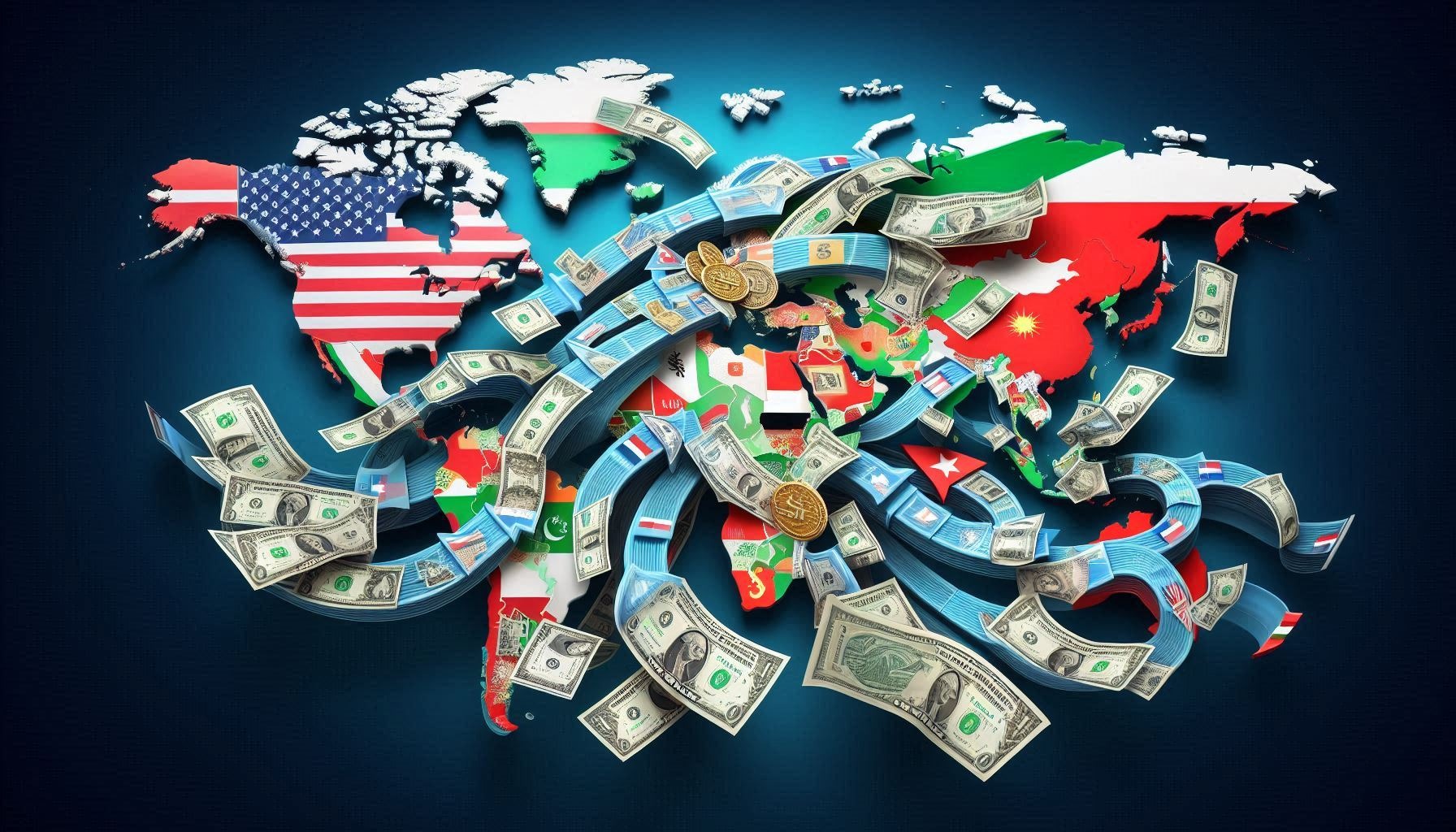
A familiar pattern of capital flight emerges as the professional network once loyal to Fidesz works to secure politically exposed fortunes abroad while Hungary’s new government races to rebuild institutions, reopen contracts, and follow the money.
WASHINGTON, DC.
The collapse of Viktor Orbán’s sixteen-year political order has triggered a financial reckoning that reaches far beyond election maps and parliamentary arithmetic, because reporting from Hungary’s transition now suggests that politically connected fortunes are being repositioned abroad as the protective architecture of the Fidesz era begins to fracture.
The precise scale of those movements remains difficult to verify publicly, and no court has established that specific transfers were unlawful, yet the broader picture has become unmistakable: a former ruling ecosystem accustomed to stability, access, and institutional predictability is suddenly operating inside a political vacuum filled with uncertainty, exposure, and rapidly changing incentives.
According to reporting on the post-election scramble around Orbán-linked wealth, figures associated with the outgoing establishment were said to be exploring transfers toward the United Arab Emirates, Saudi Arabia, Oman, Singapore, Australia, and the United States as Péter Magyar’s incoming government promised aggressive anti-corruption reforms.
The “Orbán system” was political, but it also became deeply financial.
For sixteen years, Orbán’s power extended well beyond party control, because critics argued that Fidesz gradually built a governing environment in which public procurement, media ownership, regional development, tourism spending, energy projects, and European Union-backed infrastructure became intertwined with a narrower circle of trusted commercial beneficiaries.
That network did not emerge overnight, and it was not confined to one sector, because the strength of the system came from repetition, with politically aligned firms gaining recurring opportunities, contracts reinforcing private scale, and economic scale producing influence that could then reinforce the broader governing project.
The result was a durable political-commercial ecosystem that opponents increasingly described as oligarchic, not because every successful company was illegitimate, but because the same names appeared repeatedly across public spending, strategic acquisitions, state communications, and industries where government decisions shaped profitability with unusual force.
Now that Orbán has lost office, the central question is whether that accumulated wealth will remain transparent and reviewable inside Hungary, or whether a meaningful share of it will be placed abroad before the new administration’s asset-recovery machinery becomes fully operational.
The political vacuum has created a race between investigators and advisers.
Péter Magyar’s government has made anti-corruption enforcement central to its legitimacy, promising a National Asset Recovery Office, stronger cooperation with European institutions, and a review of assets allegedly misappropriated or lost through corruption during the years when Fidesz controlled the state with extraordinary continuity.
The new government’s agenda, outlined in current reporting on Hungary’s post-Orbán policy plans, places public integrity beside budget repair, European Union fund recovery, and institutional reform, meaning the future of politically connected wealth has become inseparable from Hungary’s broader economic reset.
That creates urgency because large fortunes rarely become difficult to trace through one dramatic act, but rather through a sequence of quiet professional decisions involving corporate restructuring, foreign investment vehicles, bank mandates, property purchases, nominee arrangements, family governance structures, and the movement of beneficial ownership across borders.
When those transactions begin during a political transition, the burden on investigators increases sharply, since the state must preserve records, identify suspicious timing, understand complex financial pathways, and distinguish lawful diversification from efforts designed to frustrate future accountability.
The professional infrastructure surrounding wealth may matter as much as the wealth itself.
The most important actors in a capital-flight story are not always the politicians or business magnates whose names dominate headlines, because meaningful cross-border repositioning generally depends on lawyers, bankers, corporate service providers, private aviation specialists, tax advisers, investment managers, and reputation consultants capable of acting quickly.
Most of those services are lawful when used transparently, and international asset planning is a routine part of global commerce, yet the political meaning changes dramatically when the clients are linked to a collapsing governing order and the timing follows an election built around promises to investigate corruption.
That is why the current Hungarian moment has drawn attention to cross-border banking and international asset structures, because mechanisms used legitimately for diversification can also become politically controversial when employed by figures facing scrutiny over wealth accumulated during a period of state-linked economic privilege.
The central concern is not that foreign accounts, global investments, or corporate mobility are inherently suspicious, but that they can reduce transparency, complicate recovery, and place assets beyond immediate reach precisely when a new government is attempting to determine whether public resources were distorted by political favoritism.
Billions may be at issue, even when the public cannot yet see every transfer.
The headline figure in Hungary’s post-Orbán reckoning is not only the value of any alleged outbound capital flow, but the much larger universe of fortunes, contracts, and state-linked opportunities that developed after 2010 under a governing model repeatedly criticized for procurement opacity and concentrated economic reward.
The new administration is also racing to unlock more than ten billion euros in European Union recovery funding that remained blocked under Orbán because of rule-of-law concerns, which places anti-corruption credibility at the center of Hungary’s fiscal future and adds urgency to every question about money that may be leaving.
That broader financial context matters because a government seeking renewed confidence from Brussels cannot afford the perception that politically connected wealth is escaping unnoticed, especially while Hungarian households are being told that public finances require discipline, transparency, and a painful break from the habits of the prior era.
The scale of possible recovery remains uncertain, yet the public stakes are immense, because even a modest share of misspent infrastructure money, inflated communications contracts, or improperly favored public work could represent resources that voters believe should have remained available for schools, hospitals, housing, or national investment.
Washington had already signaled that the corruption concerns were serious.
The international warning signs appeared before Orbán’s electoral defeat, most notably when the U.S. Treasury Department issued its sanctions notice against Antal Rogán, accusing the senior Hungarian official of corruption and describing a system in which public contracts and state resources allegedly benefited politically loyal actors.
That sanctions action did not determine the legal status of every Fidesz-linked fortune now facing public debate, and it did not prove that all reported post-election transfers are improper, yet it showed that corruption concerns surrounding the Orbán system had already reached a formal level of foreign-government scrutiny.
The significance of that official warning now appears larger, because Hungary’s new government is operating with a domestic mandate that echoes many of the same concerns, promising to examine whether public contracting became a wealth engine for insiders while the broader economy absorbed growing financial and institutional strain.
For wealthy figures associated with the previous order, the combination of domestic reform and international attention creates a more difficult environment than any they faced during Orbán’s long dominance, particularly if banks, investment houses, and foreign jurisdictions begin examining politically exposed Hungarian capital with greater caution.
The alleged outward movement follows a familiar pattern seen after entrenched power collapses.
When a political system has operated for many years with high confidence in its own permanence, sudden defeat often produces a scramble to preserve money, status, and mobility, because the old assumptions about friendly regulators, sympathetic prosecutors, and predictable public contracts disappear almost immediately.
Hungary now appears to be entering that uneasy phase, with reports of private jets leaving Vienna, foreign jurisdictions entering asset-planning conversations, and former insiders contemplating whether political defeat may eventually lead to audits, investigations, asset freezes, or reputational losses that travel beyond Budapest.
The practical logic of capital flight is simple even when the morality remains contested, because money that stays visible inside a country undergoing anti-corruption reform can be examined more easily than money that has already been converted into overseas property, private funds, foreign companies, or layered cross-border holdings.
That does not mean every transfer is evasive, yet it does explain why timing has become the central interpretive issue, since actions that might look ordinary during political stability appear far more defensive when they coincide with the collapse of a system widely accused of enriching its own allies.
Fidesz-linked wealth faces a new test because infrastructure control has changed hands.
The Orbán era’s economic strength came partly from its control over public infrastructure priorities, because governing parties that shape roads, rail, tourism districts, communications budgets, development banks, and energy investment can influence which businesses scale rapidly and which remain peripheral.
With Magyar now promising procurement review and a level playing field, companies that prospered inside the Fidesz framework may no longer be able to assume that familiar access will translate into future windfalls, which makes capital preservation more urgent for those whose business confidence depended on political continuity.
This shift has already unsettled broader markets, since banks and investors are calling for clearer rules, more predictable policy, and an end to the ad hoc measures that critics say weighed on economic performance during the final years of Orbán’s government.
The post-Fidesz economy will therefore be judged not only by prosecutions or asset recoveries, but by whether the next wave of public contracts actually opens to broader competition rather than reproducing the same concentration of access under a new political banner.
The professional network loyal to the old order may now be repurposed for survival.
A system that spent years helping favored businesses expand can also help them adapt when the political winds shift, because the same advisers who structured acquisitions, handled large contracts, and built internationally connected portfolios may now be asked to secure flexibility, distance, and defensive options.
That is why Hungary’s transition cannot be understood solely through the visible drama of politicians leaving office, since the more consequential shift may be happening quietly inside conference rooms, law firms, banks, wealth-management offices, and private briefings between exposed clients and their advisers.
Such work may remain formally legal, but it becomes politically charged when carried out during a moment of national accountability, especially if the public suspects that professional expertise is being used to preserve gains from a system that voters have just repudiated through the ballot box.
The term “political vacuum” captures the atmosphere well, because Orbán’s defeat removed the old certainty before the new government’s institutions were fully in place, creating a narrow but consequential period during which those with resources could attempt to move faster than the state.
The line between prudence and evasion will depend on evidence, not suspicion.
A wealthy person who diversifies internationally, relocates family members, or establishes new banking relationships is not automatically guilty of misconduct, because global mobility remains lawful and prudent planning often increases during periods of political uncertainty, especially among entrepreneurs and exposed public figures.
Yet the same behavior may become evidence of intent if investigators later show that transfers were tied to disputed public contracts, unexplained enrichment, imminent official scrutiny, or instructions specifically designed to obstruct asset recovery by moving ownership beyond Hungary’s immediate legal reach.
That distinction is crucial for Magyar’s government, because a democratic restoration cannot rely on broad guilt by association, even while it is fully entitled to scrutinize whether particular fortunes emerged from corruption, manipulated procurement, or improper channeling of public resources.
The challenge will be especially demanding if assets have already entered complex structures abroad, because lawful-looking paperwork can make questionable wealth difficult to unpack once it has passed through multiple companies, multiple jurisdictions, and multiple layers of professional validation.
The new administration must follow the money without losing the rule-of-law argument.
Magyar won power by presenting himself as the force capable of ending Fidesz-era corruption, but governing successfully will require more than anger, because recovery efforts must survive courts, international legal standards, financial institutions, and the skepticism of partners who expect process rather than political spectacle.
If the government hesitates, voters may conclude that the old elite outran accountability, yet if it acts carelessly, Fidesz loyalists will argue that corruption probes are merely revenge politics, allowing former insiders to present themselves as victims rather than subjects of legitimate public scrutiny.
The administration therefore needs transparent audits, professional investigators, clear statutory authority, international cooperation, and careful communication that separates substantiated findings from allegation, because the legitimacy of the post-Orbán era depends on proving that law has replaced patronage rather than simply reversing its direction.
That balance will shape whether Hungary can restore credibility with Brussels, unlock funding, reassure investors, and persuade its own citizens that the national wealth debate is not about political theater, but about building institutions capable of resisting capture in the future.
Mobility planning now carries a sharper political meaning.
In ordinary conditions, wealthy families and internationally active businesspeople may pursue residence diversification, second-country contingency plans, and lawful mobility options without attracting unusual attention, particularly when those steps are taken openly and before a crisis narrows available choices.
In Hungary’s present environment, however, broader international mobility planning has become politically sensitive because reports of asset transfers, visa inquiries, and foreign destinations are appearing while the new government publicly promises to investigate whether politically exposed fortunes were built through abusive state access.
The same planning that looks strategic in a calm period can resemble flight during a corruption reckoning, which means timing, documentation, and source-of-wealth explanations will likely matter enormously if former insiders seek to defend cross-border movements against future public suspicion or legal examination.
That does not erase the legitimacy of lawful planning, but it places a heavier reputational burden on anyone whose wealth is tied, directly or indirectly, to years of government contracts and political proximity during an era voter have now decisively rejected.
The “Orbán system” may unravel financially before it is fully judged legally.
A political system does not disappear the moment its leader loses an election, because companies, media assets, private relationships, procurement histories, and elite networks often survive long after the governing structure that created them has been removed from office.
What can change immediately is the confidence surrounding those assets, and Hungary is now witnessing that transformation in real time, as fortunes once secure inside a dominant national order suddenly confront the possibility of audits, frozen funds, contract reviews, and a government determined to expose the hidden architecture of power.
If substantial wealth is indeed being repositioned abroad, then the unraveling of the Orbán system may be visible first through defensive financial behavior rather than through court judgments, because the insiders themselves would be signaling that the old guarantees no longer hold.
If the reports prove narrower than feared, the broader lesson will remain, since the very plausibility of a capital-flight narrative reveals how deeply many Hungarians believe politics and wealth became entangled during the Fidesz years.
The coming battle will be fought in records, not rhetoric.
Private jets, dramatic headlines, and public warnings create the early atmosphere of scandal, but the eventual truth will be determined by contracts, banking instructions, ownership registers, corporate minutes, property filings, tax records, and communications between politically exposed clients and the professionals advising them.
That documentary trail will decide whether Hungary is confronting ordinary post-election portfolio diversification, deliberate efforts to evade lawful scrutiny, or a complicated mixture in which some actors behaved defensively while others simply responded to legitimate uncertainty after a historic transfer of power.
For the new government, the burden is immense but unavoidable, because it must show that billions in public value cannot disappear into professional networks, foreign jurisdictions, and carefully structured ownership chains without the state asking precise questions about how those fortunes were created.
The “Orbán system” now stands at a decisive threshold, because political protection has fallen away, financial behavior is being scrutinized globally, and Hungary’s next chapter will depend on whether public institutions can follow wealth with enough speed, skill, and restraint to turn democratic victory into lasting accountability.
