
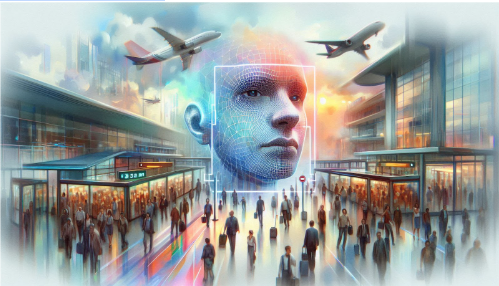
What emerging technologies and global regulations are redefining the balance between national security and privacy rights
WASHINGTON, DC, November 29, 2025
In 2026, biometric border systems operate at the center of a global transformation in migration control, technological regulation, and personal privacy. Governments have adopted new identity verification platforms that integrate facial recognition, iris scans, fingerprint matching, voice pattern analytics, and artificial intelligence-driven fraud detection. These systems verify the identities of travelers, asylum seekers, workers, expatriates, and individuals moving across complex geopolitical regions. The rise of biometric borders reflects a convergence of national security priorities, digital innovation, and legal obligations that govern data protection, civil liberties, and international cooperation.
Biometric border control has expanded far beyond simple fingerprinting. Modern systems rely on advanced identification algorithms, global data-sharing agreements, and cloud-based processing to screen travelers against immigration, criminal, and security databases. As these technologies advance, legal systems around the world face pressure to adapt. Policymakers must balance the security benefits of biometric systems with their implications for privacy rights, data retention, and individual autonomy.
Amicus International Consulting, which advises clients on lawful mobility planning, identity restructuring, compliance alignment, and document verification across borders, reports a surge in inquiries related to biometric border systems. Individuals seek clarity on how emerging technologies affect travel, residency, migration procedures, and privacy protections. This investigative report examines how technology and law intersect at global borders, how governments use biometrics to modernize migration control, and how these systems influence personal freedoms.
The Rise of Biometric Identity Verification Across Global Borders
By 2026, biometric authentication will be the standard for identity verification at international borders. Airports, maritime terminals, and land crossings deploy biometric gates that scan faces, fingerprints, and irises. These systems validate passport information, confirm a traveler’s identity, detect fraudulent documents, and flag inconsistencies in government databases.
Biometric systems assist governments in detecting individuals who attempt to cross borders illegally or present forged identities. In Europe, the Entry Exit System captures biometric data for all non-European travelers entering and exiting the Schengen Area. In North America, biometric entry systems are deployed at nearly all major airports, with expansion underway at land borders. Asia and the Middle East have built some of the most technologically advanced biometric corridors, integrating seamless travel pathways with high-volume identity verification.
Case studies show the impact of these systems. A traveler attempting to enter Eastern Europe with a fraudulent passport was identified immediately when biometric scans revealed a mismatched facial profile linked to prior immigration violations. In another case, an asylum seeker entering Southern Europe lacked documentation, but fingerprint scans matched records from a humanitarian agency, allowing authorities to verify identity while processing the asylum claim. These examples demonstrate how biometric systems enhance both security and humanitarian efficiency.
Artificial Intelligence and Automated Risk Assessment
Artificial intelligence plays a central role in biometric border systems. AI evaluates travel patterns, analyzes identity data, and detects anomalies that may signal fraud, trafficking, or identity manipulation. Risk scoring algorithms process millions of data points, ranging from travel history and visa status to behavioral indicators detected by machine learning tools.
Some border systems incorporate voice biometrics for secondary screening, analyzing speech patterns to confirm identity during interviews. Others use AI-driven document forensics to detect altered passports, forged residence permits, or tampered visa pages.
Case studies illustrate AI’s capabilities. A traveler entering the Gulf region presented a valid passport, but AI flagged inconsistencies between the passport photo and facial recognition results. Manual review confirmed that the document had been fraudulently obtained. Another case involved a migrant crossing a Southeast Asian border who attempted to use an altered visa. AI-based document analysis detected abnormalities in the ink pattern and microtext, leading to further investigation. These cases reveal how AI improves detection accuracy and reduces the workload on border officers.
The Legal Framework Surrounding Biometric Borders
As biometric systems expand, legal frameworks must redefine how identity data is collected, processed, and shared. Countries operate under different data protection regimes. Europe enforces strict data privacy laws through the General Data Protection Regulation, while other regions maintain more flexible policies. These differences shape how biometric data can be stored, shared, and retained.
Governments use biometric systems to protect national security, uphold immigration laws, prevent identity fraud, and regulate cross-border movement. Legal systems require transparency, oversight, and procedural safeguards to ensure that biometric technologies do not infringe on fundamental rights.
Case studies highlight legal tensions. A traveler in Western Europe requested access to stored biometric data to verify accuracy, invoking legal rights under data privacy law. Authorities granted access and corrected errors related to outdated travel information. In contrast, a traveler in Asia encountered limited recourse for correcting biometric mismatches due to less-defined data protection laws. These scenarios expose the disparities in legal protections across jurisdictions.
Balancing National Security and Individual Privacy Rights
Biometric borders present significant privacy considerations. Individuals who travel internationally often leave extensive biometric footprints that remain in government databases for years. Governments assert that biometric retention is necessary for national security and immigration enforcement, while privacy advocates argue for strict limits on retention periods, data-sharing protocols, and oversight mechanisms.

Case studies demonstrate these tensions. A humanitarian worker traveling across multiple regions discovered that biometric data collected during one entry was shared with another jurisdiction through a regional security partnership. While the sharing was legal under the applicable framework, the traveler expressed concern that the data remained linked to movements long after the purpose had ended. Another case involved a student whose biometric data from an earlier visa application remained active in a migration database after transitioning to a different legal status, prompting concerns about potential misuse.
These cases illustrate the need for standardized privacy protections that balance legitimate security objectives with personal autonomy.
Global Data Sharing Agreements and Cross-Border Cooperation
Governments increasingly participate in global and regional data-sharing agreements that allow biometric information to circulate across jurisdictions. These agreements strengthen migration control by identifying individuals who attempt to cross borders illegally, use fraudulent documents, or commit immigration violations in other countries.
Agreements between Europe, North America, and regional alliances in Asia and Africa support the exchange of biometric data to enhance border security. Information sharing helps governments detect individuals who attempt to obscure their identities by traveling through multiple jurisdictions.
Case studies reveal the benefits of cooperation. A traveler entering South America with a forged British passport was identified through biometric data shared by European authorities following a prior visa overstay. Another traveler in the Caribbean was flagged because biometric data provided by North America linked the individual to a deportation order. These examples demonstrate how cooperation prevents the exploitation of jurisdictional gaps.
Biometric Borders and Humanitarian Protections
Biometric systems also support humanitarian functions. Governments use biometrics to process asylum applications, protect vulnerable populations, and prevent human trafficking. Biometric verification helps ensure that individuals receive proper documentation, access to services, and legal protection.
Case studies highlight humanitarian uses. A displaced person arriving in Europe without documents was identified through a humanitarian database, allowing authorities to confirm identity and provide appropriate support. Another asylum seeker in North America used biometric verification to reunite with family members after fleeing conflict. These cases show that biometrics can strengthen humanitarian processes when implemented responsibly.
Technological Challenges and Operational Limitations
Biometric systems, although advanced, face limitations. Variations in lighting, camera quality, equipment calibration, and physical changes in appearance can affect accuracy. Medical conditions, injuries, or age-related changes can alter biometric markers. In certain regions, infrastructure limitations reduce the effectiveness of biometric platforms.
Case studies illustrate challenges. A traveler in South Asia experienced repeated delays due to poor facial recognition results caused by inconsistent lighting conditions at a border crossing. Another traveler in Africa faced mismatches because fingerprint scans failed to capture accurate readings due to manual labor-related skin abrasion. These limitations show that no biometric system is infallible and that technological failure can disrupt lawful travel.
Corporate Travel, Compliance Demands, and Identity Verification
Corporations managing global workforces depend on accurate biometric processing to ensure compliance with immigration laws, employment regulations, and tax residency rules. Employers often coordinate with immigration authorities to ensure employee identity data remains accurate and up to date. Errors in biometric systems can affect work permits, travel itineraries, or corporate compliance obligations.
Case studies underscore these pressures. A multinational corporation deploying staff to the Middle East discovered that biometric mismatches caused delays in onboarding and in the issuance of work permits. Another corporation operating in Europe had to assist an employee whose biometric data was incorrectly linked to a previous record, triggering additional scrutiny. These issues highlight the importance of properly aligning documentation across legal and corporate systems.
Amicus International Consulting and Biometric Mobility Planning
Amicus International Consulting supports individuals navigating biometric border systems by guiding compliance, documentation consistency, identity alignment, and global mobility strategies. Clients seek assistance with travel planning, document renewal, identity restructuring, and privacy-compliant approaches to cross-border movement. The firm emphasizes that individuals must maintain accurate records across all platforms to prevent biometric mismatches and avoid disruptions during travel.
Conclusion
Biometric borders represent one of the most significant technological and legal developments in global mobility. These systems strengthen national security, reduce identity fraud, and enhance migration control. They also expedite lawful travel for millions of individuals each day. At the same time, biometric systems introduce legal, ethical, and privacy challenges that require consistent oversight, transparent regulation, and cross-border cooperation. Case studies show that while biometrics offer unparalleled accuracy, errors and mismatches can disrupt legitimate travel and raise questions about the long-term retention of data. As governments expand biometric capabilities, the balance between security and privacy will remain central to global border governance.
Contact Information
Phone: +1 604 200 5402
Signal: 604 353 4942
Telegram: 604 353 4942
Email: info@amicusint.ca
Website: www.amicusint.ca