
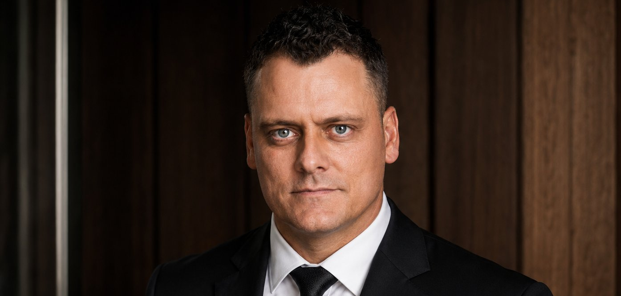
Standing still feels safe. Marco explains why, for South African institutions, doing nothing is quietly the most expensive decision on the table.
When budgets tighten, modernisation is often the first initiative to be deferred. It feels prudent cautious, even responsible. But the cost of inaction rarely appears as a single, alarming line in the accounts, which is precisely why it so often goes unchallenged. We asked Marco Pires, at North-West University, to make the hidden costs of digital stagnation visible.
“Digital stagnation” sounds abstract. Make it concrete what does it actually cost?
According to Marco, the costs are entirely real but deferred, and that delay is what makes them dangerous. “There’s the rising bill to keep ageing systems alive. The productivity quietly lost to manual workarounds that everyone has stopped noticing. The customers and citizens who slowly drift away. And the talent that simply won’t stay to babysit obsolete tools.” None of it, he points out, arrives as a dramatic event. “There’s no fire, no headline, no single moment of failure so it never triggers a decision. Stagnation kills institutions slowly enough that nobody is ever held responsible for it.”
Let’s talk technical debt. How much is it really costing institutions?
“Far more than the maintenance line suggests, because the real cost is the compounding one,” Marco says. “Every year you defer, the cost of catching up grows it never shrinks.” He reaches for a familiar comparison. “It’s deferred building maintenance. The small leak you ignore this year becomes the structural repair you can’t avoid in five. Legacy systems also quietly lock you into expensive vendors and an ever-shrinking pool of people who still understand them. So the bill doesn’t just grow it grows while your options to deal with it narrow.”
You’ve mentioned the public sector specifically. Is stagnation worse in institutions than in private companies?
“Often, yes for a structural reason,” Marco explains. “A private firm feels competitive pressure quickly. Lose enough customers and the problem becomes impossible to ignore. A public institution can stagnate for years, because its ‘customers’ frequently have nowhere else to go.” But the cost doesn’t vanish, he stresses it simply changes who pays it. “It’s paid by citizens in queues, in errors, in eroded trust. And eventually it’s paid by the institution itself, in irrelevance and in the loss of the public’s confidence, which is far harder to rebuild than any system.”
Cybersecurity, how does stagnation feed risk?
Directly and dangerously, in Marco’s view. “Old, unsupported systems are the soft targets. Every unpatched legacy platform is, in effect, an open door and attackers are utterly systematic about finding them.” He frames it as a brutal piece of arithmetic. “The cost of a serious breach the downtime, the data loss, the regulatory exposure, the reputational damage dwarfs the cost of the modernisation that would have closed the door in the first place. Institutions tell themselves they’re saving money by deferring. They’re actually buying risk on credit.”
Talent again. How does standing still affect your ability to keep good people?
“Your best people want to do meaningful work with modern tools, and they read your technology stack as a statement about your future,” Marco says. “Force ambitious talent to spend their days fighting outdated systems and you don’t just lose efficiency you lose the exact people you’d need to fix the problem.” It becomes self-reinforcing, he warns. “The capability drains out precisely when you need it most, and the longer you wait, the smaller the pool of people willing and able to rescue you.”
There’s a competitiveness angle too, especially against African and global peers.
According to Marco, this is the cost leaders underestimate most badly. “While a South African institution spends two years debating whether to modernise, peers elsewhere on the continent often unburdened by decades of legacy leapfrog straight to mobile-first, cloud-native models.” Standing still, he insists, is never neutral. “It only feels like holding your position. In reality everyone else is moving, so standing still is moving backwards relative to the field. By the time the gap is obvious, it’s usually too wide to close cheaply.”
How do you actually quantify something this hidden so that a board will act?
“You convert the invisible into the visible that’s the entire job,” Marco says. “Put a number on the manual hours being burned. On the customer churn. On the breach exposure. On the recruitment offers you keep losing.” Stagnation, in his experience, thrives on vagueness. “It wins the argument as long as it stays abstract and the cost of action is the only concrete figure in the room. The moment you put a credible number on the cost of doing nothing, the conversation changes because suddenly inaction has a price tag too.”
Final word for leaders telling themselves that ‘now isn’t the time’?
Marco is direct. “There’s no such thing as standing still. You are either compounding value or compounding cost there is no third option.” The decision that feels safest, he argues, is almost always the most expensive one on the table. “The institutions that thrive treat modernisation as a continuous discipline, something they do a little of every year, rather than a once-a-decade emergency they’re eventually forced into. ‘Now isn’t the time’ is just a way of agreeing to pay more, later.”
For South African institutions weighing whether to defer once more, Marco’s closing point lands hardest of all: the bill for inaction is already being paid the only open question is whether anyone is brave enough to read it out loud.
About Marco Pires: Digital Specialist, North-West University. More than 17 years of progressive leadership experience spanning enterprise technology, AI governance, operational management, and organisational change