

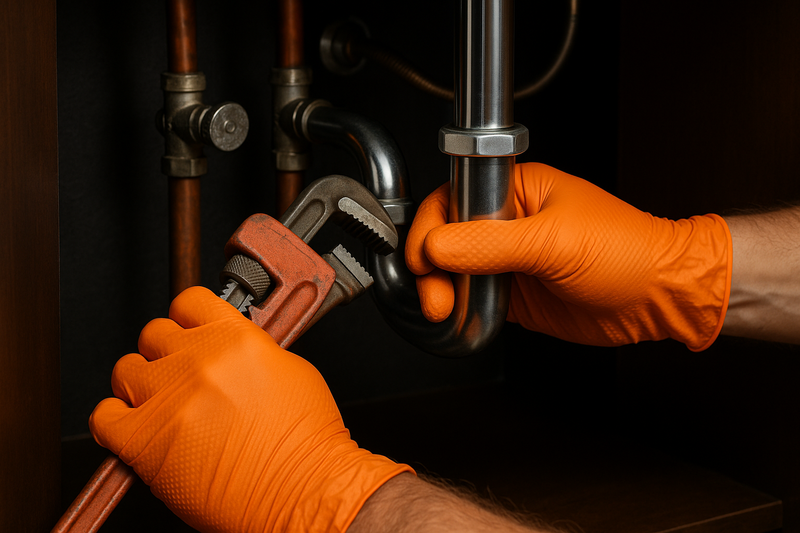
In the world of personal protective equipment (PPE), disposable gloves are often treated as a “one size fits all” commodity. You grab a box, pull a pair on, and get to work. However, anyone who has ever had a glove rip in the middle of a messy oil change or while handling harsh cleaning chemicals knows that not all gloves are created equal.
The market is flooded with options ranging from ultra-thin food service gloves to heavy-duty industrial gauntlets. But sitting comfortably in the middle of this spectrum is the 6 mil nitrile glove.
Often referred to as the “heavy-duty middleweight,” 6 mil gloves have become the gold standard for professionals who need a specific balance: they are tough enough to resist tearing under stress but thin enough to allow for the manual dexterity required to manipulate small tools or parts.
In this guide, we will explore exactly what “6 mil” means, the science behind nitrile, and the myriad of industries where these specific gloves are indispensable.
Part 1: Anatomy of a Glove
To understand what 6 mil gloves are used for, we first need to dissect what they actually are.
What is Nitrile?
Nitrile butadiene rubber (NBR), commonly known as nitrile, is a synthetic rubber coploymer. It was developed as a solution to two major problems with natural latex rubber:
- Allergies: A significant portion of the population has a latex allergy, which can range from mild skin irritation to anaphylaxis. Nitrile is 100% latex-free.
- Chemical Weakness: While latex provides excellent comfort and feel, it degrades quickly when exposed to oils, greases, and petroleum-based products. Nitrile is inherently resistant to these substances.
Understanding the “Mil”
The thickness of disposable gloves is measured in mils. One mil is equal to one-thousandth of an inch (0.001 inch). It might sound microscopic, but in the world of PPE, a few mils make a massive difference in performance.
- 3–4 Mil (Standard): These are your typical medical exam gloves or food service gloves. They offer great sensitivity (you can feel a pulse or a vein easily) but are prone to ripping if snagged on a sharp edge.
- 6 Mil (Heavy-Duty): This is the upgrade. At 6 mils, the glove is 50% to 100% thicker than the standard option. This thickness provides significantly higher puncture resistance and longer breakthrough times for chemicals.
- 8+ Mil (Industrial): These are extra-thick gloves used for extreme scenarios. While they offer maximum protection, they can stiffen the fingers and reduce the ability to feel fine details.
The 6 Mil Sweet Spot: The reason 6 mil gloves are so popular is that they occupy the functional sweet spot. They provide the “armor” needed for industrial work without making the user feel like they are wearing oven mitts.
Part 2: The Core Benefits of 6 Mil Nitrile
Why would a business or an individual opt for 6 mil gloves over the cheaper 3 mil options?
1. Superior Puncture Resistance
Nitrile is naturally three to five times more puncture-resistant than latex. When you increase the thickness to 6 mils, that resistance scales up. This is vital for anyone working with tools, wire, glass, or metal shavings. Unlike latex, which tends to split widely once punctured, nitrile usually tears, making it immediately obvious that the barrier has been breached so you can change gloves.
2. Enhanced Chemical Resistance
Thickness equals time. When a chemical touches a glove, it eventually permeates through the material. A 6 mil glove provides a longer physical barrier than a thinner glove, giving the user more time to work safely before the chemical reaches the skin. This is particularly effective against:
- Oils and greases
- Gasoline and diesel fuel
- Pesticides
- Many acids and bases
3. Texture and Grip
Most 6 mil gloves are engineered for industrial environments rather than clinical ones. As a result, manufacturers often add aggressive textures to them. You will frequently see “Diamond Grip” or “Mega Texture” on 6 mil gloves. This allows liquids to channel away from the surface of the glove, ensuring a solid grip on oily wrenches or wet tools.
Part 3: What Can 6 Mil Nitrile Gloves Be Used For?
Because of their versatility, these gloves are found in an astonishing variety of workplaces. Here is a deep dive into the specific applications of 6 mil nitrile gloves.
1. Automotive and Mechanics
This is perhaps the most common home for the 6 mil black nitrile glove. Mechanics favor them for several reasons:
- Brake Fluid and Oil: Standard latex gloves disintegrate rapidly when exposed to motor oil or brake fluid. 6 mil nitrile holds up for hours, keeping the mechanic’s hands clean and preventing dermatitis caused by long-term exposure to used oil.
- Snag Protection: Engines are full of hose clamps, rusted bolts, and sharp plastic edges. A 3 mil glove will rip the moment a mechanic reaches into a tight engine bay. A 6 mil glove can often survive the snag, protecting the hand from minor scrapes and cuts.
- Concealing Grime: Many mechanics prefer black 6 mil gloves because they hide grease and oil stains, maintaining a cleaner professional appearance when talking to customers.
Typical Tasks: Oil changes, brake pad replacements, transmission flushes, and engine teardowns.
2. Industrial Manufacturing and Assembly
In factory settings, workers handle components that may be coated in rust inhibitors, cutting fluids, or adhesives.
- Adhesives and Epoxies: Working with industrial glues requires gloves that won’t degrade or stick excessively. 6 mil nitrile offers the resistance needed for handling epoxy resins and sealants.
- Metal Fabrication: When handling sheet metal or machined parts, there are often burrs or sharp edges. While 6 mil gloves are not “cut resistant” (you need Kevlar for that), they offer a layer of abrasion resistance that prevents minor nicks.
Typical Tasks: Assembly line work, painting/coating, handling raw materials, and equipment maintenance.
3. High-Risk Medical and EMS
While standard 4 mil gloves are fine for routine checkups, Emergency Medical Services (EMS) and trauma doctors often upgrade to 6 mil.
- High-Stress Environments: In an emergency, paramedics are moving fast, lifting stretchers, and working in uncontrolled environments (like the side of a road). They need a glove that won’t rip if they brush against asphalt or broken glass.
- Pathogen Protection: In scenarios involving high volumes of blood or bodily fluids, the extra thickness provides peace of mind and a stronger barrier against blood-borne pathogens (HIV, Hepatitis).
- Fentanyl and Chemotherapy: Certain 6 mil nitrile gloves are tested and rated for protection against chemotherapy drugs and fentanyl handling, which is crucial for first responders and oncology nurses.
Typical Tasks: Trauma response, ambulance ride-alongs, oncology wards, and handling biohazard waste.
4. Janitorial and Sanitation
Cleaning involves more than just soap and water. Professional sanitation requires strong bleach, ammonia, and industrial descalers.
- Chemical Burns: Prolonged exposure to cleaning agents can cause chemical burns or severe contact dermatitis. 6 mil gloves provide the breakthrough time necessary to scrub a shower or strip a floor without the chemicals seeping through to the skin.
- Gross Hazards: Janitors often encounter unknowns—broken glass in trash bags, sharps, or biological hazards. The thicker glove provides a necessary buffer.
Typical Tasks: Restroom sanitation, floor stripping and waxing, trash removal, and handling industrial detergents.
5. Tattoo and Piercing Artists
The tattoo industry has largely shifted to black nitrile gloves, and 6 mil is a preferred thickness for many artists.
- Needle Safety: While no glove stops a direct needle stick, the 6 mil thickness offers better resistance against accidental grazes from tattoo needles or piercing equipment.
- Long Sessions: Tattoo sessions can last hours. A thicker glove is less likely to degrade from the vaseline or ointments used during the tattooing process.
- Aesthetics: The black color frames the artwork well and prevents the “bloody glove” look that can alarm clients.
Typical Tasks: Tattooing, body piercing, and equipment sterilization.
6. Agriculture and Pest Control
Farmers and exterminators handle a cocktail of fertilizers, herbicides, and pesticides.
- Agrochemicals: Many pesticides are absorbed through the skin. 6 mil nitrile provides a robust barrier against these toxic compounds during mixing and spraying.
- Animal Handling: When dealing with livestock or dairy operations, gloves need to withstand the rough hides of animals and the wet environments of milking parlors.
Typical Tasks: Mixing pesticides, spraying crops, milking dairy cows, and animal grooming.
7. Food Processing and Butchery
While 6 mil is overkill for making a sandwich (where a cheap poly glove suffices), it is essential for heavier food processing.
- Butchery: processing raw meat involves animal fats and bone fragments. Animal fats can break down weaker gloves. 6 mil nitrile withstands the fat and offers grip when handling slippery cuts of meat.
- Bone Punctures: Small bone splinters can easily pierce a thin glove. The thicker nitrile helps prevent contamination and protects the wearer.
- Hot Peppers: When handling ghost peppers or processing hot sauces, capsaicin can permeate thin gloves, leading to “hot hands.” 6 mil gloves block the oils effectively.
Typical Tasks: Deboning meat, processing fish, handling acidic foods or hot peppers, and deep cleaning kitchen equipment.
8. DIY and Home Improvement
For the weekend warrior, keeping a box of 6 mil gloves in the garage is a game-changer.
- Painting and Staining: Oil-based stains and thinners are tough on skin and tough on latex. Nitrile stands up to mineral spirits and turpentine.
- Plumbing: This is essentially “janitorial” work but in tight, dirty spaces. Protecting hands from drain cleaners (which are highly caustic) and sewer grime is essential.
- Gardening: For pulling weeds (some of which may be irritants like poison ivy) or handling fertilizer, these gloves offer great protection without the bulk of leather gardening gloves.
Part 4: Buying Guide – Features to Look For
If you have decided that 6 mil nitrile gloves are right for your needs, there are a few variations to look for when purchasing.
1. Cuff Length
Standard gloves usually have a beaded cuff at the wrist. However, many 6 mil gloves come in extended cuff versions (10 to 12 inches long).
- Why you want it: If you are dipping your hands into buckets of chemicals or water, or reaching deep into an engine, the extended cuff protects your wrist and forearm and prevents liquids from running down into the glove.
2. Texture
- Smooth/Micro-roughened: Good for medical use where you don’t want to irritate a patient’s skin.
- Diamond/Raised Texture: Essential for automotive and industrial use. The raised diamonds create channels for liquids to escape, giving you massive grip power even when the glove is covered in oil.
3. Color Coding
- Black: Mechanics, tattoo artists, security (hides dirt).
- Orange/Green: High visibility. These are great for industrial safety environments where you need to see your hands clearly in low light, or to see if the glove has been compromised.
- Blue: The standard “medical” look, often used in food processing to ensure pieces of glove are visible if they fall into food (since blue is not a natural food color).
4. AQL Score
AQL stands for “Acceptable Quality Level.” It refers to the percentage of gloves in a batch that might have pinhole defects.
- Medical Grade: usually AQL 1.5 or lower (higher quality).
- Industrial Grade: usually AQL 4.0 (slightly lower quality standard). If you are handling dangerous chemicals or biohazards, ensure you buy gloves with a Medical Grade AQL, even if you are using them for industrial tasks.
Part 5: Limitations (When 6 Mil Isn’t Enough)
While 6 mil nitrile gloves are incredibly versatile, they are not magic. There are situations where you should upgrade to a heavy chemical glove (often reusable neoprene or butyl) or a specialized cut-resistant glove.
- Acetone and Ketones: Nitrile has only “fair” resistance to Acetone (nail polish remover). If you are soaking your hands in Acetone, nitrile will eventually swell and degrade.
- High-Strength Acids: For prolonged submersion in strong sulfuric or nitric acid, you need heavy-duty butyl rubber gloves, not disposable nitrile.
- Sharp Metal/Glass: 6 mil nitrile resists punctures (needles), but it offers very little resistance to slices. If you are running your hand along the edge of a sheet of glass or metal, you need a Kevlar or HPPE cut-resistant glove.
Conclusion: The Ultimate Utility Glove
The 6 mil nitrile glove has earned its reputation as the workhorse of the PPE world. It bridges the gap between the flimsy, tear-prone exam glove and the clumsy, thick industrial glove.
Whether you are rebuilding a carburetor, scrubbing a hospital floor, tattooing a masterpiece, or just trying to unclog the kitchen sink without touching “the unknown,” 6 mil nitrile gloves provide the durability, grip, and chemical resistance to get the job done safely. They are an investment in safety that pays off by keeping your most valuable tools—your hands—clean, safe, and ready for the next task.