

Your wedding suit will appear in more photographs than any piece of clothing you’ve ever owned.
That’s not a reason to overthink it. It’s a reason to think it through once, correctly, and then stop second-guessing. Wedding suits for men have changed significantly in the last few years cuts have evolved, color expectations have shifted, and the rigid rules around tuxedos and formal attire have loosened in ways that actually give grooms more freedom than before.
But more options also means more decisions. Do you wear a suit or a tuxedo? Black or navy? Custom or ready-to-wear? What does “beach formal” actually mean for what you put on your body?
This guide answers all of it. Whether you’re getting married in a cathedral, a vineyard, or on the sand at sunset, you’ll finish reading this with a clear direction and no remaining excuses for showing up underdressed or overdressed.
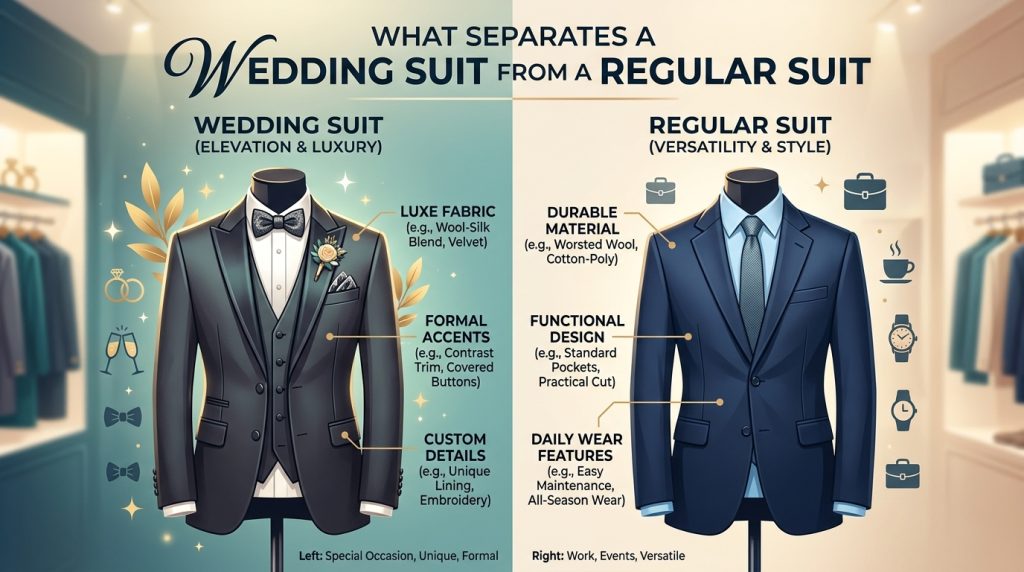
What Separates a Wedding Suit From a Regular Suit
The distinction isn’t always obvious, but it matters.
An everyday suit is built for repeated wear, professional settings, and practical versatility. A wedding suit serves a specific occasion, a specific aesthetic, and in most cases a visual connection to the people standing beside you.
That changes the decision framework entirely.
When you’re buying a suit for the office, versatility is the main value. When you’re choosing wedding suits for the groom, the priorities shift:
- Formality level matched to the venue and dress code
- Visual cohesion works alongside the bridal party’s attire
- Photography performance some fabrics and colors look significantly better in photographs than others
- Comfort across a long day the right fabric makes a twelve-hour day manageable
A good everyday suit and a good wedding suit can be the same garment. But the buying process leading you to that garment is different when a specific high-stakes occasion is involved.
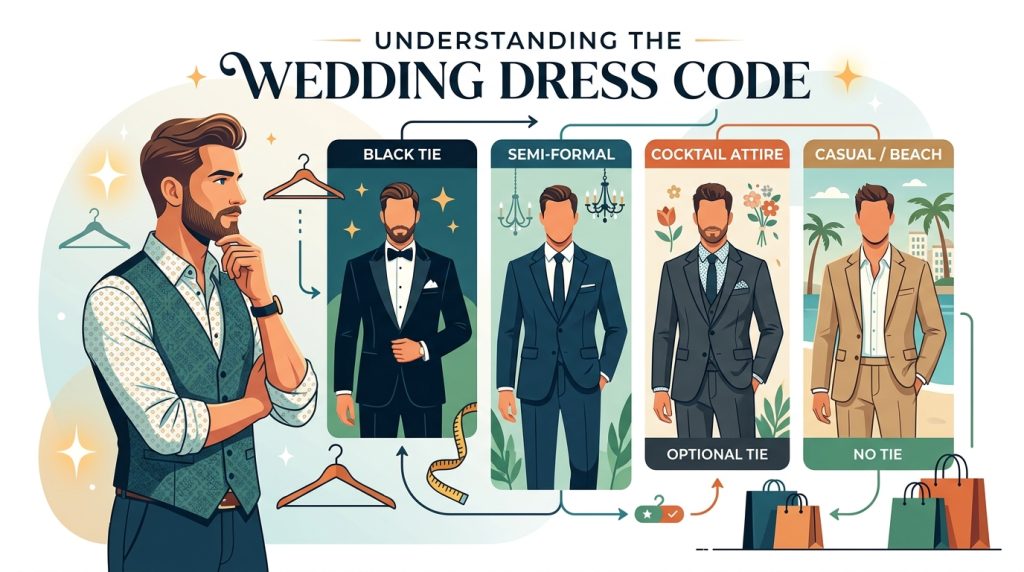
Understanding the Wedding Dress Code Before You Shop
This is where most men go wrong. They pick a suit they like, then figure out later whether it fits the occasion.
Do it the other way around. Start with the dress code.
Black-Tie and Formal Weddings
Wedding tuxedos for the groom are appropriate here and often expected. Black-tie signals satin lapels, a bow tie, and a formal dress shirt. Choosing a suit instead of a tuxedo at a black-tie event reads as underdressed, regardless of how well the suit fits.
Peak lapel tuxedos are the most formal cut and photograph particularly well. Shawl collar tuxedos are elegant and slightly softer in appearance. Either works for formal weddings.
Black-Tie Optional
This is where a well-chosen suit becomes the smarter call for many grooms. A dark navy suit or charcoal suit in a fine wool fabric signals that you’ve dressed appropriately for a formal occasion without locking yourself into full tuxedo formalwear.
If the bridal party is wearing lighter colors, a dark suit also provides contrast that photographs well.
Cocktail and Business Formal
The widest range of options lands here. Navy suits, charcoal suits, and well-fitted black suits all work. Lighter tones medium blue, grey, or tan begin to feel appropriate depending on the season and venue.
Smart Casual and Garden Weddings
Linen blends, lighter colors, and relaxed cuts all enter the picture. You still want structure, but a three-piece suit in charcoal wool would feel out of place at a garden ceremony in June.
Suits vs. Wedding Tuxedos: Getting This Decision Right
The suit-versus-tuxedo question comes up at nearly every formal wedding, and the answer is simpler than most men expect.
Choose wedding tuxedos when:
- The invitation says “black-tie” or “black-tie optional”
- The venue is a formal ballroom, upscale hotel, or grand estate
- Your partner’s outfit reflects high formality
- The wedding is an evening ceremony
Choose a suit when:
- The dress code is cocktail, business formal, or smart casual
- The wedding takes place outdoors, in daytime, or in a relaxed venue
- You want something you’ll genuinely wear again after the wedding
One practical note: wedding tuxedos carry a visual commitment. They work beautifully in the right context and look conspicuously overdressed in the wrong one. A sharp navy or charcoal suit, by contrast, handles a wider range of formality with ease.
The 2026 Color Guide for Wedding Suits
Color trends in menswear move slowly, and that’s a good thing for grooms. What works in 2026 is grounded in what has always worked with a few refinements worth knowing.
Navy Blue Suit: Still the Most Reliable Choice
The navy blue suit continues to be the most requested color for grooms in 2026. It photographs clearly, complements nearly every bridal gown color, and works across formality levels from cocktail to black-tie optional.
Navy also gives you styling flexibility. Pair it with a white shirt and burgundy tie for classic elegance, or a light blue shirt and no tie for a relaxed modern look.
Charcoal: The Professional Standard
Charcoal reads as serious and authoritative without the rigidity of black. For winter weddings and evening ceremonies, it’s a strong choice that holds its own in photographs.
Black Suit: High Contrast, High Formality
A black suit works well at formal and evening weddings. It creates sharp contrast in wedding photos, pairs cleanly with white or ivory florals, and signals formality without requiring a full tuxedo.
The limitation is seasonal black absorbs heat and can feel heavy at outdoor or summer weddings.
Lighter Tones for 2026
Slate blue, warm grey, and stone tan are seeing increased use at outdoor and daytime weddings. These tones feel intentional and current without chasing trends that won’t age well in photographs taken twenty years from now.
Mens Beach Wedding Attire: An Entirely Different Category
Mens beach wedding attire operates by its own rules, and the standard suit buying process doesn’t apply.
Heat, humidity, sand, and informal surroundings all push the decision toward lighter fabrics and more relaxed silhouettes. What looks elegant in a ballroom looks visually wrong on a beach.
What actually works for beach weddings:
Linen suits are the most popular choice. They breathe, they move naturally, and they look appropriately relaxed for outdoor coastal settings. The trade-off is that linen wrinkles visibly throughout the day something most guests understand and overlook in a beach setting.
Cotton-linen blends split the difference. Slightly more wrinkle-resistant than pure linen, still lightweight, and comfortable in warm weather.
Light colors white, off-white, light grey, stone, and tan feel natural at beach ceremonies in a way that dark colors don’t.
Avoid: Heavy wool suits, dark formal colors, and structured three-piece suits at beach weddings. They’re uncomfortable and visually disconnected from the setting.
Footwear matters here too. Leather dress shoes on sand are impractical. Loafers, suede boots, or even clean white leather sneakers are reasonable depending on the formality of the occasion.
How to Find the Right Fit for Your Wedding Suit
For any groom looking at wedding suits for men, fit is the factor that determines how everything else looks. A well-fitted mid-range suit outperforms an expensive suit in the wrong size every time.
Get these five measurements before you shop:
Chest Around the fullest part, under your arms and across shoulder blades.
Waist Around your natural waist, above the hip bones, not where your belt sits.
Seat Around the widest part of your hips, approximately 8 inches below the waist.
Inseam From your crotch to the floor, standing upright.
Torso Length From your shoulder to your hip bone. This distinguishes Short, Regular, Long, and Extra Long jacket sizes.
Men who wear a 40 Regular and a 40 Long are wearing completely different jackets. If you’ve always found suits proportionally awkward jacket too short, shoulders fitting but trousers needing heavy alteration your torso length measurement is usually the missing piece.
Custom Suits for Weddings: When They’re Worth It
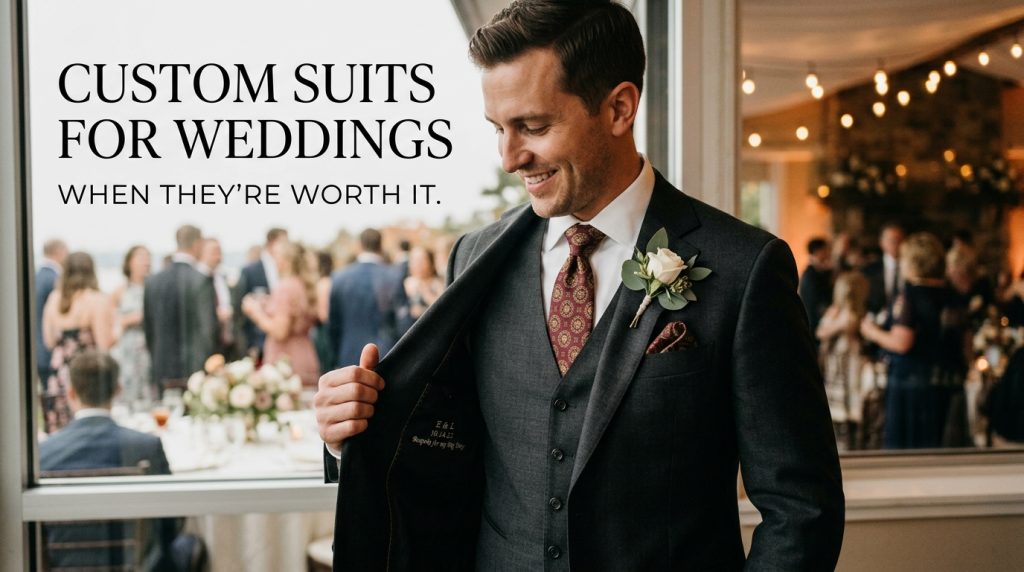
Custom suits for weddings are worth serious consideration, even if you’ve never bought one before.
A wedding is the highest-stakes occasion most men dress for. The photography is permanent. The memories are visible in those photographs for decades. Getting the fit precisely right not “close enough,” but exactly right matters more here than anywhere else.
Custom also gives you decisions that ready-to-wear doesn’t offer: lapel width, button stance, lining color, pocket style, trouser break. Each element can be calibrated to your body type and the visual aesthetic of your wedding.
The lead time for custom suits is typically four to six weeks from order to delivery. Add another week for any final adjustments, and plan your order at least two months before the wedding date.
If a full custom suit is outside your budget, made-to-measure is the middle path. It adjusts a standard pattern to your measurements and delivers a noticeably better fit than off-the-rack at a lower price than fully bespoke construction.
Groomsmen Coordination: How to Make It Work Without Making It Uniform
The groom’s suit should stand apart from the groomsmen’s but not clash.
The most common approach is for the groom to wear a slightly more formal version of the group’s look. If groomsmen are in navy suits, the groom wears a navy suit with a different lapel style, a more distinctive tie, or a boutonniere that separates him visually.
Another approach: the groomsmen wear suits, and the groom wears a tuxedo. This creates clear visual hierarchy in photographs and makes the primary subject easy to identify in every frame.
What doesn’t work well: matching the groomsmen exactly in every detail. Wedding photography becomes confusing, and the groom should be immediately identifiable in every photo.
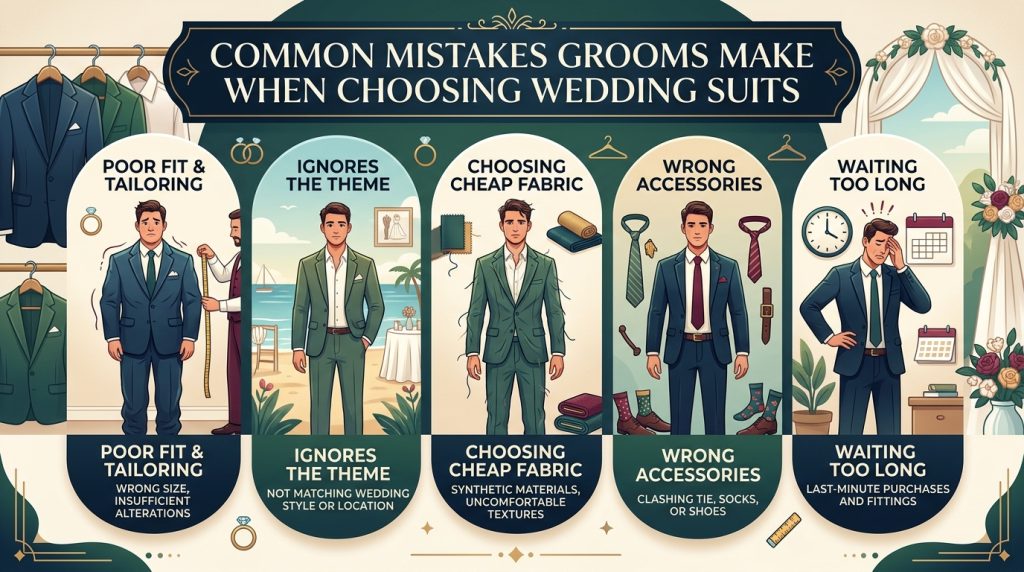
Common Mistakes Grooms Make When Choosing Wedding Suits
Ordering too late. Custom and made-to-measure suits take time. Off-the-rack suits may still need alterations. Order at minimum six to eight weeks before the wedding.
Ignoring the venue’s formality. A suit that looks great in a showroom can look wrong at the actual location. Think about the setting before choosing color, cut, or fabric weight.
Measuring once and assuming it’s right. Measure twice, compare against the retailer’s specific size chart, and confirm the numbers before placing an order.
Choosing based on photos without checking fabric content. Photography can make synthetic fabrics look like fine wool. Read the product description carefully.
Skipping the alteration budget. Even a well-fitted suit typically needs minor adjustments after delivery. Budget $50–$100 for final tailoring.
Matching the bridal party too closely. Your look should complement the overall aesthetic not merge into it.
FAQ: Wedding Suits for Men Real Questions, Direct Answers
Q: Should a groom wear a suit or a tuxedo?
It depends on the dress code. Black-tie events call for a tuxedo. For cocktail, business formal, or outdoor weddings, a well-fitted suit is appropriate and more versatile.
Q: What color wedding suit works best for photographs?
Navy blue photographs cleanly against almost every background and bridal gown color. Charcoal and black also perform well in formal settings.
Q: How early should I order a custom wedding suit?
Order at least six to eight weeks before the wedding. Made-to-measure suits typically take four to five weeks, plus time for any final adjustments.
Q: What should I wear to a beach wedding as the groom?
A linen or cotton-linen blend suit in a light color white, stone, or light grey is the standard choice. Avoid heavy fabrics and dark formal colors in beach settings.
Q: Can groomsmen wear the same suit as the groom?
A close match in color is common, but the groom should have at least one distinguishing element a different tie, lapel, boutonniere, or formality level.
Q: Is a navy suit appropriate for a formal wedding?
Yes. A navy suit in fine wool is appropriate for cocktail and business formal weddings. For black-tie events, a tuxedo is more appropriate.
Q: How much should I budget for a quality wedding suit?
Ready-to-wear suits range from $200–$600. Made-to-measure typically runs $400–$900. Custom suits can range from $700 upward. Add $50–$100 for tailoring adjustments.
Q: What’s the difference between wedding tuxedos and regular tuxedos?
The garment itself is identical. “Wedding tuxedo” refers to the styling context the accessories, color, and formality choices made specifically for a wedding occasion.
Conclusion
Your approach to wedding suits for men in 2026 doesn’t need to be complicated it needs to be deliberate.
Start with the dress code. Build from there. Choose a fabric appropriate for the season and venue. Get your measurements before you look at a single product listing. Decide between a suit and a tuxedo based on the formality of the occasion, not personal preference alone.
The details color, cut, fabric weight, custom versus ready-to-wear fall into place once the fundamentals are clear. And when they do, the result is a suit that looks exactly right in every photograph and feels comfortable through every hour of the day.
For a professional selection of wedding suits, custom suits, and formal formalwear built around precise fit and lasting quality, visit Mensusa.