

Introduction
A tuxedo is not just a suit with a different name. It is a specific category of formal wear with its own construction, details, and rules and when you wear one correctly, the effect is genuinely powerful.
The challenge is that most men only wear a tuxedo for mens occasions a handful of times in their lives. That limited experience means most men walk into the process with little context for what they are actually choosing, relying on whatever the rental shop recommends or whatever looks familiar from movies.
The result is often a tuxedo that fits poorly, feels uncomfortable, and does not photograph the way anyone hoped.
We will cover what actually makes a tuxedo different from a suit, the main tuxedo styles available today, how to choose the right fit and fabric for your body and the occasion, whether renting or buying makes more sense for your situation, how wedding tuxedos differ from gala formalwear, and the mistakes that are easiest to avoid once you know what to look for.
What Actually Makes a Tuxedo Different From a Suit
This is the question most men never ask clearly and it leads to a lot of confusion when shopping.
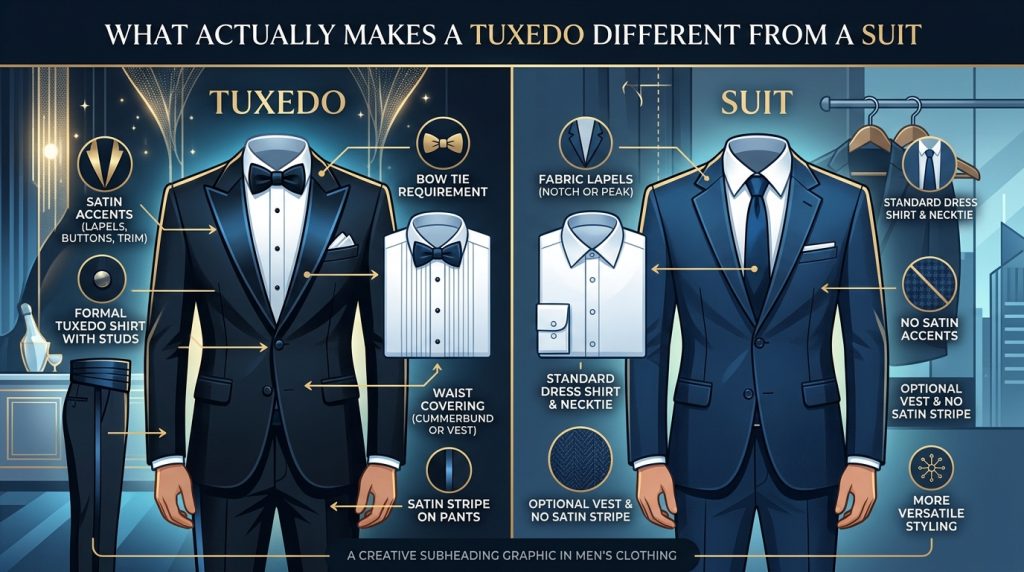
A mens tuxedo suit is defined by several specific construction and design details that distinguish it from a regular business or formal suit:
- Satin or grosgrain lapels the lapels on a tuxedo jacket are faced with satin or grosgrain ribbon, creating a distinct sheen that no standard suit replicates
- Matching satin or grosgrain stripe running down the outer seam of each trouser leg
- No external pockets or pocket flaps on the jacket tuxedo jackets have clean, unbroken lines
- Covered or satin-faced buttons rather than standard suit buttons
- A formal shirt with a pleated or bib front, typically with a wing collar or spread collar
- A bow tie either pre-tied or self-tie rather than a standard necktie
These details work together to create the clean, high-contrast, formal visual signature that makes a tuxedo immediately recognizable. Remove any of these elements and the look becomes something else not necessarily worse, but no longer a true tuxedo.
Understanding this helps you shop more confidently and evaluate what you are looking at when comparing options.
The Main Tuxedo Styles You Need to Know
Tuxedos are not a single style they come in several distinct variations that suit different occasions, body types, and personal preferences.
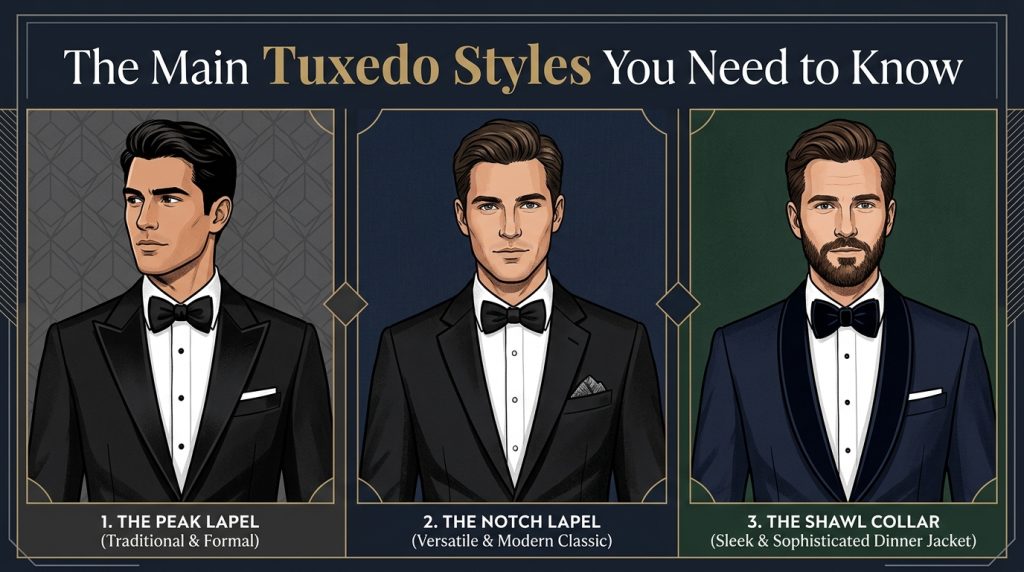
Single-Breasted Tuxedo
The most common and versatile tuxedo style. A single column of buttons typically one or two with lapels that meet at the front. The one-button single-breasted tuxedo with a peak or shawl lapel is the most classic formal choice and the most widely photographed option at weddings and galas.
Best for: Most body types. Works across the full range of formal occasions from weddings to black-tie galas.
Double-Breasted Tuxedo
Two parallel columns of buttons with wider, overlapping front panels. A significantly more formal and fashion-forward choice than single-breasted. The double-breasted tuxedo carries a strong, authoritative visual presence that suits men who want to make a deliberate, confident style statement.
Best for: Taller, broader builds where the structured front panel creates strong proportion. Less flattering on very slight or petite frames. More appropriate for galas and formal evening events than casual wedding celebrations.
Shawl Lapel Tuxedo
The shawl lapel a continuous, rounded lapel with no notch is the most distinctly formal lapel style available. It is smooth, unbroken, and carries a sense of old-world elegance that no other lapel replicates. Many consider the shawl lapel to be the most correct and traditional tuxedo lapel choice.
Best for: Classic formal occasions. Particularly beautiful on taller frames. Works well for both weddings and gala events.
Peak Lapel Tuxedo
The peak lapel points upward toward the shoulders, creating a bold, structured frame around the face. More assertive than the shawl lapel and increasingly popular for wedding tuxedos where the groom wants a strong, distinctive appearance.
Best for: Most body types. Creates a particularly strong visual impression on broader-shouldered builds. Highly photogenic and a strong choice for wedding portraits.
Notch Lapel Tuxedo
The notch lapel the standard suit lapel with a triangular cut where the lapel meets the collar appears on some tuxedo styles but is considered less formal than peak or shawl options. It creates a softer, slightly less ceremonial appearance.
Best for: Semi-formal occasions where a tuxedo is appropriate but strict formality is not required.
Tuxedo Colors: Beyond Classic Black
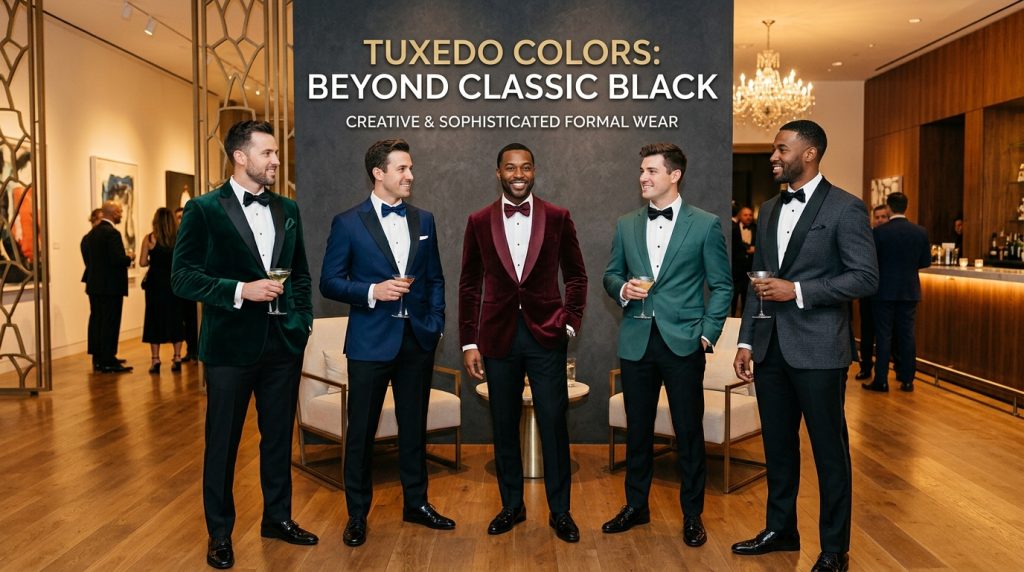
Black is the traditional and most widely worn tuxedo color and for good reason. A black tuxedo with a white shirt and black bow tie creates the highest-contrast, most universally recognizable formal look available. It works at virtually every black-tie event without question.
But black is not the only option, and for wedding tuxedos in particular, color deserves more thought.
Midnight Navy: The closest alternative to black, midnight navy reads as black in most indoor lighting but carries a richer, deeper tone that many photographers and style experts consider more interesting and flattering. An excellent choice for grooms who want the formality of black with slightly more personality.
Ivory and Cream: A popular choice for grooms at beach, destination, and warm-weather weddings. Creates a softer, warmer appearance than black and works beautifully in outdoor daylight photography. Pairs naturally with linen or lightweight wool fabrics.
Burgundy and Deep Wine: A bold, fashion-forward tuxedo color choice that works particularly well for autumn and winter weddings and galas. Rich in color and visually striking in formal event photography.
Grey: From light silver-grey to deep charcoal, grey tuxedos offer a softer formality than black. Medium grey works well for daytime formal weddings. Charcoal reads nearly as formal as black while feeling slightly less severe.
White Dinner Jacket: The white dinner jacket paired with black formal trousers is a distinctly warm-weather, resort, or tropical formal look. Classic, elegant, and particularly appropriate for destination weddings and summer galas.
Fit: The Factor That Determines Everything
A tuxedo’s visual impact is almost entirely determined by how well it fits. An expensive tuxedo in the wrong size looks worse than a modest tuxedo that fits correctly. This is not an exaggeration.
Here is what correct tuxedo fit looks like at each key point:
Shoulders: The shoulder seam sits exactly at the edge of your shoulder not hanging over or pulling inward. This is the most important measurement and the one that cannot be corrected by a tailor without significant expense.
Chest: The jacket closes cleanly without pulling across the chest or creating an X-shape at the button. You should be able to place one flat hand inside the jacket without significant resistance.
Waist suppression: A well-fitted tuxedo jacket should show a subtle inward taper at the waist when buttoned. This creates the clean, structured silhouette that distinguishes a properly fitted tuxedo from one that hangs like a box.
Sleeve length: The jacket sleeve should end roughly half an inch above the shirt cuff, allowing a small amount of dress shirt and cufflink to show. This detail is both functional and visually important.
Trouser break: Tuxedo trousers are traditionally worn with little to no break at the shoe the trouser hem sits just at or slightly above the top of the shoe. This creates a clean, modern line that works particularly well with patent leather or polished dress shoes.
Overall comfort: A tuxedo should allow you to raise your arms, sit comfortably, and move through an event without constant adjustment. If any of these feel restricted at fitting, the tuxedo needs adjustment before the event.
Fabric Choices for Tuxedos
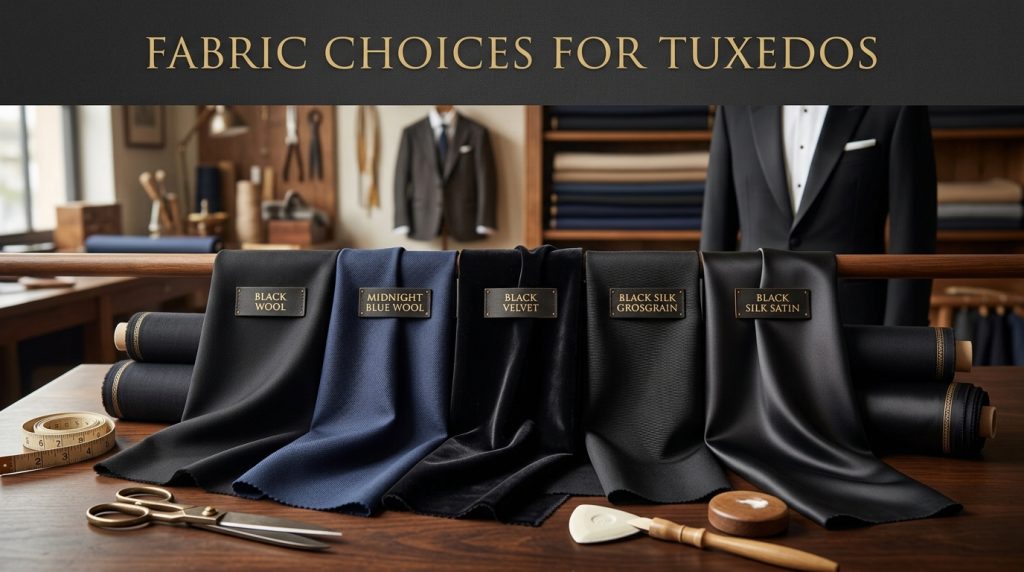
Tuxedo fabric affects comfort, drape, and how the garment photographs.
Wool: The most appropriate and widely recommended fabric for formal tuxedos. Medium-weight wool drapes beautifully, holds its shape through a long event, breathes reasonably well, and creates the clean structure that a tuxedo requires. The majority of quality mens tuxedo suit options are constructed in wool or wool blends.
Wool Crepe: A slightly textured wool weave with an elegant matte finish. Particularly popular for contemporary wedding tuxedos where a cleaner, less shiny appearance is preferred over the high-gloss look of traditional formal wear.
Velvet: A strong choice for winter galas and autumn formal events. Velvet tuxedo jackets typically in midnight navy, rich burgundy, or deep green carry an opulent, textured quality that photographs beautifully under warm event lighting. Often paired with standard black wool trousers rather than matching velvet.
Lightweight Wool or Tropical Weight: For warm-weather events and destination weddings, a lightweight tropical-weight wool tuxedo breathes significantly better than standard weight while maintaining appropriate formal structure.
Avoid: Very shiny polyester fabrics that look synthetic under event lighting, heavy fabrics for summer events, and fabrics that wrinkle easily without inherent drape quality.
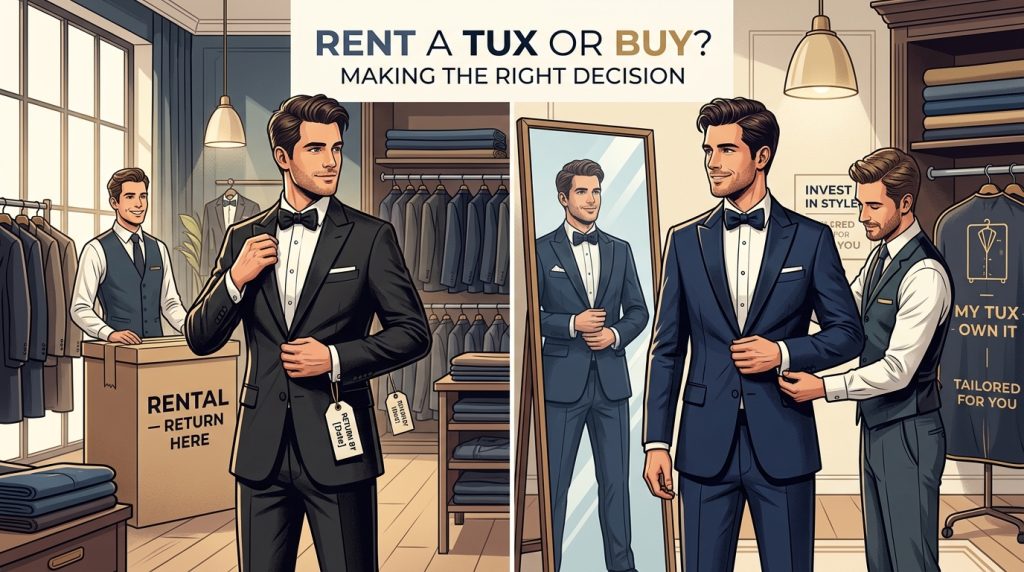
Rent a Tux or Buy? Making the Right Decision
This is one of the most common questions men ask when preparing for a formal event and the honest answer depends on your specific situation.
When Renting Makes Sense
Renting makes practical sense when:
- This is a one-time occasion and you genuinely do not anticipate needing a tuxedo again in the foreseeable future
- Your budget is limited and a quality purchase is not currently realistic
- You are a groomsman being asked to match a specific style selected by the groom
When you rent a tuxedo, be aware of these practical considerations:
- Rental tuxedos are worn by many people and may not fit as precisely as a purchased garment
- Request your measurements be taken professionally rather than estimating
- Pick up the tuxedo at least two days before the event to confirm fit and address any issues
Searching for rent a tux near me or tuxedos near me through a reputable formal wear retailer rather than a large chain gives you access to better quality inventory and more personalized fitting service.
When Buying Makes More Sense
Purchasing your own tuxedo makes more sense when:
- You attend formal events regularly more than once every two to three years
- You are the groom and want a tuxedo that fits and photographs perfectly
- You want the freedom to wear your tuxedo to multiple future events without rental fees accumulating
The cost of purchasing a quality tuxedo particularly when you factor in the number of events it will serve across several years often makes more financial sense than repeated rental fees. A well-cared-for wool tuxedo can remain appropriate and relevant for ten years or more with occasional updating of accessories.
A broad selection of tuxedo for mens styles across different cuts, lapel options, and colors gives you a significantly better starting point than limiting yourself to whatever a single rental shop stocks.
Wedding Tuxedos: Specific Considerations for Grooms
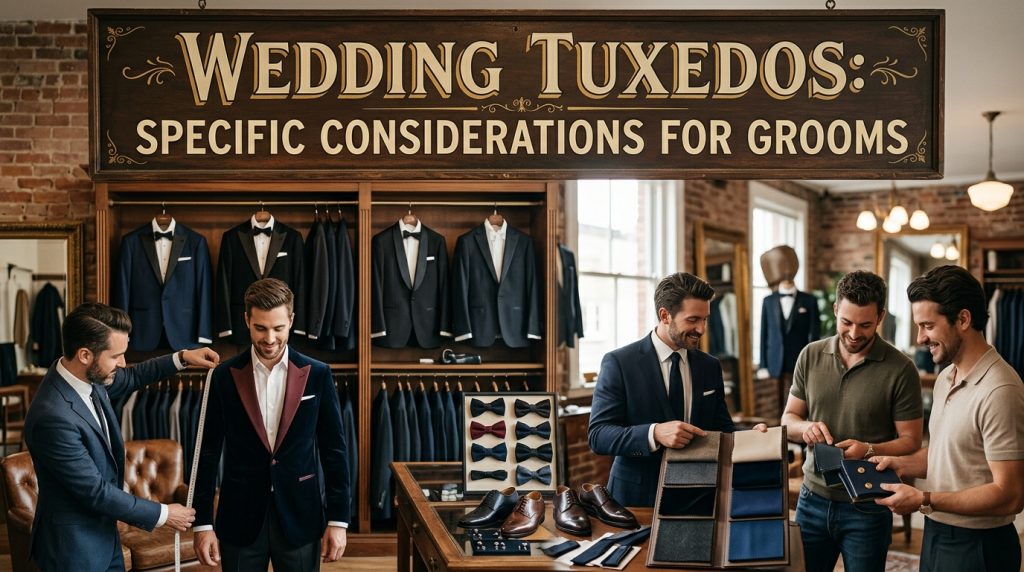
Wedding tuxedos require slightly different thinking than tuxedos chosen for galas or other formal events.
Coordinate with the wedding’s formality level. A black-tie wedding calls for a traditional black tuxedo with classic accessories. A semi-formal or cocktail wedding may allow more color flexibility. A beach or destination wedding may suit an ivory dinner jacket or lightweight grey tuxedo more naturally than traditional black.
Distinguish yourself from the groomsmen. The groom should be visually distinct from the wedding party. Common approaches include:
- Groom wears a different lapel style than groomsmen peak lapel versus notch lapel
- Groom wears a different color midnight navy while groomsmen wear black
- Groom wears a 3 piece style while groomsmen wear 2 piece
- Groom’s accessories boutonniere, pocket square, tie color distinguish him clearly
Invest in fit more than anything else. Wedding photographs are permanent. The single best investment for a wedding tuxedo is professional tailoring that makes the garment fit precisely. This matters more than brand, more than price, and more than any individual style choice.
Choose accessories that coordinate with the wedding’s color palette. Bow tie color, pocket square, and boutonniere should relate to the overall wedding aesthetic rather than being chosen in isolation.
Tuxedo Accessories: Getting the Details Right
The accessories complete the tuxedo look. Getting them right makes a visible difference in the overall impression.
Dress Shirt: A white formal shirt with a pleated or bib front is the traditional choice. Wing collar shirts have a classic, theatrical quality. Spread collars are more contemporary and comfortable. The shirt should fit the neck precisely a gaping collar undermines the entire look.
Bow Tie: A self-tie bow tie one you tie yourself is the more formal and widely respected choice. Pre-tied bow ties are perfectly acceptable and practical. Both options are appropriate. Avoid novelty bow ties or ties that are clearly out of proportion with your collar and lapels.
Cufflinks: Required with a formal dress shirt. Silver, gold, or black onyx cufflinks work across most tuxedo color combinations. Keep them proportionate small to medium size reads as most elegant.
Formal Shoes: Black patent leather Oxford shoes are the most traditional and correct choice with a black tuxedo. Highly polished black cap-toe Oxfords are an excellent alternative if patent leather is not preferred. The shoes should be clean, polished, and in good condition scuffed or dull shoes undermine the formality of the entire look.
Pocket Square: A white linen or silk pocket square in a flat presidential fold is the classic tuxedo choice. It should be clean, crisp, and sit just above the pocket edge without excess volume.
Common Tuxedo Mistakes Men Make
Wearing a regular necktie instead of a bow tie. A regular tie with a tuxedo jacket creates a visual clash that reads as either uninformed or deliberately casual. Unless the event specifically calls for a different accessory approach, always wear a bow tie with a true tuxedo.
Ignoring the trouser stripe. Wearing standard suit trousers with a tuxedo jacket missing the satin stripe creates a visually incomplete look. Tuxedo trousers are specifically designed to accompany the jacket.
Picking up a rental tuxedo the same day as the event. This leaves no time to address fit issues, missing components, or damage. Always collect a rental tuxedo at minimum two days before the event.
Wearing the wrong shoes. Brown shoes, casual leather shoes, or worn footwear with a formal tuxedo is one of the most visible and avoidable errors. Black patent leather or highly polished black Oxfords are the correct choices.
Leaving alterations too late. Whether renting or buying, alteration appointments take time. Schedule them as soon as you have the tuxedo in hand at least three to four weeks before the event.
FAQ Section
Q1: What is the difference between a tuxedo and a suit?
A tuxedo has satin or grosgrain lapels, matching trouser stripes, covered buttons, and is worn with a formal dress shirt and bow tie. A suit has standard lapels, plain trousers, and is worn with a regular shirt and necktie.
Q2: Should I rent or buy a tuxedo for a wedding?
If you attend formal events more than once every two to three years, buying almost always makes more financial sense over time. If this is a genuine one-time occasion, renting is practical.
Q3: What color tuxedo should I wear to a black-tie wedding?
A classic black tuxedo with a white dress shirt and black bow tie is always appropriate and correct at a black-tie wedding. Midnight navy is an excellent alternative that reads nearly as formal while offering slightly more visual depth. Q4: What is the most formal tuxedo lapel style?
The shawl lapel a smooth, continuous, rounded lapel is widely considered the most formal and traditional tuxedo lapel. The peak lapel is the second most formal option and creates a bolder, more assertive visual frame.
Q5: Can I wear a tuxedo to a semi-formal wedding?
Yes. A tuxedo is never underdressed at a formal or semi-formal event you can only be overdressed, and a well-fitted tuxedo at a semi-formal wedding reads as a sign of respect for the occasion rather than excess.
Conclusion
A tuxedo for mens occasions is one of the most powerful statements in formal dressing when it fits correctly, suits the occasion, and is worn with the right accessories and genuine confidence.
The process of choosing the right one is straightforward when broken into clear steps: understand what makes a tuxedo distinct from a suit, choose a style and lapel that suits your body type, select the right fabric for the season and setting, decide honestly between renting and buying based on your actual circumstances, and invest in proper fit above everything else.
For wedding tuxedos, the stakes are particularly high because the photographs are permanent. Spend proportionately. Get the fit right. Coordinate thoughtfully with the wedding’s aesthetic. And wear the finished result with the confidence that comes from knowing every detail was chosen deliberately.
For a wide selection of quality formal styles across every occasion, visit AlbertoNardoni.