

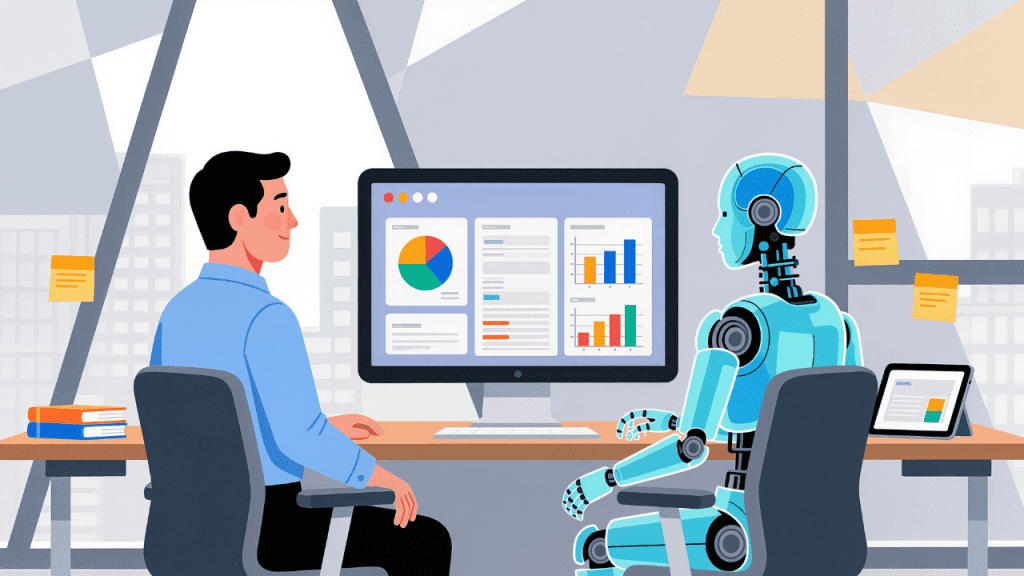
Artificial intelligence is no longer a distant frontier—it’s become a practical tool that small and mid-sized businesses can use to streamline operations, improve customer experiences, and accelerate decision-making. But as interest in large language models (LLMs) grows, many leaders are discovering that the path to meaningful adoption is not as simple as flipping a switch. Integrating AI can create tremendous value, but only when it’s done with clarity, intention, and a realistic understanding of what these technologies can and cannot do.
Understanding What LLMs Actually Solve
Large language models excel at one thing above all: handling language-based work at scale. They can analyze customer messages, summarize documents, generate content, assist with research, and provide decision support. But they are not drop-in replacements for human judgment. Leaders should approach LLMs as powerful assistants rather than autonomous operators.
Before adopting AI, identify the specific tasks taking up time across your team—drafting emails, documenting procedures, answering repetitive inquiries, sorting information. LLMs often shine in these areas, freeing humans to focus on strategy and relationship-driven work.
Start With a Focused Use Case
A common mistake business owners make is trying to implement AI everywhere at once. The better approach is to choose one high-impact workflow and pilot an LLM there. For example, a customer support team might use an AI model to suggest responses or summarize long back-and-forth threads. A management team might use it to clean messy data, write meeting recaps, or generate internal documentation.
The point is to validate usefulness early. Once employees see real improvements in time saved or errors reduced, AI adoption feels like a natural evolution rather than a top-down mandate.
Data Quality Matters More Than You Think
LLMs rely heavily on the information you give them. If your data is outdated, inconsistent, or scattered across tools, you’ll see inconsistent outputs. Business leaders should treat data cleanup as part of the AI transformation—not an afterthought.
Clarify where your information lives, who owns each type of data, and how it flows through your business. Think of it as tuning the engine before adding new horsepower. Good AI isn’t only about model performance; it’s about the quality and clarity of the content feeding it.
Customization Isn’t Optional
While off-the-shelf AI tools are powerful, businesses get the best results when models are tailored to their unique language, processes, and industry standards. This is where many organizations begin exploring light forms of AI software development—not to build everything from scratch, but to shape the system around how the business actually works.
Fine-tuning a model on past proposals, customer conversations, training materials, and brand guidelines can dramatically improve accuracy. Even small customizations can ensure the AI speaks in your brand voice and reflects your industry’s nuances.
Governance Protects the Business
Integrating AI isn’t only about capability; it’s about responsibility. Leaders need to consider data privacy, security, and how employees will interact with the technology. Establish guidelines early:
- What types of information can be shared with AI platforms?
- When does a human need to verify AI output?
- Who is responsible for reviewing the system’s accuracy?
Good governance is not bureaucratic—it creates confidence. Teams are more likely to embrace AI when they understand how to use it safely and effectively.
Build a Culture of Experimentation
The most successful AI transformations don’t happen in boardrooms—they happen in day-to-day workflows. Encourage teams to explore how LLMs can help them, share discoveries, and surface new opportunities. Small businesses often adapt faster than large enterprises because they can adjust processes quickly and innovate without layers of approval.
Leaders who foster curiosity and openness will see the greatest gains. Employees who feel empowered to test AI’s capabilities become partners in transformation, not observers of it.
AI Is a Long-Term Shift, Not a Quick Fix
The businesses that will benefit most from AI are the ones that treat it as an evolving capability—something to refine, expand, and build upon over time. LLMs will continue to improve, tools will become more specialized, and workflows will keep shifting. Staying informed and flexible is essential.
The AI transformation isn’t about replacing people—it’s about giving them better tools. Leaders who understand this will build organizations that are faster, sharper, and more resilient in a changing economy. The opportunities are enormous, but the smartest path forward begins with a thoughtful, focused, and human-centered approach to AI adoption.
Elevate your brand with Digital Success, a hub for affordable, results-driven solutions in marketing, branding, advertising, and content creation. Leverage your strategic approach to boost visibility, increase sales, and take your business to the next level.