
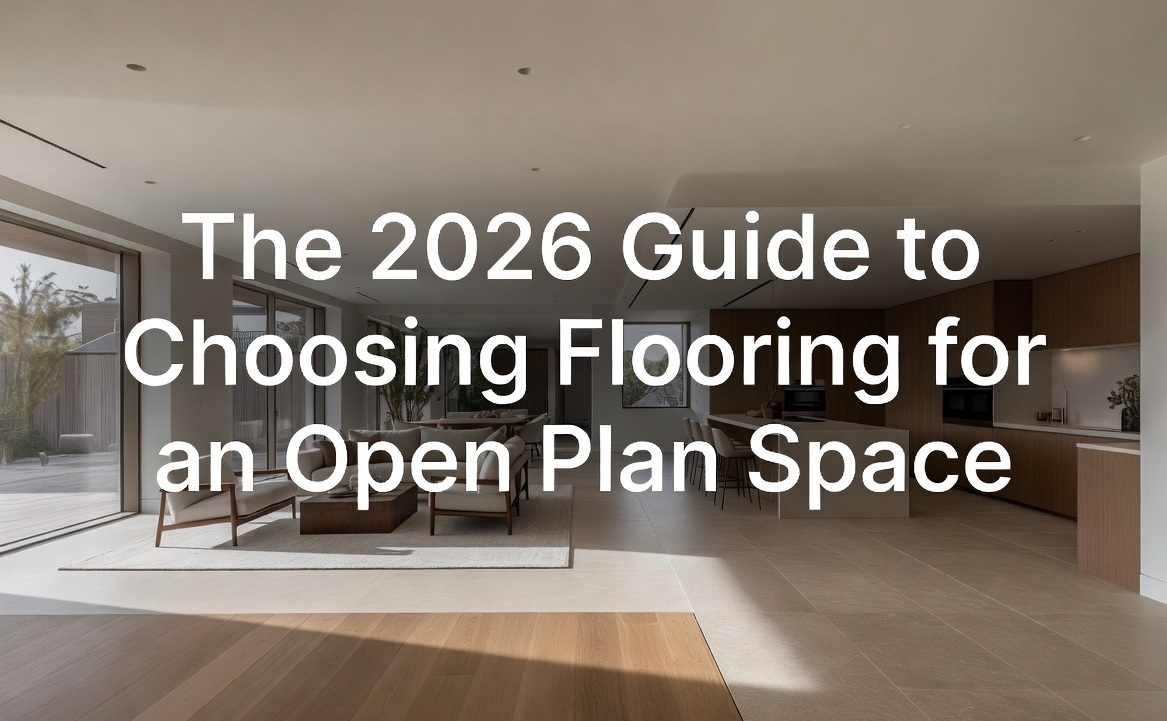
Open-plan living looks effortless in magazines. The design features one continuous, beautifully flowing space where the kitchen transitions into the dining area, which then opens naturally into the living room, all connected by a single type of wood flooring that creates a cohesive and considered look.
What the magazines don’t show you is the person standing in a flooring showroom six weeks before their renovation is due to start, genuinely uncertain about which flooring they are going to get installed, although fully aware that whatever they choose is going to cover the most visible surface in their entire home and will be extremely difficult and expensive to change if they get it wrong.
That moment of uncertainty is more common than you’d think. And it usually happens because open-plan spaces present a flooring challenge that single-room decision simply don’t. A single floor must perform well in multiple environments at the same time, look appealing from every angle and in various lighting conditions, and withstand the different demands of cooking, dining, and relaxing, all of which occur within a few feet of each other.
So, how should you think through it? This article will help you in exploring the right direction of thinking through the flooring choice and installation.
Start With the Space Itself, Not the Flooring
The Question Most People Skip Entirely
Before you look at a single sample or browse a single product page, there is one question worth sitting with properly. What is this space actually going to be used for, day to day, by the people who live here?
This might sound obvious, but it isn’t. Most people begins their approach to open-plan flooring by focusing on aesthetics, such as a colour they like or a finish they admire, and then work backward to find something that matches that look. That approach works fine for soft furnishings. For flooring, it regularly leads to beautiful choices that are genuinely wrong for the space.
A young family with children and a dog has entirely different flooring needs compared to a couple in their fifties whose children have left home. A kitchen-diner that doubles as a home office requires different thinking than one that’s purely a cooking and socialising space. An open-plan ground floor in a Victorian terrace faces different technical challenges due to draughts, temperature fluctuations, and an original suspended timber subfloor compared to a modern new build with a concrete slab and underfloor heating.
Therefore, it becomes critical that you know your space before you choose your floor.
The Three Zones Every Open-Plan Floor Has to Serve
Most open-plan spaces in UK homes contain three functionally distinct zones, even when they flow into each other visually. The kitchen zone, which involves water, food, grease, and heavy foot traffic around appliances. The dining zone, which involves chairs being dragged across the floor multiple times a day. The living zone is where comfort underfoot becomes significantly more important than in the kitchen and dining zones.
A floor that handles all three well is not an impossible request, but it does narrow the field, and knowing which zone creates the most demanding conditions in your specific home helps you choose a clear hierarchy rather than trying to optimise everything equally.
Understanding Your Three Main Options
Luxury Vinyl Tile
Luxury vinyl tile has taken over UK open-plan renovations over the past decade for an entirely practical reason. It is, of all the options available, the one that handles the widest range of conditions without compromise.
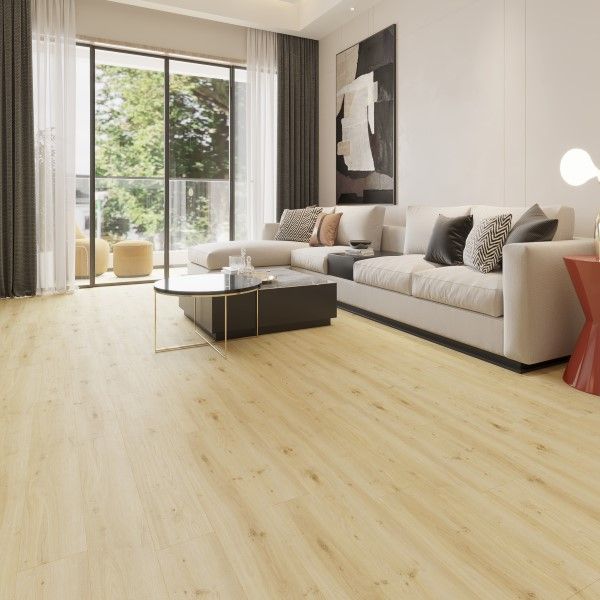
Fully waterproof, scratch-resistant, warm underfoot, compatible with underfloor heating, and available in a quality of wood- and stone-effect finishes that would have been unrecognisable to anyone buying vinyl flooring twenty years ago. LVT ticks most of the boxes that open-plan living demands without asking the homeowner to make significant sacrifices in any one area.
For the kitchen zone specifically, LVT is close to ideal. Spills don’t matter; the surface cleans easily, and it holds up to the kind of daily heavy usage that a busy kitchen goes through without showing it. In the living zone, it performs impressively too, though it will never feel quite as warm or natural underfoot as real wood.
Laminate Flooring in the UK
Modern laminate flooring in the UK has come an extraordinarily long way from the thin, hollow-sounding boards that gave the category its slightly unfair reputation. Today’s laminate options, particularly at 10mm and 12mm thickness, look gorgeous, feel solid underfoot, and offer a warmth and visual authenticity that exceptional LVT approaches but doesn’t quite match.
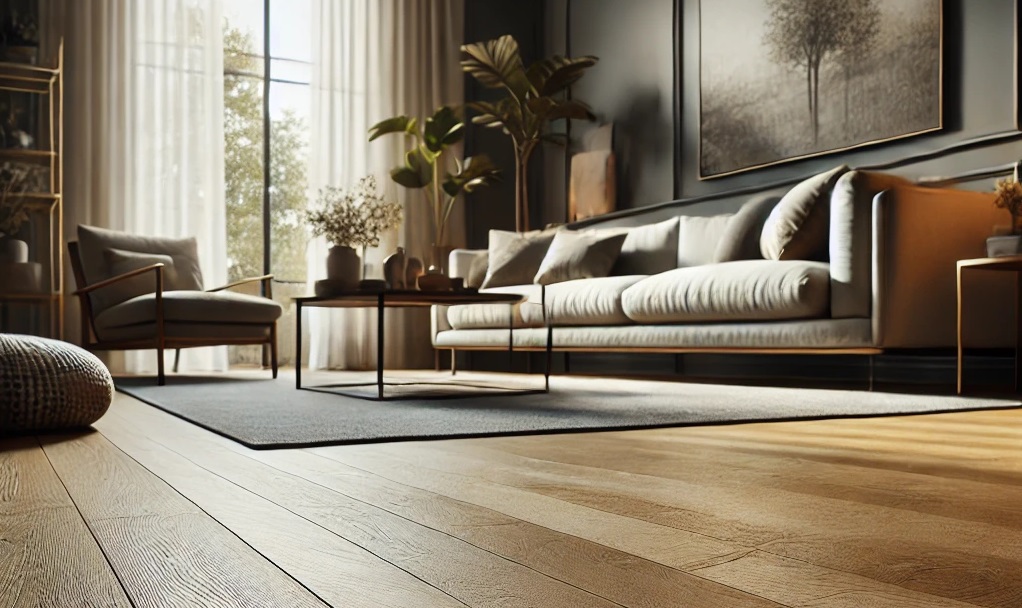
For the dining and living zones of an open-plan space, laminate is a strong performer. It handles foot traffic well, resists scratching better than many people expect, and can be installed as a floating floor relatively quickly and cleanly. In the living zone, the slightly warmer feel underfoot compared to LVT significantly enhances daily comfort.
Wood Flooring
Real wood flooring in an open-plan space is the best thing you can put down. There is simply nothing that looks or feels like it. The natural variation between boards, the way it ages and develops character over years, the warmth and solidity underfoot, and the way it responds to light differently at different times of day – none of these things are fully replicable, however, regardless of what the alternatives have become.
In an open-plan setting, it is the most challenging of the three options, with the widest gap between right and wrong.
Wood moves. It expands in humidity and contracts in dry conditions, which means temperature and moisture management matter considerably more with wood than with LVT or laminate. In a kitchen zone, this movement needs to be accounted for carefully and not necessarily avoided, but managed with the right installation approach, the right finish, and realistic maintenance expectations.
Engineered wood flooring handles this issue better than solid wood in most UK open-plan contexts because the layered construction reduces the degree of movement compared to a solid board. For spaces with underfloor heating, engineered wood is generally the recommended choice over solid wood, which can be more problematic over heating systems.
For homeowners seeking the genuine warmth and authenticity of real wood in a large open-plan space and who are willing to maintain it properly, wood flooring is a worthwhile investment. LVT is probably the better choice for those who want a flooring option that resembles wood but requires very little maintenance after installation.
Summing Up
To sum up, when planning the flooring for an open space, it’s important to take into account and clarify several factors. If you take these points into account, you can install the appropriate flooring throughout the entire house, ensuring it remains safe and durable over time.