

When selecting thin metal materials for engineering, manufacturing, or specialized technical projects, the choice often narrows down to two primary contenders: stainless steel foil and aluminum foil. While they may appear similar at a cursory glance, their metallurgical properties, mechanical performance, and ideal use cases differ significantly.
Understanding these distinctions is essential for optimizing your project’s durability, cost-efficiency, and operational success. In this guide, we break down the key differences between these two materials. For a foundational look at our high-performance offerings, feel free to browse our full catalog of Stainless Steel Foil products.
Defining the Materials
What is Stainless Steel Foil?
Stainless steel foil is an engineered, ultra-thin sheet of stainless steel, generally measuring under 0.2 mm in thickness. It inherits the robust mechanical properties of the base alloy—high tensile strength, significant corrosion resistance, and thermal stability—while offering the formability required for precision applications.
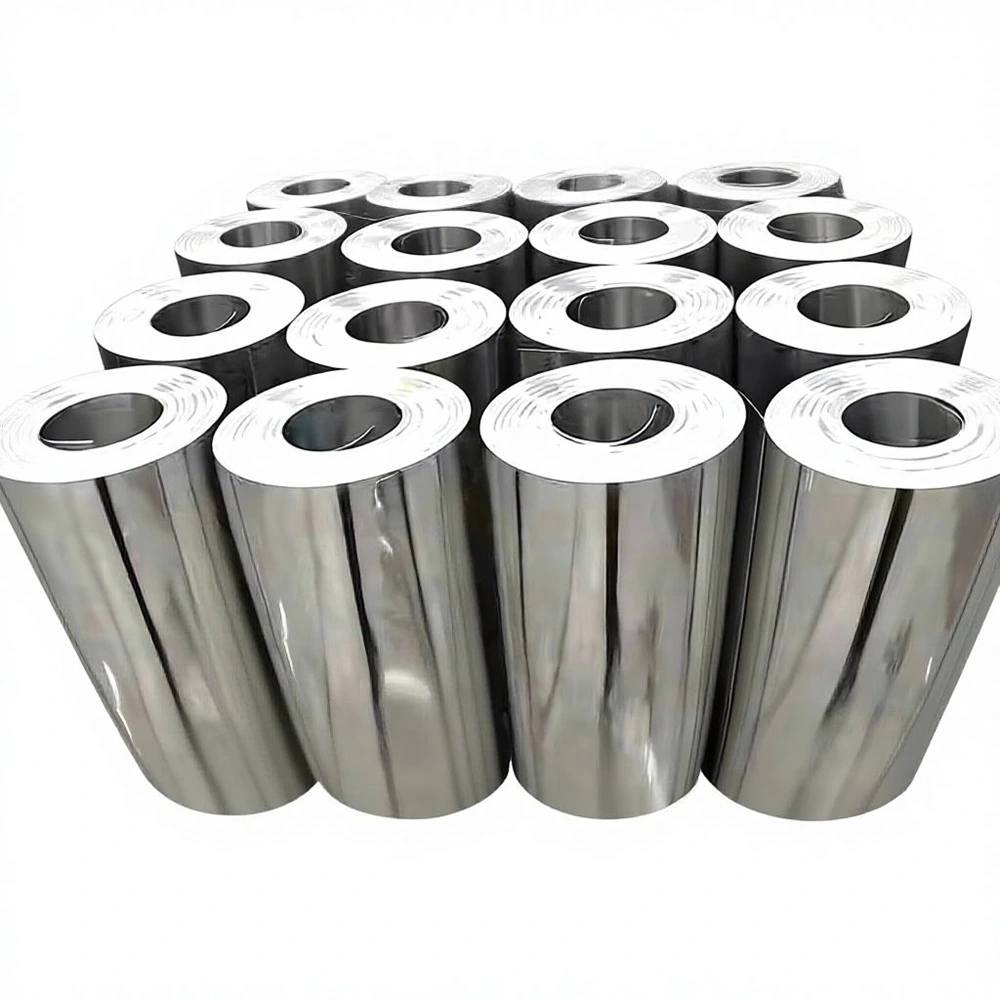
We utilize various grades to meet specific industry demands:
- 301 Stainless Steel Foil: Offers superior strength and ductility, making it ideal for high-stress environments.
- 304 Stainless Steel Foil: The gold standard for corrosion resistance and general-purpose industrial use.
What is Aluminum Foil?
Aluminum foil is a soft, lightweight metal sheet prized for its malleability and high electrical/thermal conductivity. It is ubiquitous in household packaging, basic insulation, and disposable manufacturing. While highly cost-effective, aluminum lacks the structural rigidity and high-temperature integrity of stainless steel.
Key Technical Differences
1. Strength and Mechanical Durability
- Stainless Steel: Exhibits high yield strength. It is resistant to tearing, deformation, and mechanical fatigue, making it the preferred choice for industrial environments where components are subjected to physical stress.
- Aluminum: Is relatively soft and prone to perforation. It is rarely suitable for high-stress mechanical applications where structural integrity is a priority.
2. Corrosion and Oxidation Resistance
- Stainless Steel: The chromium content forms a passive, self-healing oxide layer that provides exceptional protection against rust and chemical degradation.
- Aluminum: While it resists natural corrosion, it reacts poorly to highly acidic or alkaline environments, which can lead to rapid degradation over time.
3. Temperature Performance
- Stainless Steel: Designed to withstand extreme heat. Depending on the grade, it remains stable at temperatures exceeding 800°C. For those working with furnace environments, understanding the Best Stainless Steel Foil Grade for Heat is critical for preventing material failure.
- Aluminum: Begins to lose mechanical strength at relatively low temperatures and possesses a low melting point (approx. 660°C).
4. Thermal and Electrical Conductivity
- Aluminum: Outperforms stainless steel in conductivity. It is the material of choice for heat exchangers, HVAC systems, and electrical shielding where rapid thermal transfer or conductivity is the primary goal.
- Stainless Steel: Offers lower conductivity but provides superior structural stability, making it the better choice for protective shielding and structural components.
Quick Reference: Comparison Table
| Feature | Stainless Steel Foil | Aluminum Foil |
| Tensile Strength | Very High | Low |
| Corrosion Resistance | Excellent | Moderate |
| Heat Resistance | Very High | Low/Medium |
| Conductivity | Moderate | Very High |
| Durability | Long-term/Industrial | Short-term/Disposable |
| Cost | Premium | Low |
When to Choose Stainless Steel Foil
You should prioritize stainless steel foil when your application demands:
- Extreme Durability: For components subjected to wear, tear, or pressure.
- Harsh Environments: Where high heat or corrosive chemicals are present.
- Precision Engineering: Where structural integrity cannot be compromised.
Beyond our standard foil, we also provide specialized solutions for larger manufacturing needs, including Stainless Steel Coil for continuous lines and precision-cut Stainless Steel Strip for custom components.
When to Choose Aluminum Foil
Aluminum remains a practical option when:
- High Conductivity is required (e.g., electrical components or heat sinks).
- Budget is the primary constraint for non-structural, short-term projects.
- Lightweighting is the critical design factor and high heat is not a concern.
Sustainability and Long-Term Value
While aluminum is often associated with disposable, single-use products, stainless steel is a long-term asset. Its longevity reduces the frequency of replacement, leading to lower lifecycle costs and a smaller environmental footprint. At StainlessSteelfoil.com, we advocate for material choices that support long-term industrial efficiency.
Conclusion
The decision between stainless steel and aluminum comes down to the operational environment. If your project requires a material that can survive high-heat cycles, resist corrosion, and hold its shape under pressure, stainless steel is the professional choice.
For more information, or to discuss which grade is best for your specific application, please contact us today. You can also view our full guide on Stainless Steel Foil vs. Aluminum Foil for further technical data.
Frequently Asked Questions
Q: Can stainless steel foil replace aluminum foil in cooking?
A: Generally, no. While stainless steel is more durable, aluminum foil is preferred for cooking due to its flexibility, low cost, and high thermal conductivity. Stainless steel foil is intended for industrial heat treatment and engineering.
Q: Why is stainless steel foil more expensive than aluminum?
A: The cost reflects the superior alloy composition (chromium/nickel content) and the complex, precision-controlled cold-rolling and annealing processes required to produce thin, high-performance foil.
Q: Does stainless steel foil conduct electricity?
A: Yes, it conducts electricity, but significantly less effectively than copper or aluminum. It is often used for structural EMI/RFI shielding rather than as a primary electrical conductor.
Q: Where can I buy industrial-grade materials?
A: You can explore our extensive inventory of high-performance materials at StainlessSteelfoil.com.