

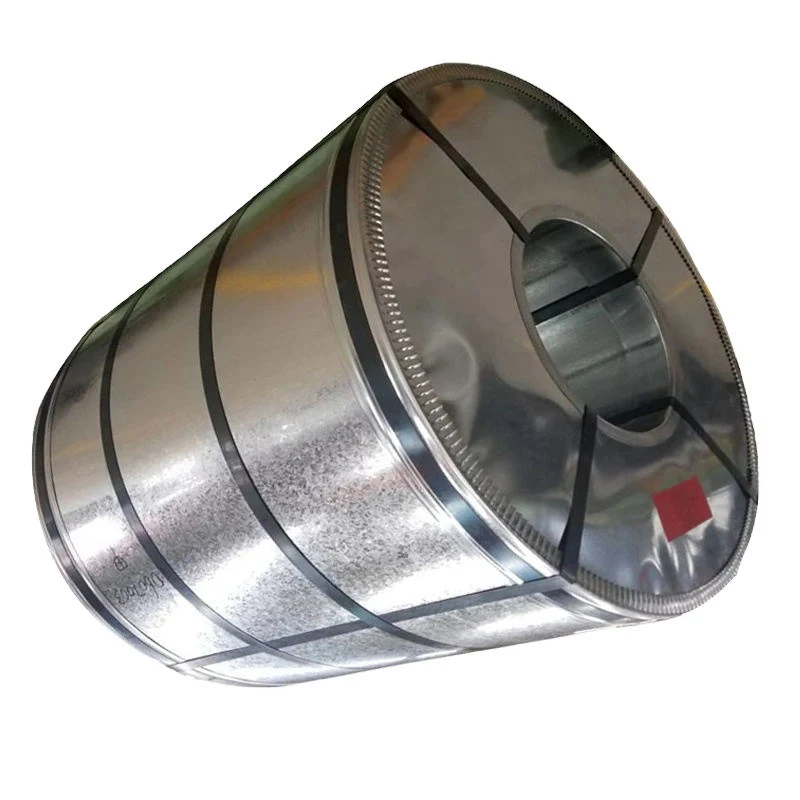
When design engineers, procurement specialists, and global manufacturers require a reliable, high-performance, ultra-thin metallic substrate, 304 stainless steel foil consistently emerges as the industry benchmark. From sterile food processing centers in Southeast Asia to micro-precision electronics facilities across Europe, this specific material grade has earned an international reputation as a versatile problem-solver for challenging industrial applications.
Whether you are navigating the precision constraints of high-tech device miniaturization or fortifying heavy industrial infrastructure, specifying cold-rolled stainless steel foil requires a deep understanding of its metallurgical composition, dimensional ranges, and strategic sourcing parameters.
Defining 304 Stainless Steel Foil: Gauge and Chemical Architecture
By technical definition, 304 stainless steel foil is an ultra-thin, flat-rolled variant of austenitic stainless steel supplied in precision-wound coils or slitted rolls. Falling under the classic AISI 304 designation, it is frequently referred to as 18/8 stainless steel due to its distinct chemical baseline of roughly 18% chromium and 8% nickel.
[304 Alloy Matrix] ➔ 18% Chromium (Forms Self-Healing Passive Layer) + 8% Nickel (Stabilizes Austenitic Structure)
This specific chemical framework gives the foil its major engineering benefits: exceptional corrosion resistance, superior deep-drawing formability, and reliable structural integrity under high stress. Unlike standard sheet metal or heavy plate stock, foil profiles are explicitly defined by their remarkably thin cross-sections. They typically range from 0.01mm up to 0.10mm (0.00039 to 0.0039 inches). Achieving these micro-gauge targets requires highly specialized, multi-high cold rolling mills capable of compressing the alloy without inducing surface defects or thickness deviations.
Chemical Composition Limits of Grade 304
| Element | Weight Percentage (%) | Engineering Function |
| Chromium (Cr) | 18.0 – 20.0 | Drives passivity and primary oxidation defenses |
| Nickel (Ni) | 8.0 – 10.5 | Stabilizes the crystalline austenitic matrix and aids ductility |
| Carbon (C) | 0.08 Maximum | Maintains base mechanical tensile limits |
| Manganese (Mn) | 2.0 Maximum | Improves hot-working strength and deoxidizes |
| Silicon (Si) | 1.0 Maximum | Enhances general oxidation resistance |
| Phosphorus (P) | 0.045 Maximum | Residual element managed to prevent brittleness |
| Sulfur (S) | 0.03 Maximum | Controlled to preserve optimal surface cleanliness |
| Iron (Fe) | Balance | Base structural solvent element |
Technical Properties Driving Global Industrial Demand
Evaluating the physical and mechanical performance metrics of 304 foil allows engineering teams to make data-driven decisions that prevent premature field failures.
Self-Healing Passive Layer
The high chromium content within the 304 alloy reacts instantaneously with ambient oxygen to build an invisible, continuous passive oxide film across the foil surface. This microscopic boundary isolates the underlying metal from environmental moisture, chemical reagents, and industrial solvents. This makes it an ideal selection for applications where rust or material degradation would cause system breakdowns—such as sterile pharmaceutical processing lines or marine-adjacent diagnostic instruments.
Deep-Drawing Formability
Among common industrial alloys, Grade 304 is highly valued for its superior ductility and elongation metrics. It can undergo progressive stamping, deep drawing, intricate wrapping, and severe bending into complex geometric parts without developing micro-cracks or losing its structural stability. This makes it a popular choice for components like custom-shaped pressure diaphragms and deep-drawn sensor enclosures.
High Strength-to-Mass Efficiency
Despite its paper-thin cross-sections, 304 foil provides excellent tensile strength relative to its weight. Aerospace and automotive engineers leverage this efficiency to shed critical grams from advanced assemblies while keeping structural safety factors well within design parameters.
Thermal Integrity and Heat Tolerance
This alloy retains its mechanical properties in continuous operating environments reaching up to 870°C (1598°F). This reliable thermal performance makes it highly valuable for localized stainless steel foil heat treatment guide processing, high-temperature exhaust wraps, and structural thermal barriers.
Precision Thickness Selection Matrix
Choosing the exact thickness gauge is a critical step during procurement. The specified thickness directly dictates the component’s mechanical load capacity, flexible bending life, and overall manufacturing cost.
| Thickness Target Range | Industrial Component Applications |
| 0.01mm – 0.02mm | Ultra-thin EMI/RFI shielding gaskets, precision semiconductor sensors, flexible electronics substrates |
| 0.02mm – 0.05mm | Specialized medical device components, industrial gaskets, burst diaphragms, electric vehicle battery cells |
| 0.05mm – 0.08mm | High-barrier food packaging laminates, custom automotive shims, localized thermal heat shields |
| 0.08mm – 0.10mm | Heavy-duty industrial seals, multi-stage stamped parts, durable architectural cladding profiles |
To understand the absolute mechanical boundaries of these extreme rolling reductions, teams can review our technical analysis on how thin can stainless steel foil actually get 0.01mm.
Primary Industrial Application Fields
The operational versatility of precision-rolled 304 foil cements its role across several multi-billion dollar markets:
Food Processing and Sterile Packaging
This alloy is heavily integrated into commercial food preparation machinery, bulk storage vats, and automated conveyor configurations. Its natural resistance to organic food acids and aggressive sanitizing agents prevents batch contamination. Additionally, it serves as a high-barrier laminate layer in flexible food packaging, protecting perishable products from light, moisture, and oxygen ingress.
Automotive and EV Battery Manufacturing
Modern vehicle engineering utilizes 304 foil for high-efficiency exhaust system wraps, localized heat barriers, internal fuel cell membranes, and ultra-precise structural shims. As the global transportation market pivots rapidly toward electric vehicles (EVs), the demand for high-strength foils within lithium-ion battery cells continues to grow. To optimize your automotive supply chain, it is helpful to look at how these thin profiles scale into high-volume runs of stainless steel coil strip in automotive components.
Aerospace, Electronics, and Specialized Shielding
In high-frequency hardware design, 304 foil provides an effective barrier against Electromagnetic Interference (EMI) and Radio Frequency Interference (RFI). It is also widely used as a durable substrate for flexible printed circuit boards (PCBs) and elements within industrial actuators. For narrower layout requirements, manufacturers frequently convert master coils into high-precision stainless steel strip runs to streamline high-speed automated assembly.
Cross-Grade Metallurgical Comparisons
Selecting the wrong alloy grade can result in premature component failure or unnecessary cost overruns. The following comparison matrices highlight the performance trade-offs of Grade 304 relative to alternative industrial choices:
304 vs. 316 Stainless Steel Foil
| Property Category | Grade 304 Foil | Grade 316 Foil |
| Corrosion Performance | Excellent in standard atmospheric conditions | Superior (Molybdenum addition resists chloride pitting) |
| Mechanical Formability | Outstanding elongation and drawing limits | Good general formability |
| Procurement Economics | Cost-effective; standard industrial benchmark | Higher cost premium due to alloy additions |
| Primary Suitability | General industrial, food processing, electronics | Marine structures, chemical vessels, pharmaceuticals |
For projects requiring heavy chemical or marine-grade performance, sourcing a specialized 316 stainless steel coil may be necessary to prevent pitting.
304 vs. 301 Stainless Steel Foil
| Property Category | Grade 304 Foil | Grade 301 Foil |
| Raw Tensile Strength | High baseline strength | Significantly higher; work-hardens rapidly under strain |
| Corrosion Defenses | Superior due to higher chromium content | Slightly lower; more vulnerable to atmospheric rust |
| Optimal Application | Corrosion-sensitive components, deep drawing | High-elasticity springs, retention clips, fasteners |
To explore the work-hardening characteristics of the 301 variant, you can read our technical resource on what is 301 stainless steel foil.
Strategic Sourcing and Procurement Verification Metrics
Sourcing raw metals efficiently requires evaluating a supplier’s quality control framework and analytical testing capabilities, rather than focusing solely on base pricing.
Verify Certified Material Test Reports (MTRs)
Never finalize a wholesale procurement contract without verifying material origin. Ensure your supplier provides an authentic, mill-traceable MTR confirming compliance with international regulatory standards, such as ASTM A240, EN 10088, or JIS G4305.
Confirm Advanced Spectrometric Testing
Partner with vertically integrated manufacturers that use precise testing systems, such as German-engineered optical emission spectrometers (OES) or X-ray fluorescence (XRF) analyzers, to check the chemical makeup of every production melt. This step guarantees the material contains the correct ratios of chromium and nickel, protecting your lines from sub-par metal stock.
Specify the Correct Surface Finish
Depending on your downstream manufacturing processes, your assembly line will require a specific surface profile:
- 2B Finish: A smooth, slightly gray standard mill finish; perfect for structural parts and general industrial roles.
- BA (Bright Annealed) Finish: A highly reflective, mirror-like surface polished via controlled-atmosphere heat treatment; optimized for precision electronics and decorative trim.
- No. 4 Finish: A distinctly brushed texture; preferred for commercial kitchen appliances and visible architectural elements.
Precision Downstream Fabrication Methods
Processing metal foil that is only a fraction of a millimeter thick requires specialized machinery and sharp tooling to prevent edge-waves, burrs, or material distortion.
- Precision Slitting: Ideal for high-volume manufacturing lines where wide master rolls must be converted into narrow strip coils. Automated slitting blades maintain exact width tolerances across thousands of linear meters.
- Laser and Water Jet Cutting: Laser cutting provides excellent dimensional accuracy for custom geometric shapes and rapid prototyping, though power settings must be managed carefully to avoid thermal distortion along the cut path. Water jet cutting is preferred for layered foil stacks when a Heat-Affected Zone (HAZ) must be entirely avoided.
- Progressive Die Stamping: Highly efficient for high-velocity punched elements. Tooling designers should slightly over-calculate bending angles to compensate for the natural springback tendency of the 304 alloy.
Technical Summary and Global Supply Chain Integration
In a global marketplace shaped by component miniaturization and strict regulatory compliance, 304 stainless steel foil remains a dependable choice for modern manufacturing. Whether it isolates delicate microcircuitry from electromagnetic fields, provides thermal insulation in high-efficiency vehicles, or ensures clean conditions in food production, its balanced profile of formability, strength, and durability outpaces alternative materials.
As a certified 304 stainless steel strip supplier with over 25 years of global export experience, Myriad delivers mill-traceable metal products to over 40 countries. Our production lines maintain tight thickness tolerances and clean, burr-free edges across our entire inventory, including wide stainless steel coil stock and custom-slit foil profiles.
Explore our full material catalog on our primary products index, or contact our technical sales team via our contact us portal to request a custom sample or a formal project quotation today.
FAQs
What is the minimum thickness available for 304 stainless steel foil?
High-precision manufacturing facilities can cold-roll Grade 304 down to an ultra-thin minimum of 0.01mm (10 microns). This micro-gauge profile is utilized in specialized electronics, high-frequency shielding, and custom sensor diaphragms.
Is 304 stainless steel foil fully food safe?
Yes. Grade 304 foil is fully approved for direct food contact applications under major international compliance standards, including the FDA (USA), EC 1935/2004 (Europe), and GB 4806.9 (China). Its non-porous surface structure resists bacterial adhesion and is easy to clean.
Can ultra-thin 304 stainless steel foil be welded?
Yes, but it requires precise heat management. It can be successfully joined using micro-TIG (GTAW), laser beam welding, or resistance spot welding. Automated control systems are typically required to prevent warping or burn-through on gauges thinner than 0.05mm.