
In recent years, the energy storage sector has witnessed rapid innovations, and solid state batteries have emerged as a promising technology. Unlike traditional lithium-ion batteries, solid state batteries replace the liquid electrolyte with a solid electrolyte, offering significant improvements in safety, energy density, and lifecycle. With applications ranging from electric vehicles (EVs) to renewable energy storage, understanding the pros and cons of solid state batteries is crucial for both consumers and industry stakeholders.
In this article, we will explore what is a solid state battery, compare it with traditional lithium-ion batteries like LiFePO4 batteries, and delve into the emerging concept of semi-solid state batteries.
What is a Solid State Battery?
A solid state battery is a type of rechargeable battery that uses a solid electrolyte instead of the liquid or gel electrolytes found in conventional lithium-ion batteries. The solid electrolyte can be made from ceramics, glass, or certain polymers. This structural difference offers unique advantages in terms of safety, energy density, and longevity.
Key components of a solid state battery:
- Anode: Usually made of lithium metal, offering higher energy capacity than traditional graphite anodes.
- Cathode: Similar to conventional lithium-ion batteries, often containing lithium cobalt oxide (LiCoO2) or lithium nickel manganese cobalt oxide (NMC).
- Solid Electrolyte: Conducts ions between the anode and cathode while preventing dendrite formation and improving safety.
How Solid State Batteries Compare to LiFePO4 Batteries
LiFePO4 batteries, or lithium iron phosphate batteries, are a popular type of lithium-ion battery known for their safety, long lifespan, and thermal stability. While both LiFePO4 and solid state batteries belong to the lithium battery family, they have notable differences:
| Feature | LiFePO4 Battery | Solid State Battery |
| Electrolyte | Liquid | Solid |
| Energy Density | Moderate (90–160 Wh/kg) | High (200–500 Wh/kg) |
| Safety | High, but flammable | Very high, non-flammable |
| Lifecycle | 2000–5000 cycles | 5000–10000+ cycles (projected) |
| Temperature Tolerance | Good | Excellent |
| Cost | Affordable | Expensive, currently |
While LiFePO4 batteries are widely used in EVs, solar storage systems, and portable electronics, solid state batteries promise higher energy density, better safety, and longer lifespans, making them ideal for next-generation applications.
Pros of Solid State Batteries
1. Enhanced Safety
Traditional lithium-ion batteries carry the risk of leakage, overheating, and thermal runaway, which can cause fires. Solid state batteries replace flammable liquid electrolytes with non-flammable solids, drastically reducing these risks.
2. Higher Energy Density
Solid state batteries can store more energy in the same volume due to the use of lithium metal anodes. This makes them ideal for applications like electric vehicles where range is a key factor.
3. Longer Lifespan
These batteries experience less degradation over time, allowing for thousands of charge cycles without significant capacity loss. This longevity is advantageous for renewable energy storage and high-use consumer electronics.
4. Lightweight and Compact Design
The higher energy density enables smaller and lighter batteries without compromising capacity. This is especially valuable in EVs, drones, and portable devices.
5. Wide Temperature Range
Solid electrolytes can tolerate extreme temperatures better than liquid electrolytes, making solid state batteries more resilient in hot or cold environments.
6. Reduced Maintenance
Unlike conventional batteries, solid state batteries are less prone to swelling or electrolyte leakage, reducing the need for frequent monitoring and maintenance.
Cons of Solid State Batteries
1. High Manufacturing Cost
Currently, solid state batteries are expensive to produce due to complex materials and manufacturing processes. This limits their accessibility in mainstream consumer products.
2. Limited Commercial Availability
While the technology has been in development for decades, large-scale commercial production is still in its infancy. Most products using solid state batteries are in pilot stages or limited production runs.
3. Mechanical Fragility
Solid electrolytes, particularly ceramics, can be brittle, making the battery prone to cracking under mechanical stress. This presents challenges for mass production and mobile applications.
4. Temperature Sensitivity During Charging
Some solid state batteries require specific temperature ranges during charging to avoid damage, which can complicate charging systems and infrastructure.
5. Scaling Challenges
Manufacturing large batteries for vehicles or grid storage requires precise control and uniformity in solid electrolyte layers, which is currently difficult to achieve at scale.
Semi-Solid State Batteries: A Hybrid Approach
A semi-solid state battery combines the advantages of both solid and liquid electrolytes. Typically, it uses a semi-solid slurry as the electrolyte, improving ion conductivity while maintaining higher safety than traditional liquid batteries.
Key Benefits:
- Improved Safety: Less flammable than liquid electrolytes.
- Better Energy Density: Higher than standard LiFePO4 batteries.
- Cost-Effective: Easier to manufacture than fully solid state batteries.
Applications: Semi-solid state batteries are gaining traction in renewable energy storage systems, grid-scale energy applications, and hybrid electric vehicles, offering a compromise between performance and cost.
Applications of Solid State and Semi-Solid State Batteries
1. Electric Vehicles (EVs)
Solid state batteries promise longer driving ranges, faster charging, and safer battery packs, making them ideal for next-generation EVs. Companies like Toyota and BMW are actively investing in solid state battery research.
2. Renewable Energy Storage
With longer lifespans and higher energy densities, these batteries are suitable for solar and wind energy storage systems, reducing the frequency of replacements and maintenance.
3. Consumer Electronics
From smartphones to laptops, solid state batteries offer thinner, lighter, and safer options compared to conventional lithium-ion cells.
4. Aerospace and Defense
The high energy density and safety profile of solid state batteries make them suitable for drones, satellites, and military applications where reliability is crucial.
5. Grid and Industrial Storage
Semi-solid state and solid state batteries can be used in industrial-scale energy storage solutions, supporting peak-load management and microgrid applications.
Renogy and Solid State Battery Innovation
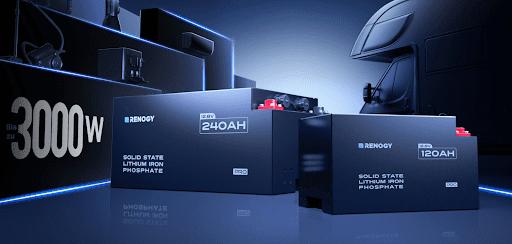
Renogy, a leading company in renewable energy solutions, is exploring the integration of solid state and semi-solid state battery technology in their solar storage systems. By combining high energy density, safety, and long lifespan, Renogy’s advanced battery systems aim to improve energy efficiency for residential and commercial applications.
Future Outlook
The future of solid state batteries is promising but depends on overcoming manufacturing and material challenges. Key trends include:
- Advanced Materials: Research in sulfide and polymer-based electrolytes to improve conductivity and flexibility.
- Scaling Production: Companies are developing mass-production techniques to reduce costs and improve reliability.
- EV Adoption: As the electric vehicle market grows, solid state batteries may replace conventional lithium-ion cells in mainstream models.
- Hybrid Designs: Semi-solid state batteries may serve as an intermediate technology bridging the gap between conventional LiFePO4 batteries and fully solid state solutions.
Conclusion
Solid state batteries represent a major leap in battery technology, offering significant advantages in safety, energy density, lifespan, and environmental resilience. However, challenges like high manufacturing costs, mechanical fragility, and limited commercial availability remain.
The hybrid approach of semi-solid state batteries offers a practical middle ground, combining safety, performance, and affordability. As companies like Renogy invest in advanced battery systems, solid state and semi-solid state batteries are expected to play a pivotal role in the future of electric vehicles, renewable energy storage, and consumer electronics.
Understanding the pros and cons of solid state batteries is crucial for consumers, businesses, and policymakers alike, helping guide decisions in adopting these next-generation energy solutions.