
South African electricity bills have risen by over 300 percent in the past decade. Loadshedding has made things worse for households still running conventional electric geysers. A standard electric geyser accounts for 30 to 40 percent of a home’s total electricity consumption. For most families, it is the single largest drain on their monthly energy budget.
Two alternatives stand out as practical and proven solutions: solar geysers and heat pumps. Both reduce electricity use significantly. Both pay for themselves over time. Understanding the difference helps homeowners choose what genuinely fits their roof, budget, and daily hot water needs.
How a Solar Geyser Works
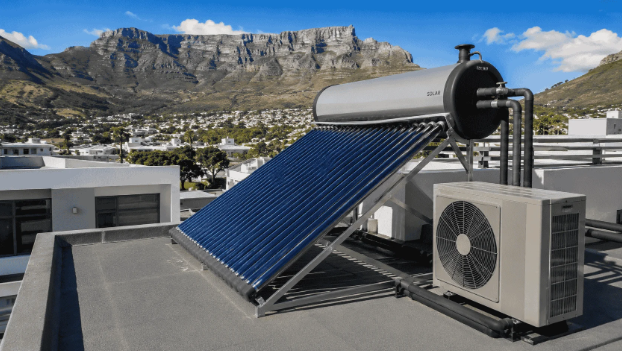
A solar geyser uses roof-mounted collectors to absorb sunlight and heat water stored in an insulated tank. Most systems rely on natural thermosiphon circulation, requiring no pump or external power on sunny days.
Cape Town averages between 2,500 and 3,000 peak sun hours annually. A correctly sized system meets 60 to 80 percent of a household’s annual hot water demand using free solar energy. That figure applies across most of the Western Cape for the majority of the year.
Most systems include an electrical backup element for overcast days. This ensures continuous hot water supply regardless of weather. SABS-approved systems carry warranties of up to 10 years on collector and tank components.
How a Heat Pump Works
A heat pump extracts heat from ambient air and transfers it to water using a refrigerant cycle. It works like a reverse air conditioner and needs only electricity to run the compressor. No sunlight is required.
The efficiency advantage is significant. A well-specified residential heat pump produces three to four units of heat for every one unit of electricity consumed. This means it uses roughly 60 to 70 percent less electricity than a conventional geyser element.
Heat pumps function day and night and suit households with shaded roofs or high demand spread across morning and evening. They are not affected by cloud cover or seasonal sun angles.
Key Differences to Understand
Solar geysers perform best on north-facing roofs with minimal shading. They cost less to purchase and install than heat pumps. On sunny days they heat water using no electricity at all.
Heat pumps have no roof orientation requirement. They suit properties where roof space is limited, shaded, or south-facing. For larger households with three or more bathrooms, they often deliver better long-term value despite the higher upfront cost.
Budget, roof suitability, and daily hot water volume are the three factors that determine which option makes more sense for a specific property.
What the Numbers Look Like
A standard 150-litre electric geyser costs between R350 and R500 per month at current Eskom tariff rates. A solar geyser of equivalent capacity reduces that to R80 to R150 monthly once installed. Running costs on clear days drop to near zero.
A heat pump serving the same household draws between 500 and 800 watts to produce water that would otherwise require a 3,000-watt element. Monthly running costs typically fall to R120 to R200 depending on usage and tariff rates.
Both options offer payback periods of three to six years under current South African electricity pricing. As Eskom tariffs rise annually, that payback window shortens with each increase.
Choosing the Right Supplier
Installation quality determines long-term performance more than product specification. A mid-range system installed correctly by an accredited contractor outperforms a premium system installed poorly every time.
For Western Cape homeowners, working with an established local specialist matters. Sunscan Heat Pumps and Solar Geysers has been supplying and installing SABS-tested solar water heating systems and residential heat pumps across Cape Town and the broader Western Cape for decades. Their systems carry warranties of up to 10 years and are installed through an accredited network.
Always request a tailored assessment before purchasing. A qualified installer evaluates your roof, usage patterns, and budget before recommending a system. This prevents the most common mistake in this category: buying the wrong solution for your specific property.
Conclusion
Solar geysers and heat pumps both address South Africa’s electricity cost and supply challenges effectively. Neither is universally the better option. The right choice depends on your property, your household size, and your priorities.
What both share is the ability to reduce dependence on an expensive and unreliable grid for one of your home’s largest energy needs. In a country where electricity costs rise predictably and loadshedding remains a reality, that independence is worth considerably more than its purchase price.