
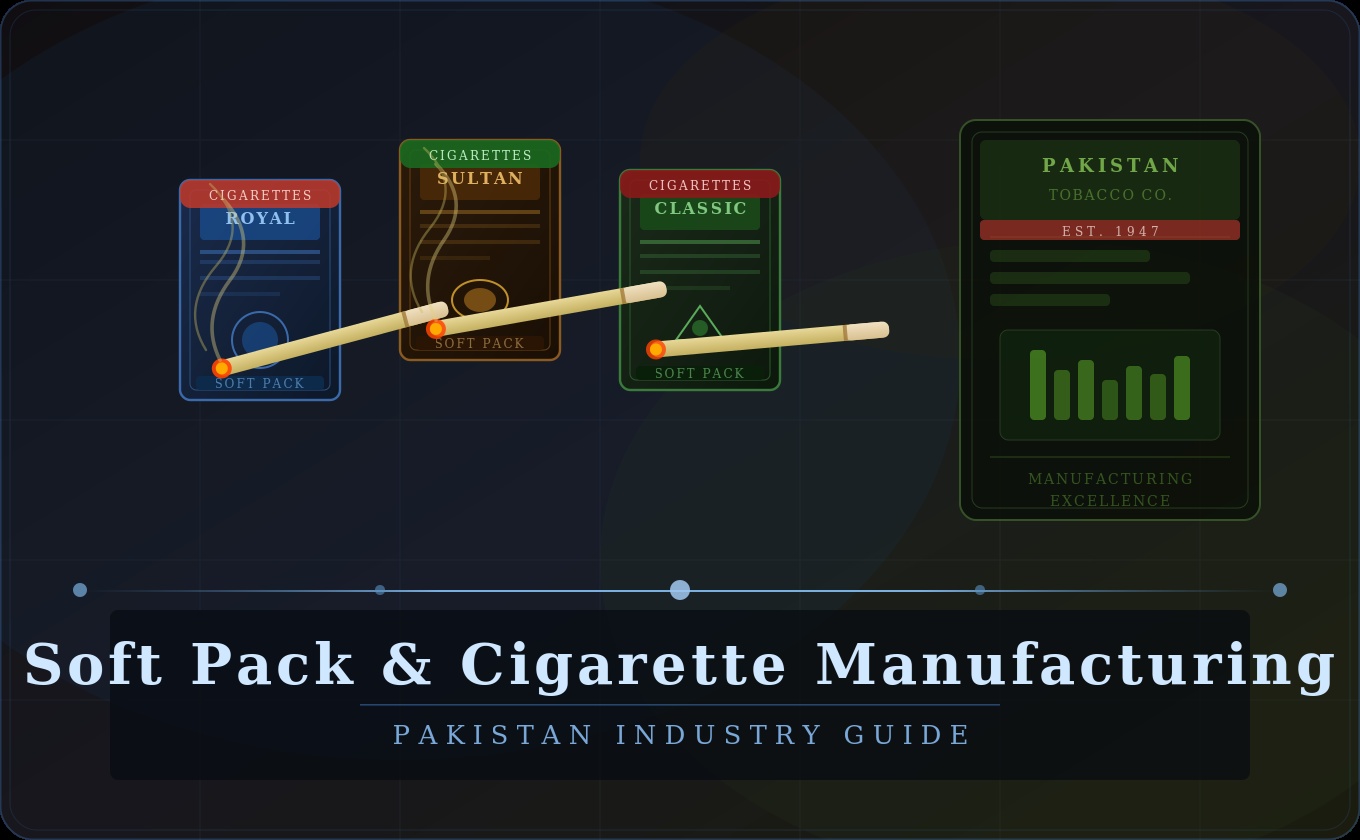
Go to any tobacco shop in Pakistan and ask for Capstan. Nine times out of ten, the guy behind the counter will hand you a soft pack without even asking which format you want. That’s just how it is with certain brands. The soft pack is the default, the original, the version that long-time smokers grew up with. And yet, if you ask most younger smokers what a soft cigarette pack actually is, you’d get a blank stare.
That gap is worth addressing. Because there’s a whole side to Pakistan’s tobacco market that doesn’t get talked about much, the packaging, the manufacturing, the companies quietly running massive operations in the background. This article covers both.
So What Exactly Is a Soft Cigarette Pack?
A soft cigarette pack is exactly what it sounds like. Flexible, paper-based, no rigid frame, no hinged lid. You peel back the top, pull out a cigarette, and the pack slowly collapses as you work through it. Old-school smokers know this intimately. There’s even a habit that goes with it, tapping the pack against your palm a few times before opening it. Practical reason behind that: it settles the tobacco so the cigarette burns more evenly. Looks cool too, which is probably why it stuck around.
Compare that to the hard flip-top box most people carry today. Sturdy, protects the cigarettes from bending, holds its shape in your pocket. The hard box took over through the 80s and 90s because brands liked the extra surface area for design, and smokers appreciated that their cigarettes didn’t arrive crushed. Makes sense.
But soft packs didn’t disappear. They’re cheaper to produce, simpler materials, faster on the packaging line. And there’s a loyal group of smokers who genuinely prefer them. Not out of nostalgia necessarily, but because of how they feel. A soft pack sits differently in a shirt pocket. It doesn’t dig into you. It gives a little. Small thing, but when you’re carrying something every single day, that stuff adds up.
In Pakistan specifically, soft packs remain common in the budget segment. Smaller manufacturers lean toward them because the equipment required is less expensive. And in rural areas, certain soft pack brands have been around so long they’ve become habit rather than choice.
Hard Box vs Soft Pack: The Actual Difference
Here’s the thing most people don’t realize. In many cases, the cigarette inside a soft pack and a hard box version of the same brand is identical. Same tobacco blend, same filter, same length. The packaging is the only variable. So when a smoker says they prefer one over the other, what they’re really responding to is the experience around the cigarette, not the cigarette itself.
Hard boxes keep cigarettes straighter. If you’re someone who keeps their pack in a back pocket or at the bottom of a bag, that matters. Soft packs, on the other hand, are more forgiving in tight spaces and feel less bulky overall. Neither is objectively better. It comes down to lifestyle and habit, which is true of most smoking-related preferences if you think about it.
One practical point worth mentioning: soft packs don’t age well in humid conditions. The paper can absorb moisture faster than a hard box would, which affects the tobacco inside. In a place like Karachi where summers are brutal and humidity is constant, this actually matters. Hard box wins on that front.
Cigarette Manufacturing Company: What Actually Goes On Inside
Most people have a vague idea that a cigarette manufacturing company exists somewhere, employs people, and puts cigarettes in boxes. The actual process is something else entirely.
Start with the leaf. Tobacco farming in Pakistan happens mostly in KPK, the Nowshera and Mardan belt in particular. Farmers grow Flue-Cured Virginia tobacco, which is then bought by manufacturers either directly or through intermediaries. This leaf gets combined with imported varieties from places like Brazil and Zimbabwe, because no single origin gives you the flavor consistency a manufacturer needs at scale.
Once the raw leaf is at the facility, it goes through threshing, separating the usable leaf from the stem, then cutting, blending, and casing. Casing is where liquid additives go in: things that affect moisture retention, burn rate, and flavor. This part of the process is heavily guarded. Every manufacturer has its own formulas, and that’s a big part of what makes one brand taste different from another even when the base tobacco is similar.
After processing, the tobacco goes to the making machines. Modern high-speed cigarette manufacturing equipment can produce tens of thousands of cigarettes per minute. The filter gets attached, the cigarette gets cut to length, and within seconds it’s moving down the line toward the packaging stage. For soft packs, the packaging line wraps and folds at high speed. For hard boxes, it’s a slightly more involved process with the rigid carton being formed and filled simultaneously.
Quality checks happen at every stage. Draw resistance, tobacco weight per unit, moisture levels, filter density, all of it gets tested continuously. At the volumes these companies operate at, even a tiny inconsistency across millions of units becomes a serious problem fast.
The Companies Actually Running This Show in Pakistan
Pakistan’s legal cigarette manufacturing sector comes down to a handful of major players.
Pakistan Tobacco Company is the biggest by a significant margin. It’s been operating here since 1947, runs factories in Akora Khattak and Jhelum, and produces Gold Leaf, Capstan, Gold Flake, Benson & Hedges among others. As a British American Tobacco subsidiary, it brings global manufacturing standards to local production. The scale of PTC’s operation is hard to fully appreciate from the outside, it’s one of the largest continuously operating manufacturing businesses in the country.
Philip Morris Pakistan sits in a strong second position on brand recognition. Marlboro alone gives them that. But their broader portfolio, Morven Gold, Red & White, Parliament, covers a wide price range and keeps them competitive across segments. Philip Morris has also been quietly pushing smoke-free alternatives in Pakistan, though that’s still very much an urban niche.
Khyber Tobacco Company in Nowshera is a different kind of operation. Part cigarette manufacturer, part raw tobacco exporter. They supply processed leaf to international buyers, which makes their business model more resilient to domestic market fluctuations than pure manufacturers. Listed on the stock exchange since the 1950s, KTC is a genuinely old institution in this industry.
Smaller players like Sarhad Cigarette Industries and Universal Tobacco Company produce primarily for the budget market. Soft packs are a big part of their output. Lower equipment costs, faster production, and a price-sensitive consumer base that cares more about cost per cigarette than packaging format.
Why Manufacturing Costs Matter More Than People Think
Running a cigarette manufacturing company is expensive in ways that aren’t immediately obvious. The machinery investment alone is enormous. A single modern production line costs millions of dollars, and a viable facility needs multiple lines running continuously.
Then there’s the regulatory side. Federal excise duties have been climbing steadily in Pakistan. Track-and-trace requirements have been added to curb illicit trade. Compliance with these systems costs money and adds operational complexity. Raw material prices shift with global leaf markets and exchange rates. All of this has to be absorbed while maintaining a retail price that consumers will actually pay.
This is partly why the gap between large manufacturers and small ones keeps widening. The big players have the capital to invest in compliance, efficiency upgrades, and scale. Smaller manufacturers are squeezed from both ends, rising costs on one side, pressure from illicit cigarettes undercutting their prices on the other.
Pulling It Together
Soft packs and cigarette manufacturing companies aren’t the most glamorous subjects. But they sit right at the center of an industry that touches millions of Pakistanis every day, as consumers, as farmers, as factory workers, as retailers. Understanding how the product gets made and why it’s packaged the way it is gives you a clearer picture of something most people interact with constantly without thinking twice about.