
The Silent Revenue Killer: How Social Media Response Speed Makes or Breaks Pest Control Jobs
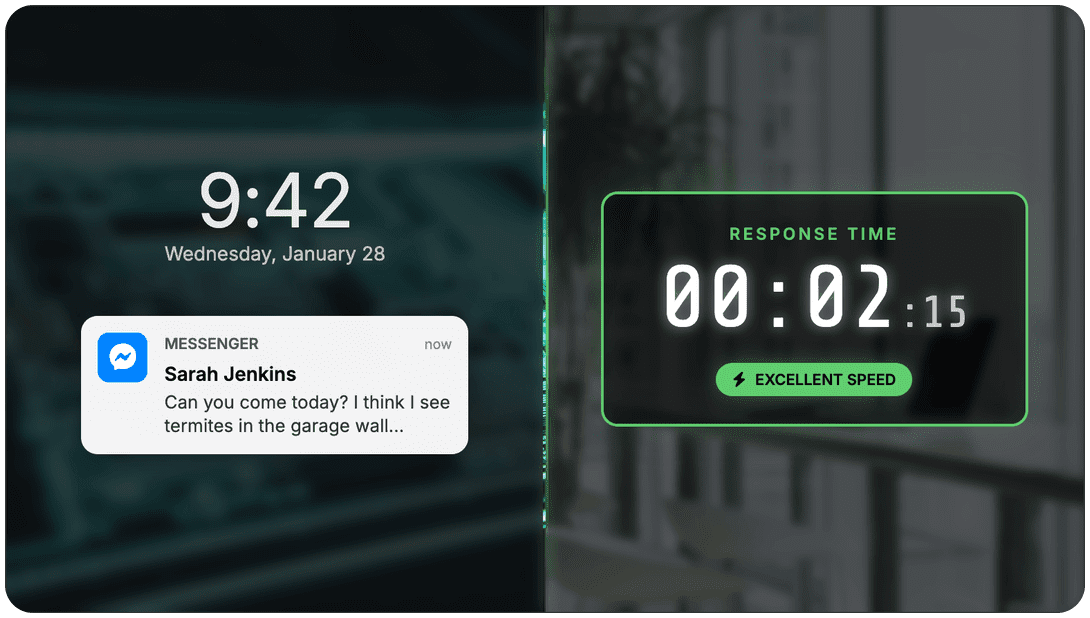
In pest control marketing, “speed” is typically framed as the time a technician arrives at a house or the time the office answers the phone. But a new stopwatch is running, and it is happening in your Direct Messages (DMs). Increasingly, the speed at which a company responds to a Facebook message or Instagram inquiry is the deciding factor in who gets the job. Homeowners messaging businesses expect quick replies, and their perception of responsiveness often determines whether a conversation turns into a booked inspection or a lost lead.
For many pest control owners, social media is still viewed as a “passive” channel—a place to post photos of bugs and trucks. But for the modern homeowner, it is an active communication line. It is a legitimate contact channel, just like a phone call or a web form. When a potential customer asks, “Do you handle wasps?” they are not looking for a pen pal. They are looking for a solution, right now. If you treat that message like an email you can answer tomorrow, you have already lost the revenue.
The New “Emergency Hotline” is Messenger
A recent industry analysis published on Social Media Explorer examined how pest control companies are structuring their social media systems to enable faster responses and conversions. The report emphasized that social media is now part of the frontline communication stack. It is no longer enough to have a social media manager who checks the account once a day. The inbox needs to be monitored with the same urgency as the office phone line.
This shift is driven by consumer behavior. Many homeowners send direct messages alongside phone calls, particularly when they are at work and can’t talk, or when they want a quick price range without a sales pitch. According to data from Sprout Social, 76% of consumers value how quickly a brand can respond to their needs, and a significant portion expect a response on social media within the same day—if not within the hour. In the pest control industry, where the problem is literally crawling on the floor, that expectation is even tighter.
The Financial Implications of “I’ll Get to It Later”
This shift has massive financial implications. When a homeowner discovers a pest problem, they often contact multiple companies at once—sending a DM to three different providers they found on Facebook or Google. The first one to respond with clear, professional information often secures the job. This is the “First-to-Respond” advantage.
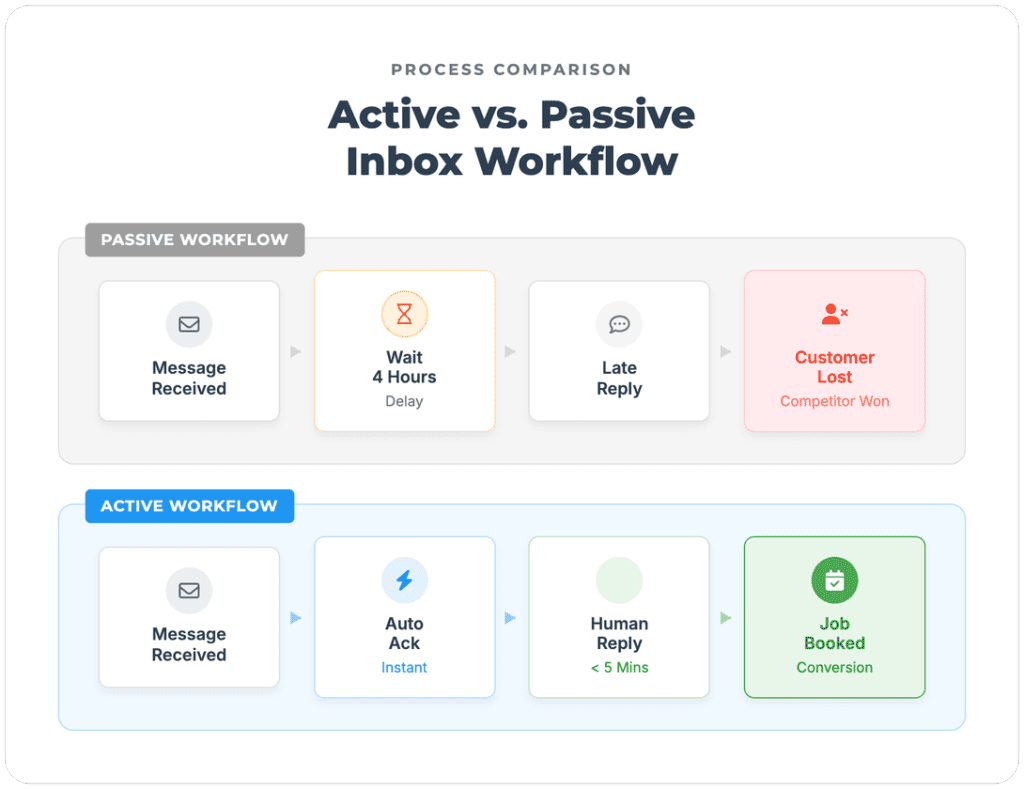
Studies on lead response management show that the odds of qualifying a lead decrease by 80% after just five minutes. While this data typically applies to web forms, the psychology on social media is identical. A slow reply undermines even the strongest reputation. You could be the highest-rated pest control company in town, but if you take four hours to reply to a message while your competitor answers in five minutes, the competitor gets the money. It is a quiet loss; you never even knew you were in the running.
Furthermore, social platforms publicly display your responsiveness. Facebook Business Pages often display badges such as “Very Responsive to Messages.” This is a trust signal. If a customer sees “Typically replies within a few hours” versus “Typically replies within minutes,” they are psychologically primed to trust the faster company more.
Operationalizing the Inbox
From an operational standpoint, treating social media as an emergency hotline requires coordination. Messaging workflows, notification handling, and handoffs from social platforms to scheduling systems all influence outcomes. Companies that treat social messages casually may unintentionally signal disorganization.
This is where “marketing” meets “dispatching.” Industry practitioners note that response speed reinforces trust. Prompt replies suggest reliability and attentiveness—qualities homeowners value immensely when allowing a service provider into their home to spray chemicals. In contrast, a delayed response creates doubt. “If they take a day to answer a message, will they show up on time for the appointment?”
According to HubSpot’s customer service research, nearly 90% of customers rate an “immediate” response as important or very important. For pest control, “immediate” translates directly to “competent.”
Integrating Speed into Strategy
Some marketing agencies have begun integrating response readiness into social media programs for pest control companies. BlakSheep Creative has identified messaging systems as a key driver of social media performance, focusing on converting initial inquiries into scheduled inspections rather than leaving messages unanswered. Their approach treats the social inbox as a sales funnel, ensuring that notifications are routed to the right people who can actually book the job.
This might involve setting up automated “Instant Replies” that acknowledge the message immediately and promise a human follow-up within minutes. It might mean training office staff to monitor Meta Business Suite alongside their call logging software. Whatever the method, the goal is the same: reduce the friction between “I have a bug problem” and “Help is on the way.”
As homeowners increasingly use social platforms as their primary contact channels, pest control companies may need to rethink how they staff and manage these channels. In a category defined by urgency, responsiveness is not just a customer service issue. It is a revenue driver. If you aren’t fast, you aren’t first.
