

Table of Contents
- Understanding Smart Building Automation
- Key Components of Sustainable Building Automation
- Benefits of Implementing Smart Building Strategies
- Challenges in Adopting Smart Building Technologies
- Best Practices for Successful Implementation
- Future Trends in Smart Building Automation
- Conclusion
Urban environments are evolving rapidly, and sustainable building automation plays a crucial role in this transformation. With the advancement of smart technologies, industries and facility managers now have effective methods to reduce operational costs and curb environmental impact. The integration of energy-efficient building controls is one of the foundational moves toward supporting environmental goals and enhancing building performance in real time.
Building automation systems enable owners and managers to oversee various functions remotely, ensuring that resources are not wasted and maintenance can be proactive rather than reactive. This approach leads to optimized efficiency, a comfortable environment for occupants, and a substantial reduction in the carbon footprint, all of which are essential outcomes for modern buildings seeking to remain resilient in the face of climate change.
By leveraging automation and smart analytics, property stakeholders can make data-driven decisions that balance financial and environmental outcomes. As a result, sustainability is no longer an aspiration but a measurable target for both new constructions and retrofit projects.
With increasing pressure from regulators, tenants, and the public to operate sustainably, building automation helps set properties apart as future-ready and environmentally responsible. As interest in smart buildings grows, understanding the strategies and tools available for sustainable automation becomes even more relevant.
Understanding Smart Building Automation
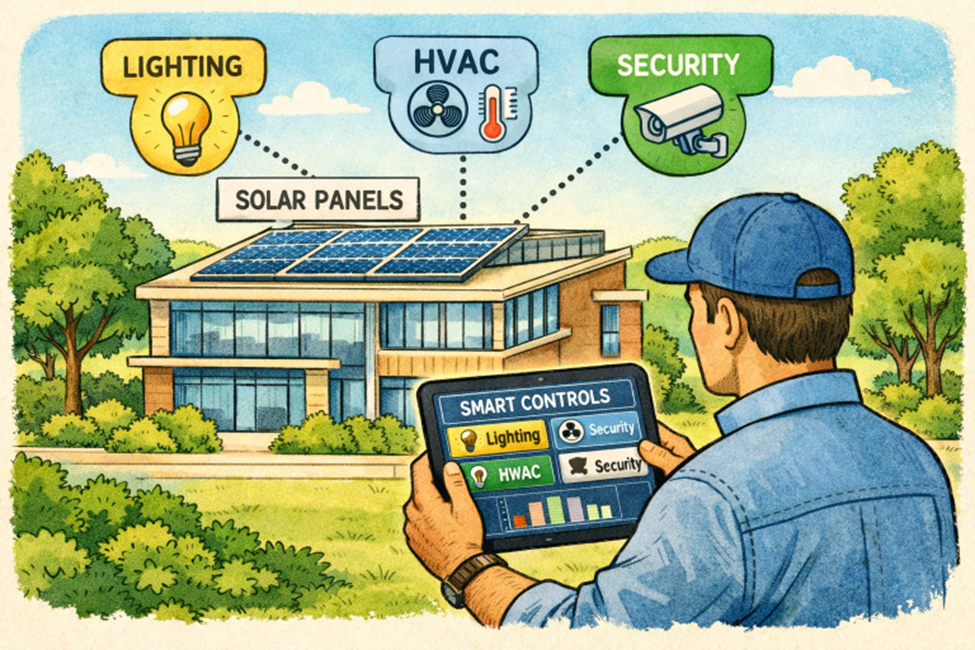
Smart building automation integrates multiple mechanical and electrical systems, such as heating, ventilation, air conditioning (HVAC), lighting, security, and energy management, into a single comprehensive platform. Connectivity between these systems enables centralized or even remote monitoring via cloud-based dashboards, providing managers with critical insights that can lead to energy savings and operational improvements.
Real-time data collection through this integrated network means buildings can respond instantaneously to changing conditions. For example, occupancy sensors can trigger adjustments in lighting and HVAC settings, reducing energy use in unoccupied areas. This responsiveness forms the backbone of sustainable building management, helping properties adapt to both internal and external demands seamlessly.
Key Components of Sustainable Building Automation
- Energy Management Systems (EMS): These sophisticated platforms track energy consumption patterns and identify opportunities for savings, often integrating renewable sources and demand response features.
- IoT Sensors: Internet of Things sensors provide granular data on temperature, occupancy, humidity, lighting, and air quality, enabling continuous fine-tuning of building operations.
- Automated Lighting Controls: These controls use motion sensors and daylight-harvesting strategies to deliver illumination exactly when and where it is needed, substantially reducing wasted electricity.
- Advanced HVAC Controls: These systems use data analytics and predictive maintenance to ensure the indoor climate remains comfortable without unnecessary energy expenditure.
Benefits of Implementing Smart Building Strategies
The implementation of intelligent automation technologies brings several substantial advantages to facility managers and property owners:
- Energy Efficiency: Studies have shown that integrating automation can reduce a building’s energy use by up to 30 percent. By optimizing consumption patterns, buildings can ensure efficiency and sustainability.
- Cost Savings: A direct outcome of reduced energy usage is lowered utility bills, and smart maintenance scheduling can also cut repair and replacement expenses.
- Enhanced Occupant Comfort: Smart automation continuously adjusts indoor air quality, lighting, and climate to maintain occupant comfort, boosting well-being and productivity. More on the psychological benefits of well-managed environments can be found at ArchDaily’s report on intelligent building automation.
- Environmental Impact: Automated systems minimize resource waste and help buildings achieve their sustainability and carbon emission targets.
Challenges in Adopting Smart Building Technologies
Despite the advantages, several obstacles stand in the way of widespread adoption:
- High Initial Costs: The upfront investment for upgrading legacy systems or installing new automation networks can be significant.
- Integration Complexity: Many older buildings require extensive retrofitting to enable smart automation, which can be disruptive and complex.
- Data Privacy and Security: Increased connectivity exposes organizations to greater cyber risks, making robust security strategies more important than ever. The need for strong cybersecurity practices in building automation is discussed further at CSO Online.
- Standardization Issues: Without consistent industry standards, compatibility concerns may prevent the seamless integration of different systems and devices.
Best Practices for Successful Implementation
- Conduct a Comprehensive Assessment: Begin with a detailed evaluation of current building systems to identify where smart automation can deliver the greatest value.
- Engage Stakeholders Early: Secure buy-in from facility managers, IT staff, occupants, and investors to streamline implementation and avoid conflicts.
- Prioritize Interoperability: Select technologies that use open communication protocols, enabling integration with future upgrades and equipment from different manufacturers.
- Plan for Scalability: Adopt flexible systems that support expansion and the incorporation of new technologies as they become available.
- Focus on Cybersecurity: Implement advanced security protocols to safeguard data privacy and defend against cyber threats.
Future Trends in Smart Building Automation
- Artificial Intelligence (AI): AI-enabled systems can learn occupant behavior and building patterns, continually improving performance without manual input.
- Biophilic Design Integration: Automation tools are increasingly being used alongside natural materials and green spaces to create healthier, more sustainable indoor environments.
- Advanced Robotics: Robots are starting to take on repetitive and hazardous maintenance tasks, further improving safety and operational efficiency.
- Enhanced Data Analytics: As facilities collect ever-larger volumes of operational data, advanced analytics platforms will provide deeper insights and more accurate forecasting capabilities.
Conclusion
Adopting smart strategies for sustainable building automation is essential for creating properties that are more resilient, energy-efficient, and environmentally responsible. By integrating advanced control systems, sensors, and data-driven technologies, building owners can optimize energy use, reduce operational costs, and improve occupant comfort. Thoughtful planning and continuous collaboration with stakeholders ensure that automation systems align with long-term goals while maintaining strong security and scalability. Regular monitoring and updates further enhance system performance and reliability. As the industry continues to evolve, staying informed about emerging innovations allows facility managers to adapt effectively, ensuring buildings remain sustainable, future-ready, and capable of meeting evolving environmental standards.
