

Grading is worth the cost when a card is rare, in sharp condition, and likely to grade PSA 9 or higher. For everyday cards, common rookies, and mixed collections, selling raw almost always puts more money in your pocket once fees and wait time are factored in. The answer depends less on the sport and more on what is actually sitting in your box.
Anyone researching how to sell sports cards in Indiana that collectors have held onto for years runs into the same fork early: grade first, or sell as-is. Both paths work. Neither is automatically better. What matters is matching the decision to the specific card, not applying one rule to an entire collection.
Should you grade before you sell?
Grading isn’t a guaranteed upgrade in price. It’s a bet that only pays off under specific conditions, and knowing those conditions before you submit a card saves you from paying to find out the hard way.
| Consideration | What it means |
| Break-even test | Only grade if the price gap between an ungraded sale and a graded sale is bigger than the grading fee, the shipping, and the wait. |
| Wait time cost | Turnaround runs 40-50 business days, and the market for that card can shift before it comes back. |
| Common mistake | Collectors grade a stack of $15 cards expecting a payday, then get back several low grades worth less combined than the submission cost. |
| Core principle | Grading protects value that already exists. It does not create value that was never there. |
Does Grading Actually Increase What You Get When You Sell Sports Cards in Indiana?
Grading raises the sale price mainly on scarce, high-demand cards in strong condition. It adds little to common base cards, reprints, or anything with visible wear, because the grade simply confirms what a buyer could already guess by looking at it. Third-party grading sells confidence, not condition.
- Rare rookie card, near-mint – grading can meaningfully raise the sale price. Often worth the cost.
- Vintage card, scarce and in demand – grading adds buyer confidence and price. Often worth the cost.
- Common base card, any era – grading brings minimal to no price change. Rarely worth the cost.
- Card with creases or worn corners – grading usually just confirms a low grade. Rarely worth the cost.
- Large mixed collection – fees add up fast across many cards. Usually not worth the cost.
What Are the Real Costs and Risks of Grading a Card Before You Sell?
PSA pricing shifted in 2026, and the same applies across Indiana; and its lower-cost value tiers have been paused since June, which changed the real entry point for most sellers.
| Service Level | Cost per Card | Declared Value Cap | Estimated Turnaround |
| Regular | $79.99 | Up to $1,500 | 40-50 business days |
| Express | $149 | Higher cap | Faster than Regular |
| Super Express | $349 | Higher cap | Faster than Express |
| Walk-Through | $599 | Higher cap | Days, not weeks |
Pricing and caps shown reflect PSA’s published rates as of mid-2026 and are subject to change without notice.
The bigger risk is not the fee itself. It is the forty to fifty business day wait, during which the card’s market value can move up or down, combined with the chance the card comes back graded lower than expected. There is also real risk of loss or damage in shipping, and grading fees are non-refundable once a card has been submitted, regardless of the grade it receives.
When Does It Make More Sense to Sell Sports Cards in Bulk Instead of Grading Them?
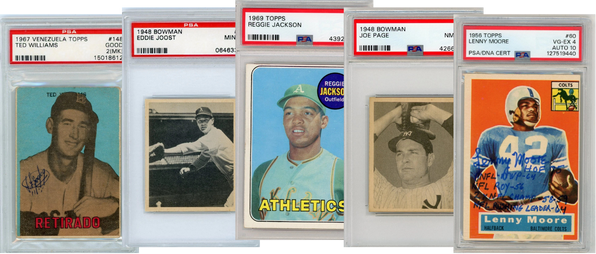
Collections heavy in commons, duplicates, or mixed sets rarely justify per-card grading. Selling sports cards in bulk to a reputable buyer skips the grading fees entirely and gets money in hand much faster. For sellers who want to sell sports cards online instantly rather than wait months on a grading company, a same-day offer based on photos or a set list is often the better move, especially when the collection is more about quantity than a handful of standout cards.
How Does the Decision Change for Sellers in Illinois and Pennsylvania?
Grading companies apply the same standards no matter where a card is submitted from, but regional demand shifts what is worth the cost. Illinois sellers looking to sell baseball cards in Illinois, which collectors have kept since childhood, often see stronger local interest in Cubs and White Sox rookie cards specifically. Pennsylvania sellers holding Phillies, Pirates, or Steelers cards tend to see the same regional lift. Anyone deciding to sell sports cards in Pennsylvania that buyers actually want should check regional demand first, since a card that would sit unsold for months is rarely worth paying to grade.
Should You Use a Local Card Shop or Sell Online?
If you are in Indianapolis and have started searching for a “sports card shop near me”, a local shop can give you a same-day cash offer and the chance to negotiate face to face. An online buyer usually sends a written quote you can compare before committing, which works better for larger or out-of-area collections.
Local shop
- Same-day payment
- In-person negotiation
- Best for small collections and quick cash
- Requires travel
Online buyer
- Payment often within 24-48 hours
- Limited negotiation, but pricing is transparent up front
- Best for bulk collections and out-of-area sellers
- Ship or submit remotely, no travel needed
Conclusion
Grading is a tool, not a requirement. It works well for the handful of cards that are genuinely rare and in strong condition, and it rarely pays off for the rest of a typical collection. Sorting out which is which before you spend money on submissions is what actually protects your return.
Hometown Sports Fan looks at raw and graded cards every day and can tell you honestly whether a card is worth grading before you spend a dollar on submission fees. If you are sitting on a collection in Indiana, Illinois, or Pennsylvania and trying to figure out the right move, reach out and they will walk through it with you, card by card.
Frequently Asked Questions
Q: Is it better to sell a card raw or graded if I need cash fast?
If you need cash fast, sell raw. Grading takes weeks, sometimes longer right now with PSA’s temporary backlog, and that wait doesn’t help when you need money today. Raw sales close in days, and for most cards the grading fee and turnaround aren’t worth the delay anyway.
Q: What are the risks of getting a card graded?
The card can come back with a lower grade than expected, which drops its resale value below what you paid to submit it. There is also real risk of loss or damage in shipping, and the current PSA turnaround runs 40 to 50 business days, during which the market for that card can shift.
Q: How much does it cost to grade a $100 card in Indiana?
Grading fees are set by the grading company, not the seller’s location, so a $100 card in Indiana costs the same as anywhere else in the country. As of mid-2026, PSA’s entry-level Regular service runs $79.99 per card with a turnaround of roughly 40 to 50 business days, plus shipping both ways.