
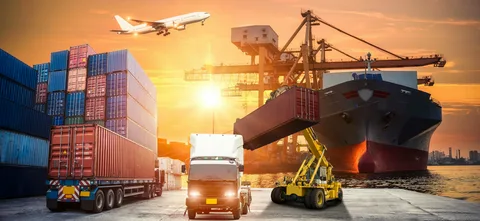
In a world that thrives on global trade, sea transportation stands as the cornerstone of international logistics. It is the silent yet powerful force driving global commerce, connecting continents, industries, and economies. Every day, millions of containers filled with goods travel across oceans, linking manufacturers to markets and suppliers to consumers. Despite advancements in air and land freight, sea transport remains unparalleled in its capacity, cost-effectiveness, and reliability.
The Historical Foundation of Global Trade
Sea transport has been a part of human civilization for centuries. From ancient trade routes across the Mediterranean and Indian Ocean to modern mega-container ships, maritime transport has always been central to commerce. Historically, it allowed nations to explore, exchange goods, and establish economic dominance. Today, over 80% of global trade by volume and more than 70% by value is carried by sea, according to the International Maritime Organization (IMO). This statistic alone shows how deeply logistics depends on maritime movement.
Unmatched Capacity and Cost Efficiency
The greatest advantage of sea transport lies in its ability to move massive volumes of goods at once. A single large container vessel can carry more than 20,000 containers, equivalent to what hundreds of aircraft or trucks would handle combined. This makes sea freight the most economical choice for transporting bulk commodities like oil, automobiles, electronics, and agricultural products.
Moreover, as fuel prices fluctuate and global inflation impacts transport costs, maritime shipping remains relatively stable and cost-effective. It offers economies of scale, meaning the more you ship, the cheaper it gets per unit. For companies seeking to optimize their supply chains, sea freight remains the best balance of capacity, cost, and coverage.
The Environmental Edge
While shipping does contribute to carbon emissions, modern fleets are becoming increasingly eco-friendly. New technologies, including low-sulfur fuels, energy-efficient engines, and wind-assisted propulsion systems, are transforming maritime logistics into a greener industry. The International Maritime Organization’s push for decarbonization by 2050 is encouraging shipping companies to innovate and invest in cleaner technologies.
When compared to air transport, sea freight emits significantly less CO₂ per ton of goods moved. This makes it the preferred choice for companies that prioritize sustainability alongside efficiency.
The Role of Ports and Infrastructure
Ports form the backbone of global logistics operations. They are the critical connection points where goods transfer between ships and inland transport systems. Modern ports are no longer just docking facilities, they’re advanced logistics hubs equipped with automated cranes, digital tracking systems, and storage zones for efficient Logistics cargo handling.
Major ports like Singapore, Shanghai, Rotterdam, and Dubai have set global standards for efficiency. These ports operate 24/7, managing thousands of ship movements and millions of containers each year. The smooth functioning of these ports ensures timely delivery, reduced congestion, and optimized supply chain flow.
Technology Steering the Maritime Revolution
Digital transformation has entered the maritime world, enhancing every stage of logistics management. Smart shipping systems now use AI, IoT, and blockchain to ensure transparency and traceability. Real-time cargo tracking enables shippers to monitor their goods’ journey across the seas, ensuring accountability and predictability.
Automation at ports has also sped up operations, minimizing human error and downtime. Predictive maintenance systems, weather forecasting tools, and data-driven route optimization have made voyages faster, safer, and more efficient.
In addition, digital documentation and e-bill of lading (e-BL) have replaced cumbersome paperwork, reducing delays and errors. With integrated logistics software, companies can now seamlessly coordinate between sea, air, and land freight to create truly global supply chains.
Sea Transport as a Pillar of Globalization
The world’s interdependence on maritime transport is a defining feature of globalization. Everything from the smartphone in your pocket to the clothes you wear likely traveled on a ship. Without sea transport, international trade would simply not exist on the scale it does today.
Developing economies, especially in Asia and Africa, rely heavily on maritime routes for export and import. It enables them to access foreign markets, attract investments, and sustain economic growth. This interconnectivity has made the maritime industry one of the key pillars of international cooperation and economic development.
Challenges Facing the Industry
Despite its advantages, sea transportation faces several challenges. Geopolitical tensions, piracy, port congestion, and labor shortages can disrupt shipping schedules. Environmental regulations and the push toward decarbonization also present operational and financial challenges for carriers.
Furthermore, the COVID-19 pandemic highlighted how vulnerable global supply chains can be. Port closures, container shortages, and sudden demand shifts caused widespread disruption. However, the industry’s resilience and adaptability helped it recover faster than many others, proving its indispensable role in logistics.
The Future of Sea Logistics
As global demand for goods continues to rise, maritime logistics is evolving rapidly. The focus is shifting towards smart shipping, sustainability, and integration. Autonomous ships are already being tested, promising safer and more efficient operations. Green corridors—shipping routes dedicated to eco-friendly vessels, are being introduced to reduce emissions.
Artificial intelligence will continue to optimize routes, manage fleet operations, and predict risks. Meanwhile, the expansion of ports and intermodal connectivity will ensure that maritime transport remains the backbone of global trade.
Why Sea Transportation Anchors the Global Supply Chain
Sea transport is more than just a means of moving goods; it’s the link that keeps the world connected. It enables cost-effective trade, supports billions of jobs, and sustains industries that rely on the smooth movement of raw materials and finished products.
Whether it’s a container of electronics bound for Europe or grain shipments headed to Asia, maritime logistics ensures that every part of the global economy stays in motion. It’s a silent yet powerful system that underpins commerce and progress.
Conclusion
The importance of sea transportation in global logistics cannot be overstated. It’s the invisible bridge connecting markets, industries, and people worldwide. As technology, sustainability, and global trade evolve, sea transport will continue to anchor the supply chain, ensuring that the world keeps moving forward efficiently and sustainably.
AVR Logistics is a leading logistics company in India, providing end-to-end freight forwarding and supply chain solutions. With India’s rapidly expanding commercial market, AVR Logistics ensures the smooth movement of goods across domestic and international borders. The company offers integrated transportation, warehousing, and 360-degree logistics services that empower clients to reach global markets efficiently and cost-effectively.