

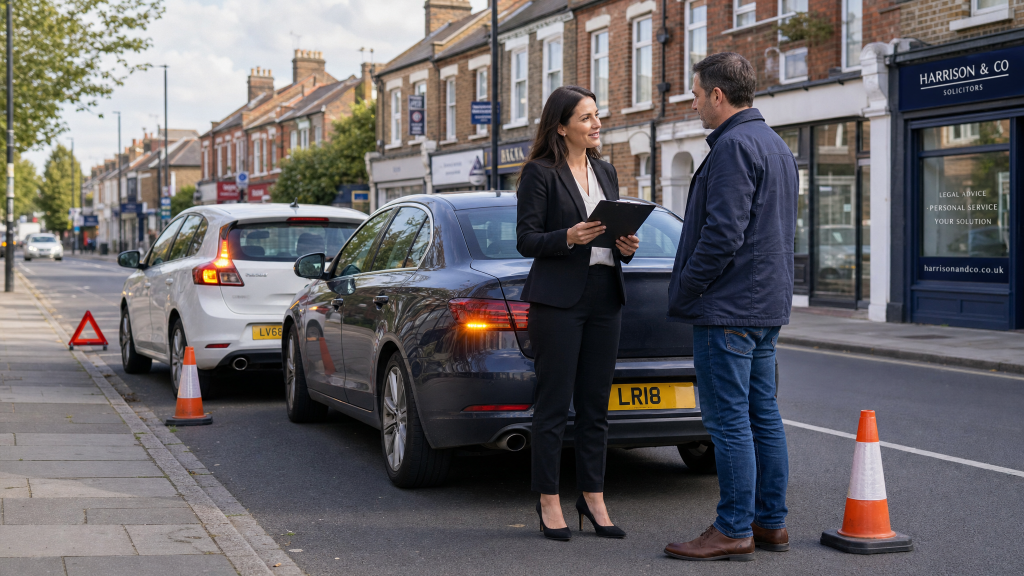
Road traffic accidents can happen in seconds, but the impact can last for weeks, months, or even years. A collision may leave you with physical injuries, emotional distress, vehicle damage, lost earnings, treatment costs, and uncertainty about what to do next. If another driver or road user caused the accident, you may be able to make road traffic accident claims uk for compensation.
Road accidents affect drivers, passengers, cyclists, motorcyclists, pedestrians, taxi passengers, bus users, delivery riders, and other road users across the UK. Some accidents cause minor soft tissue injuries, while others lead to serious or life-changing harm. No matter how the accident happened, it is important to understand your rights, the claims process, and the evidence that can support your case.
This guide explains how road traffic accident claims work, who can claim, common causes, what injuries may be included, how compensation is calculated, and what steps to take after an accident.
What Is a Road Traffic Accident Claim?
A road traffic accident claim is a personal injury claim made after someone is injured because of another person’s negligence on the road. The claim is usually made against the at-fault party’s insurance provider rather than directly against the individual.
To make a claim, you generally need to show that:
- Another person owed you a duty of care
- They breached that duty through careless or unsafe behaviour
- Their actions caused your injury or financial losses
All road users have a duty to take reasonable care. This includes following the Highway Code, keeping a proper lookout, driving at a safe speed, maintaining control of the vehicle, and avoiding actions that put others at risk.
Who Can Make a Road Accident Claim?
You may be able to claim if you were injured as:
- A car driver
- A passenger
- A motorcyclist
- A cyclist
- A pedestrian
- A bus or coach passenger
- A taxi or rideshare passenger
- A delivery rider
- A lorry, van, or HGV driver
Passengers often have strong claims because they are rarely responsible for the accident. They may claim against the driver of the vehicle they were travelling in or another driver involved.
Cyclists, pedestrians, and motorcyclists are classed as vulnerable road users because they have less protection than vehicle occupants. Injuries in these cases can be more serious, especially where speed, poor visibility, or heavy traffic is involved.
Common Causes of Road Traffic Accidents
Road traffic accidents can happen for many reasons. Some of the most common causes include:
Careless Driving
Careless driving may include failing to check mirrors, poor lane discipline, not giving way, or driving without proper attention. Even a short lapse in concentration can cause a serious collision.
Speeding
Speeding reduces reaction time and increases stopping distance. It also increases the force of impact, making injuries more severe.
Distracted Driving
Using a mobile phone, adjusting a sat nav, eating, drinking, or being distracted by passengers can prevent a driver from reacting in time.
Failing to Give Way
Many accidents happen at junctions, roundabouts, and crossings when drivers fail to give way or misjudge another road user’s speed.
Tailgating
Following too closely can lead to rear-end collisions, especially when traffic slows suddenly.
Driving Under the Influence
Alcohol and drugs affect judgment, reaction speed, coordination, and decision-making. Accidents caused by impaired drivers can lead to serious injuries.
Poor Weather Conditions
Rain, ice, fog, snow, and low sunlight can make roads more dangerous. Drivers must adjust their speed and distance to match the conditions.
Defective Vehicles
Faulty brakes, worn tyres, defective lights, or steering problems can contribute to accidents. Vehicle owners and employers may be responsible if poor maintenance caused the crash.
Poor Road Conditions
Potholes, defective road surfaces, missing signs, poor lighting, or unsafe road layouts can cause or contribute to accidents. In some cases, a local authority may be responsible.
Common Injuries in Road Accident Claims UK
Injuries from road accidents can range from minor to severe. Common injuries include:
- Whiplash
- Neck and shoulder pain
- Back injuries
- Broken bones
- Head injuries
- Concussion
- Facial injuries
- Chest and rib injuries
- Knee and leg injuries
- Soft tissue damage
- Burns or cuts
- Psychological trauma
- Travel anxiety
- Post-traumatic stress symptoms
- Spinal injuries
- Brain injuries
Whiplash is one of the most common injuries after a car accident. It is caused by sudden movement of the neck and can lead to pain, stiffness, headaches, reduced movement, and sleep problems.
Some injuries do not appear straight away. Shock and adrenaline can mask symptoms after a crash. This is why it is important to seek medical advice even if you feel your injuries are minor at first.
What Should You Do After a Road Traffic Accident?
The steps you take after an accident can protect your health and strengthen your claim.
Check for Injuries
Make sure you and others are safe. Call emergency services if anyone is injured, the road is blocked, or there is a risk of further danger.
Exchange Details
Exchange names, addresses, phone numbers, vehicle registration numbers, and insurance details with the other driver or drivers involved.
Report the Accident
You may need to report the accident to the police, especially if someone is injured, the other driver leaves the scene, or details are not exchanged.
Gather Evidence
Take photos or videos of:
- Vehicle damage
- Road layout
- Traffic signs
- Skid marks
- Injuries
- Weather conditions
- Debris
- Vehicle positions
If there are witnesses, ask for their names and contact details.
Seek Medical Attention
Visit your GP, A&E, walk-in centre, or other medical provider. Medical records help prove your injuries and connect them to the accident.
Notify Your Insurer
Tell your insurer about the accident, even if you do not plan to claim through your own policy.
Keep Records
Keep receipts, repair estimates, taxi fares, medical costs, prescription charges, wage slips, and any documents showing financial losses.
Evidence That Can Support a Claim
Strong evidence can make it easier to prove liability and value your compensation. Useful evidence may include:
- Police reports
- Dashcam footage
- CCTV footage
- Witness statements
- Photographs of the accident scene
- Medical records
- Expert medical reports
- Vehicle repair invoices
- Insurance correspondence
- Accident reconstruction evidence
- Proof of lost earnings
- Receipts for travel, care, and treatment costs
Dashcam and CCTV footage can be useful, especially where the other driver disputes fault. If nearby businesses or homes may have CCTV, act fast because footage may be deleted.
How Is Liability Decided?
Liability is decided by reviewing the evidence and determining who caused or contributed to the accident. In some cases, fault is clear. For example, if a driver hits a stationary car from behind, they may be held responsible unless there is evidence to suggest otherwise.
In other cases, liability may be disputed. Accidents at roundabouts, junctions, lane changes, and car parks can involve conflicting accounts. Evidence such as vehicle damage, road markings, dashcam footage, and witness statements can help establish what happened.
Sometimes both parties share responsibility. This is known as contributory negligence. If you are found partly at fault, your compensation may be reduced by a percentage. For example, if you are awarded £10,000 but found 20% responsible, you may receive £8,000.
Road Accident Claims UK: What Compensation Can Cover
Road accident claims uk can include compensation for physical injuries, psychological harm, and financial losses.
Compensation is usually divided into two categories.
General Damages
General damages compensate for pain, suffering, and loss of amenity. This includes:
- Physical pain
- Emotional distress
- Loss of sleep
- Reduced mobility
- Loss of hobbies
- Impact on relationships
- Reduced quality of life
- Long-term disability
The amount depends on the type and seriousness of your injuries, recovery time, and medical prognosis.
Special Damages
Special damages cover financial losses caused by the accident, such as:
- Lost wages
- Future loss of earnings
- Vehicle repair costs
- Insurance excess
- Hire car charges
- Medical treatment
- Physiotherapy
- Prescription costs
- Travel expenses
- Care and assistance
- Damaged clothing or belongings
- Home adaptations in serious cases
Keeping evidence of these losses is important because you will need to prove them.
What If the Driver Was Uninsured or Left the Scene?
If the at-fault driver was uninsured or cannot be traced, you may still be able to claim through the Motor Insurers’ Bureau. The MIB deals with claims involving uninsured and untraced drivers.
You should report hit-and-run accidents to the police as soon as possible and collect as much evidence as you can, including witness details, CCTV locations, dashcam footage, and any partial registration information.
Time Limits for Road Traffic Accident Claims
In most personal injury cases in England and Wales, you usually have three years from the date of the accident to start court proceedings.
For children, the three-year time limit usually starts on their 18th birthday. A parent or litigation friend can bring a claim before then.
If the injured person lacks mental capacity, different rules may apply.
It is best to start early because evidence can disappear, vehicles may be repaired, CCTV may be deleted, and witnesses may become harder to contact.
No Win No Fee Road Traffic Accident Claims
Many road traffic accident claims are handled under a No Win No Fee agreement. This means you usually do not pay legal fees upfront. If the claim is unsuccessful, you generally do not pay your solicitor’s fees, subject to the agreement terms. If the claim succeeds, a success fee may be deducted from your compensation.
Before starting a claim, you should receive clear information about fees, deductions, insurance, and funding options.
Final Thoughts
A road traffic accident can leave you dealing with pain, stress, financial losses, and practical problems. Whether you were injured as a driver, passenger, cyclist, motorcyclist, pedestrian, or public transport user, you may be able to claim compensation if another party caused the accident.
Compensation can help cover injuries, lost earnings, medical treatment, vehicle damage, care needs, travel expenses, and future support. The strongest claims are supported by good evidence, medical records, witness details, and clear proof of losses.
If you have been injured on the road, understanding your rights can help you take the next step and move forward with confidence.