
At the intersection of virtual architecture , Chen Yang’s work Reoccupation brings an unprecedented creative breakthrough. From November to December 2022, the Pier 5810 exhibition served as the global stage for the debut of this project. Reoccupation not only showcased innovative applications of virtual reality (VR) and augmented reality (AR) technologies but also offered a unique solution to the vacant space problem in Jackson Heights, New York City. This project is not just a display of digital art but, through Chen Yang’s design philosophy, proposes a completely new approach to urban space regeneration, breaking the traditional boundaries between art and architecture.
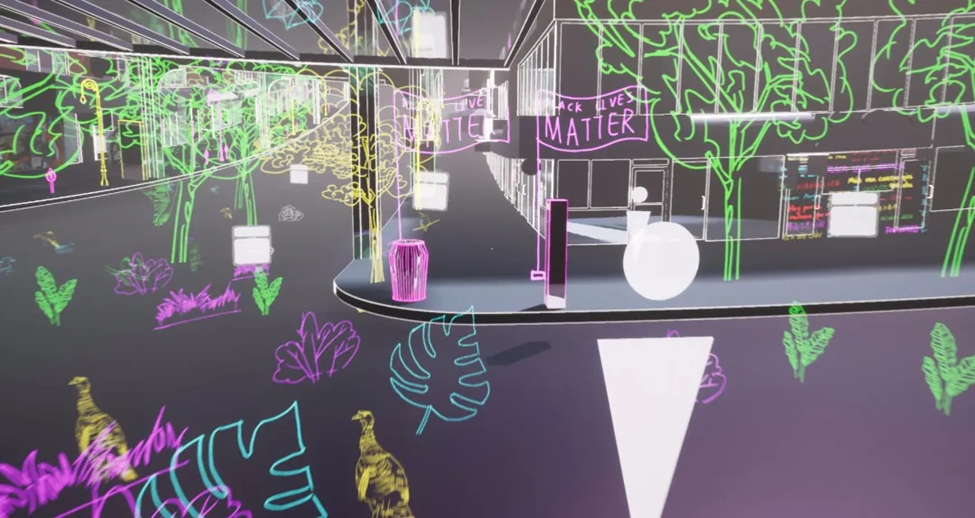
Reoccupation begins with Chen Yang’s in-depth research into the Jackson Heights community. By combining a digital model of the area around the 82nd Street subway station, he created a virtual street model. This model is not only a digital representation of these vacant spaces but also an innovative interactive platform aimed at bringing real change to the community through virtual technology. By utilizing virtual reality, Chen Yang broke the limitations of physical space, enabling global users and local residents to participate in the repurposing of these vacant spaces. In his design, virtual art is not just a display of artistic creation but also a powerful tool to inspire community engagement and interaction.
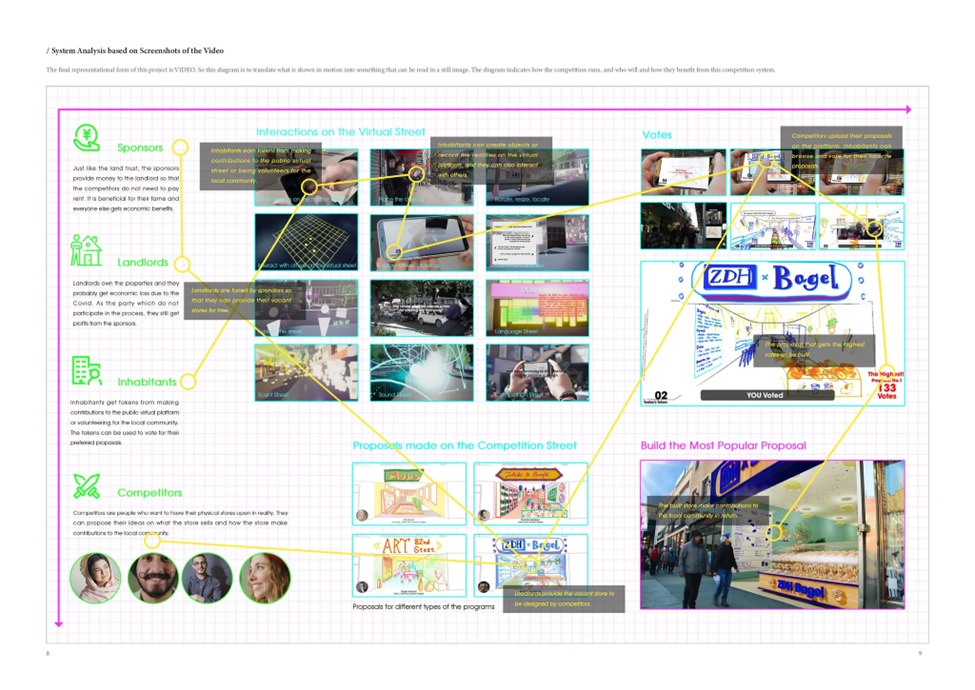
Chen Yang gives Reoccupation a new mission, believing that virtual art should go far beyond the function of display and become a force for social change. His design philosophy emphasizes that by creating virtual spaces, community members can directly participate in shaping and rebuilding urban spaces. On the Reoccupation platform, global users can freely create, share, and interact, while community members can participate by submitting sketches, voting, and more, truly realizing the democratization of urban space regeneration. As Chen Yang expressed: “I hope that through this platform, community members can not only reshape their living environment but also see their creativity realized in the real world.”
In his design, Chen Yang emphasizes the power of the community, aiming to make these virtual spaces more in line with the needs and desires of local residents through collective creation. This virtual platform is not just about repurposing vacant spaces; it provides community members with a space for creative expression, transforming them from passive recipients into active creators. Through this innovative approach, Chen Yang offers a fresh perspective for the future of architecture and space regeneration.
The Pier 5810 exhibition, one of the most influential virtual art platforms in the world, provided an important opportunity to showcase Reoccupation, gaining widespread recognition in the international art community. The exhibition not only showcased the perfect integration of virtual art and technology but also demonstrated the potential of digital art in addressing urban issues, fostering social interaction, and transforming community environments. The appearance of Reoccupation at the exhibition further validates that virtual reality is not just a tool for aesthetic creation but can have a profound impact on urban planning and social change.
Through Chen Yang’s leadership in design, the combination of virtual reality technology and urban space offers new possibilities for future urban development. Chen Yang’s design proves that virtual art can be more than a tool for artistic display; it can also become a force for solving real-world problems and driving social progress. Reoccupation not only provides a creative solution for repurposing vacant properties but also offers inspiration for the regeneration of global urban spaces, advancing the frontier of virtual urbanism.
