
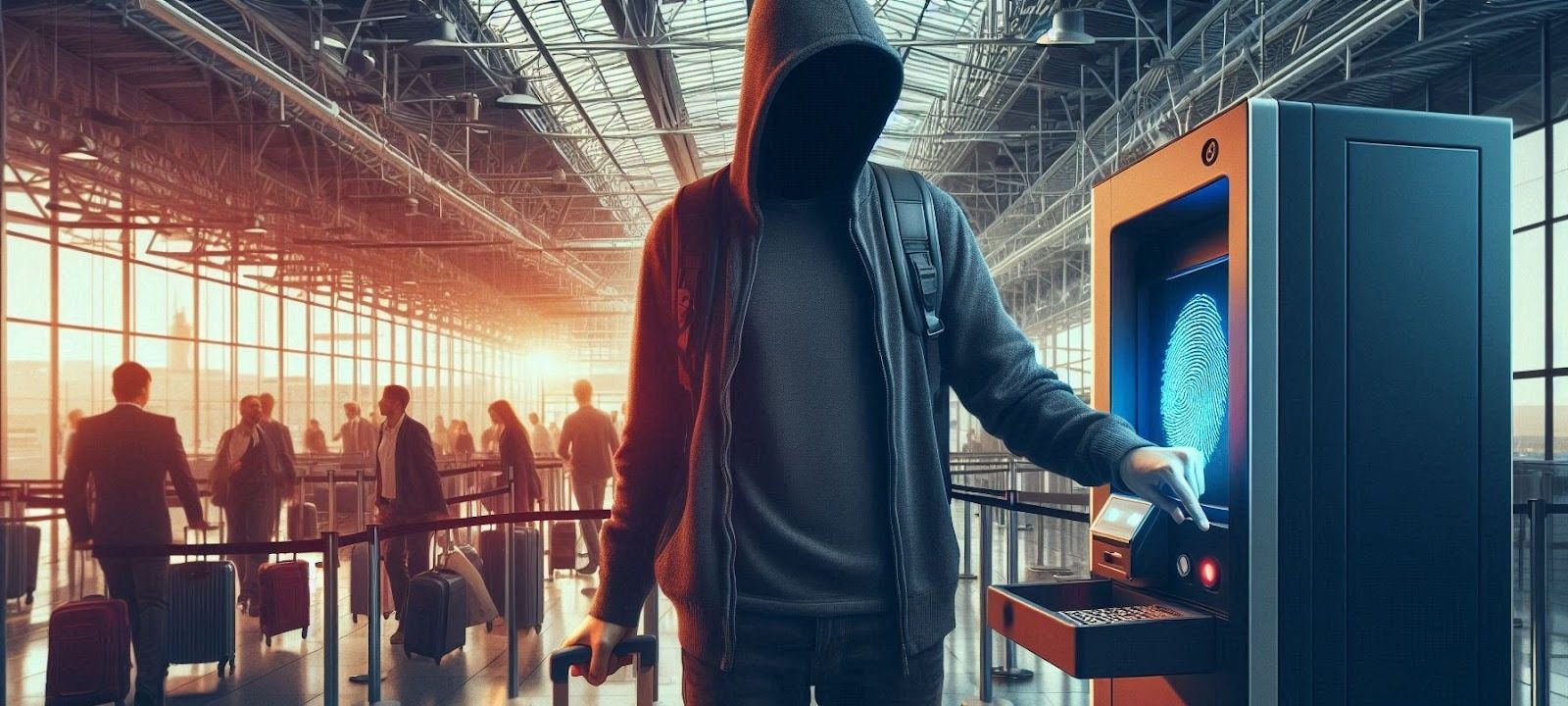
For many fugitives, the dream of escape ends under fluorescent lights at passport control.
WASHINGTON, DC.
For fugitives on the move in 2026, the real terror is no longer just the knock on a hotel-room door or the rumor that a fixer has talked. It is the airport moment.
A passport was handed over too calmly. A camera mounted above the lane. A face scanned without drama. A short pause that lasts a little too long. One officer glances at a screen, then another. A boarding pass is returned, but not the passport. The traveler is asked to step aside.
That is how the dream dies now.
Not always in a raid. Not always in a gunfight. Not always after some cinematic chase through a city full of sirens. More and more, it ends under hard airport lighting, with luggage half-zipped, adrenaline surging, and the awful realization that the system already knows more than the fugitive thought it did.
The Red Notice is bad enough. The biometric match is worse.
A lot of wanted people still misunderstand the Red Notice. They hear the phrase and imagine a global arrest warrant that instantly brings the whole world crashing down. Others make the opposite mistake. They hear that it is not technically an arrest warrant and convince themselves it is just bureaucratic noise.
Both readings are dangerous.
What makes a Red Notice so frightening in 2026 is not the label alone. It is what can happen when that alert collides with modern airport screening, biometric verification, and border technology. A fugitive might survive for years by staying mobile, changing names, using clean documents, rotating routes, and trusting that no one officer will connect the dots. That strategy starts to collapse when the body in front of the system matters more than the story in the passport.
A name can be changed. A travel narrative can be rehearsed. A supporting document can be forged, borrowed, or fraudulently obtained. But when the face, the print, or the document trail starts pulling in a different direction, the room gets cold very fast.
Airports are where the illusion gets stripped away.
For people on the run, airports are still necessary. That is the trap.
A fugitive can avoid some borders for a while. He can hide in friendly cities, use back channels, move by land, stay close to corrupt intermediaries, or keep a low profile inside one region. But sooner or later, many need to fly. Business, money, family, fear, relocation, medical needs, visa problems or simple panic eventually push them back into the system.
And the airport is where the disguise has to survive contact with procedure.
That is why airport arrests feel so brutal. They are public, sudden, and humiliating. A person can believe he is still managing the risk right up until the instant he is separated from the crowd. By then, the performance is over. The smiling traveler becomes the detained suspect. The casual transit stop becomes the end of the run.
That is exactly why so many modern fugitive stories have the same ugly shape. The person was not caught in some gangster fantasy hideout. He was caught while trying to move like everyone else.
Biometrics are turning movement into exposure.
This is the part fugitives fear most.
The more borders, airports, and travel systems lean on facial comparison and biometric identity checks, the less valuable a fake name becomes by itself. According to U.S. Customs and Border Protection’s biometrics overview, facial biometric technology is used to verify identity by matching a traveler’s live facial features against the photo in travel documents. That sounds clinical and routine. For a wanted person, it is a nightmare.
Because the modern system does not need the fugitive to confess who he is. It only needs enough friction to start asking harder questions.
A photo that lingers. A mismatch that needs review. A document that feels wrong. A second inspection results in a longer detention. The process does not have to be perfect to be dangerous. It only has to slow the fugitive down long enough for the right person, the right alert, or the right linked record to surface.
That is what makes the biometric era so different. It turns movement itself into a liability. The very act of trying to stay mobile creates new moments of exposure.
The airport takedown is often less dramatic than people imagine, and more terrifying.
There may be no shouting at first. No guns drawn. No big scene. Just procedure.
A few questions. A side room. A request to wait. A quiet phone call between officials. A longer look at the document. A subtle shift in body language from staff who suddenly know they are not dealing with an ordinary traveler.
For the fugitive, this may be the first unmistakable sign that the outside world has caught up. The aliases, the cash, the route changes, the safe apartments, the burner phones, the constant vigilance, all of it comes down to one miserable moment in an airport chair while strangers decide what happens next.
That is why airport arrests hit so hard psychologically. They do not just stop movement. They expose the lie. They show the fugitive that the system he thought he was outsmarting was still waiting in the background.
One airport arrest can shatter years of false confidence.
That is the real power of modern fugitive captures. They do not just remove one person. They frighten every other wanted person watching.
If a fugitive sees that another man was stopped at the gate, identified in transit, or pulled out of a departure lane after years of movement, the message is immediate. The route is not safe. The alias is not enough. The airport is not neutral ground.
That fear is exactly why airport arrests carry so much weight in the wider manhunt ecosystem. They send a message across criminal networks, fixer circles, and wanted communities that the movement is becoming less forgiving.
Reuters captured that fear in its report on the Athens airport arrest of Moldovan tycoon Vladimir Plahotniuc, who was detained while trying to fly to Dubai after moving across multiple countries. That is the shape of the nightmare. Not a dramatic last stand, but a sudden collapse at the threshold of departure.
Why fake names and polished documents are losing power.
For years, fugitives relied on the simplest principle in the book. Most officials only see what is in front of them. Give them a plausible passport, a calm demeanor, and a clean travel story, and many interactions end there.
But that logic weakens when the person at the desk is being assessed not only by a human being but also by a network of systems that can compare, flag, and escalate.
This does not mean the world has become one all-seeing machine. It has not. Airports vary. Countries vary. Systems vary. Enforcement varies. There are still weak points, blind spots, and human errors. But that unevenness should not comfort anyone on the run. It should frighten them. Because a fugitive does not need to fail everywhere. He only needs to fail once.
And that one failure often happens when confidence has already returned. The fugitive has flown before. Crossed before. Cleared before. That history becomes its own sedative. Then one airport, one officer, one scan, one match, and the spell breaks.
The real danger is the chain reaction after the stop.
A Red Notice plus biometric friction does not just threaten one trip. It can destroy the entire structure holding the fugitive’s life together.
Once the detention begins, everything else starts moving. Authorities are alerted. Travel stops. Lawyers are called. Extradition risk comes into focus. Associates start panicking. Phone numbers become toxic. Future routes vanish. Safe cities no longer feel safe. A person who thought he was simply trying to board a plane suddenly discovers he is now at the center of a cross-border legal problem that may take months or years to unwind.
That is why experts tracking extradition and mobility pressure, including Amicus International Consulting’s overview of Red Notice and extradition exposure, keep returning to the same hard truth. The danger is not only the notice itself. It is the cascading effect once identity, travel, and international cooperation begin to line up against the person on the move.
The new fugitive nightmare is simple. The system does not have to chase you everywhere. It just has to meet you once.
That is what 2026 keeps proving.
A wanted person can change cities, names, routes, and companions. He can keep moving through the shadows and tell himself that escape is still working. But the world of airport screening is getting less dependent on the fugitive’s version of who he is and more interested in whether the body, face, and documents in front of it truly belong together.
For many, that means the runway is getting shorter.
The dream of escape still begins with movement. But now, more often than fugitives want to admit, it ends the same way.
Under fluorescent lights.
At passport control.
With a screen glowing back.
And the terrible silence that means global justice has finally caught up.
