
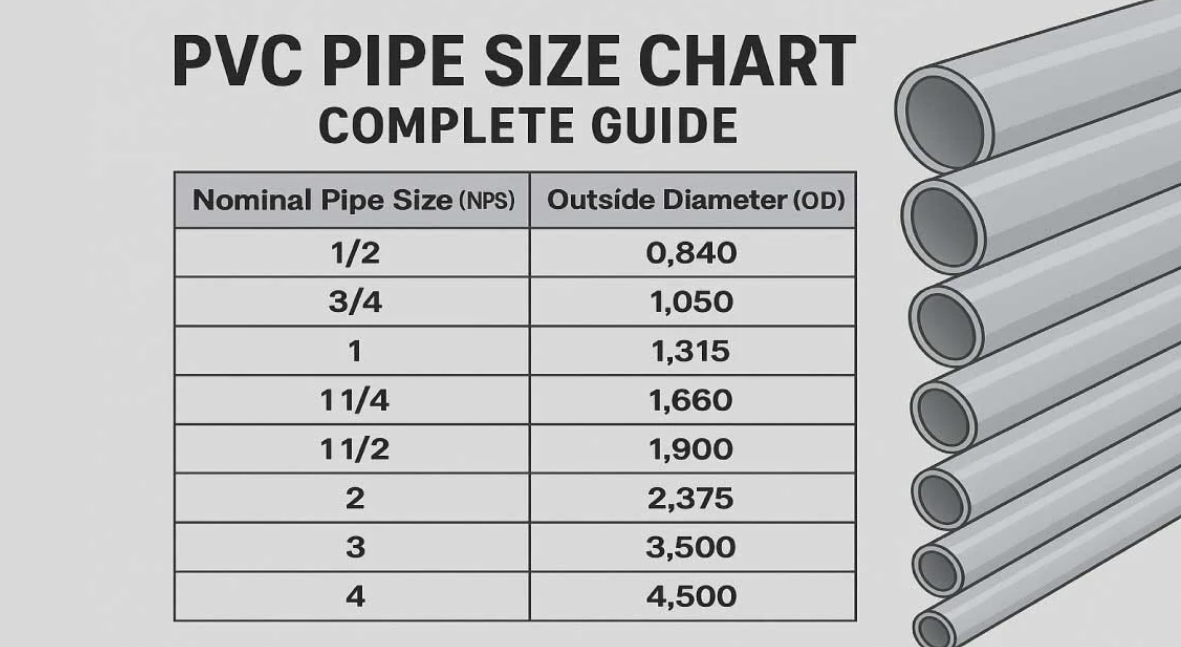
PVC pipes (Polyvinyl Chloride pipes) are one of the most widely used piping systems in the world today. They are popular in plumbing, irrigation, drainage, construction, and industrial systems because they are lightweight, affordable, corrosion-resistant, and easy to install. However, one of the most confusing aspects for beginners and even professionals is understanding PVC pipe sizes.
Unlike simple measurement systems, PVC pipe sizes are not always what they seem. A pipe labeled as “1 inch” does not actually measure exactly 1 inch in diameter. Instead, PVC sizing follows a nominal system, which can vary depending on standards, regions, and applications.
In this detailed guide, we will break down PVC pipe sizes in a simple way so you can understand how they work, how they are measured, and how to choose the right size for your project.
Understanding PVC Pipe Size Basics
PVC pipe sizing is based on nominal pipe size (NPS) in many countries, like the United States, while other regions use metric systems like DN (Diameter Nominal).
The key thing to understand is:
- Pipe size is NOT the exact outside or inside diameter.
- It is a nominal designation used for standardization.
- Actual dimensions vary depending on wall thickness (schedule).
So when you see a pipe labeled as 2 inches, it is a trade size, not a precise physical measurement.
Nominal Pipe Size vs Actual Size
One of the biggest sources of confusion is the difference between nominal size and actual size.
What Is Nominal Pipe Size (NPS)?
This is the name or label of the pipe, such as 1 inch, 2 inch, or 3 inch.
What Is Actual Pipe Size?
Actual pipe size includes:
- Outside Diameter (OD)
- Inside Diameter (ID)
- Wall Thickness
For example:
- A 1-inch PVC pipe does not have a 1-inch outer diameter.
- The OD is usually larger than 1 inch.
- The ID depends on the pipe wall thickness.
This system exists because pipes are designed to work with fittings rather than exact physical measurements.
Importance of Pipe Schedule in PVC Sizes
Another critical factor in PVC pipe sizing is the schedule.
The schedule refers to the wall thickness of the pipe.
Schedule 40 PVC Pipe
Schedule 40 PVC is the most common type and is widely used in:
- Residential plumbing
- Irrigation systems
- Drainage applications
It offers a balance between strength and affordability.
Schedule 80 PVC Pipe
Schedule 80 PVC has thicker walls than Schedule 40 and is commonly used in:
- Industrial systems
- Chemical transport
- High-pressure applications
Even when two pipes share the same nominal size, their inside diameters can differ because of wall thickness variations.
For example, a Schedule 80 pipe has a smaller inside diameter than a Schedule 40 pipe of the same nominal size because the walls are thicker.
Metric PVC Pipe Sizing System (DN System)
Many countries outside the United States use the DN system for PVC pipe sizing.
What Does DN Mean?
DN stands for Diameter Nominal.
Key characteristics include:
- Measured in millimeters
- Used internationally
- Standardized for compatibility
Examples include:
- DN 15 (approximately 1/2 inch)
- DN 20 (approximately 3/4 inch)
- DN 25 (approximately 1 inch)
- DN 50 (approximately 2 inch)
- DN 100 (approximately 4 inch)
Like NPS, DN values are nominal designations rather than exact measurements.
How PVC Pipe Sizes Are Measured
PVC pipes are measured using three primary dimensions.
Outside Diameter (OD)
The outside diameter is the distance from one outer edge of the pipe to the opposite outer edge.
It is important because:
- Fittings are designed around OD measurements.
- Outside dimensions are generally standardized.
Inside Diameter (ID)
The inside diameter refers to the hollow opening inside the pipe.
It affects:
- Flow rate
- Water volume
- System efficiency
The ID changes depending on wall thickness.
Wall Thickness
Wall thickness is the distance between the inside and outside surfaces of the pipe.
It determines:
- Strength
- Pressure rating
- Durability
Selecting a PVC pipe involves balancing all three dimensions.
Common PVC Pipe Size Categories
PVC pipes are available in a wide range of sizes. Understanding common categories helps simplify selection.
Small Diameter PVC Pipes
Typically ranging from 1/2 inch to 1 inch, these pipes are commonly used for:
- Household plumbing
- Bathroom water lines
- Small irrigation systems
- Sink drainage
They are suitable for lower flow requirements.
Medium Diameter PVC Pipes
Usually ranging from 1.25 inches to 3 inches, these pipes are used in:
- Residential water supply
- Garden irrigation
- Commercial plumbing
- Wastewater systems
They provide a good balance between pressure and flow capacity.
Large Diameter PVC Pipes
Typically ranging from 4 inches to 12 inches, these pipes are often found in:
- Main water supply lines
- Sewer systems
- Agricultural irrigation
- Industrial drainage
They are designed to handle higher flow volumes.
Extra Large PVC Pipes
Pipes larger than 12 inches are generally used in:
- Municipal water networks
- Stormwater systems
- Industrial wastewater treatment
- Large-scale drainage infrastructure
These applications often require specialized installation equipment.
Pressure Ratings and Their Relationship with Size
PVC pipe size and pressure rating are closely related.
Common pressure classes include:
- PN6 (Low Pressure)
- PN10 (Medium Pressure)
- PN16 (High Pressure)
Smaller pipes can often withstand higher pressure because of their wall-to-diameter ratio. Larger pipes are usually designed to maximize flow capacity rather than pressure resistance.
How to Choose the Right PVC Pipe Size
Selecting the correct PVC pipe size depends on several important factors.
Consider Flow Requirements
Higher water demand generally requires larger diameter pipes.
Evaluate the Application
Different applications require different sizes:
- Plumbing systems typically use smaller sizes.
- Irrigation systems often use medium sizes.
- Sewer systems require larger sizes.
Check Pressure Requirements
High-pressure systems may require thicker-wall pipes such as Schedule 80 or higher PN-rated pipes.
Account for Flow Distance
Long pipe runs may need larger diameters to reduce pressure loss and maintain performance.
Consider the Type of Fluid
Different fluids, including water, chemicals, and wastewater, may require specific pipe grades and sizing considerations.
Common Mistakes When Selecting PVC Pipe Sizes
Choosing the wrong PVC pipe size can lead to costly problems.
Confusing Nominal and Actual Sizes
Many people assume nominal size equals actual diameter, which can result in incorrect fitting selection.
Ignoring Schedule Differences
Failing to consider wall thickness can lead to inadequate pressure performance.
Choosing Pipes That Are Too Small
Undersized pipes can reduce flow and increase pressure loss.
Overlooking Future Expansion
Installing slightly larger pipes can make future system upgrades easier and more cost-effective.
PVC Pipe Size Compatibility with Fittings
PVC fittings are designed to match nominal pipe sizes rather than actual dimensions.
For example:
- A 2-inch PVC pipe fits a 2-inch PVC fitting.
- Standardization ensures compatibility across manufacturers.
To ensure reliable connections:
- Use compatible fittings.
- Match schedules where required.
- Use the correct solvent cement and installation methods.
Industrial vs Residential PVC Pipe Sizes
Pipe sizing often varies based on the intended application.
Residential PVC Pipe Sizes
Residential systems commonly use:
- 1/2 inch
- 3/4 inch
- 1 inch
- 2 inch
These sizes are suitable for household water supply and drainage.
Commercial PVC Pipe Sizes
Commercial buildings often use:
- 2 inch
- 3 inch
- 4 inch
- 6 inch
These systems handle greater water demand and drainage requirements.
Industrial PVC Pipe Sizes
Industrial applications frequently use:
- 6 inch and larger
These pipes are used for:
- Chemical processing
- Wastewater treatment
- Industrial water transport
Industrial systems often require Schedule 80 or other heavy-duty specifications.
Advantages of Standard PVC Pipe Sizes
Standardized PVC sizing offers several benefits:
- Easy installation
- Wide compatibility
- Lower costs
- Global availability
- Simplified system design
- Reliable fitting connections
These advantages make PVC one of the most practical piping materials available today.
Conclusion
PVC pipe sizes may seem confusing at first because they do not follow simple measurement logic. However, once you understand the concepts of nominal size, schedule, outside diameter, inside diameter, and the DN system, selecting the correct pipe becomes much easier.
The most important takeaway is that PVC pipe sizing is standardized for compatibility rather than exact measurement. This ensures that pipes, fittings, and accessories from different manufacturers can work together efficiently.
Whether you are planning a residential plumbing project, irrigation system, drainage network, or industrial installation, understanding PVC pipe sizes will help you avoid costly mistakes, improve system performance, and choose the right piping solution for your needs.