
Introduction
Before your customer reads a single word of your copy, visits your website, or experiences your customer service, they have already formed an opinion about your brand. That opinion was formed the moment they saw — or touched — the way your product is presented.
This isn’t opinion. It’s neuroscience. The human brain processes visual information 60,000 times faster than text, and first impressions are formed within 50 milliseconds of visual exposure. For luxury businesses, that fraction of a second is loaded with commercial consequence.
Premium product presentation isn’t decoration layered on top of a good product. It is a deliberate psychological system — one that shapes perceived quality, triggers emotional buying behaviour, builds trust, and ultimately determines whether a customer feels your price point is justified or inflated. Understand that system, and you have one of the most powerful tools in modern luxury retail psychology.
This article unpacks exactly how high-end presentation works on the customer’s mind — and what business owners in luxury markets can do, practically, to harness it.
What High-End Presentation Actually Means
Many business owners equate premium presentation with expensive materials — heavy paper, thick card, gold foiling. While material quality matters, it is only one layer of a much deeper system.
High-end product presentation is the deliberate design of every sensory touchpoint associated with a product — from the moment a customer first sees it online to the moment they hold it in their hands, open its packaging, and place it in their home or wear it on their body. It encompasses:
- Visual aesthetics — colour, typography, proportion, and negative space in all brand touchpoints
- Material quality and tactile experience — the weight, texture, and finish of packaging and collateral
- Structural design — how a package opens, the sequencing of reveals, the resistance of closures
- Scent and sound — elements many brands overlook entirely but that luxury retailers have long understood
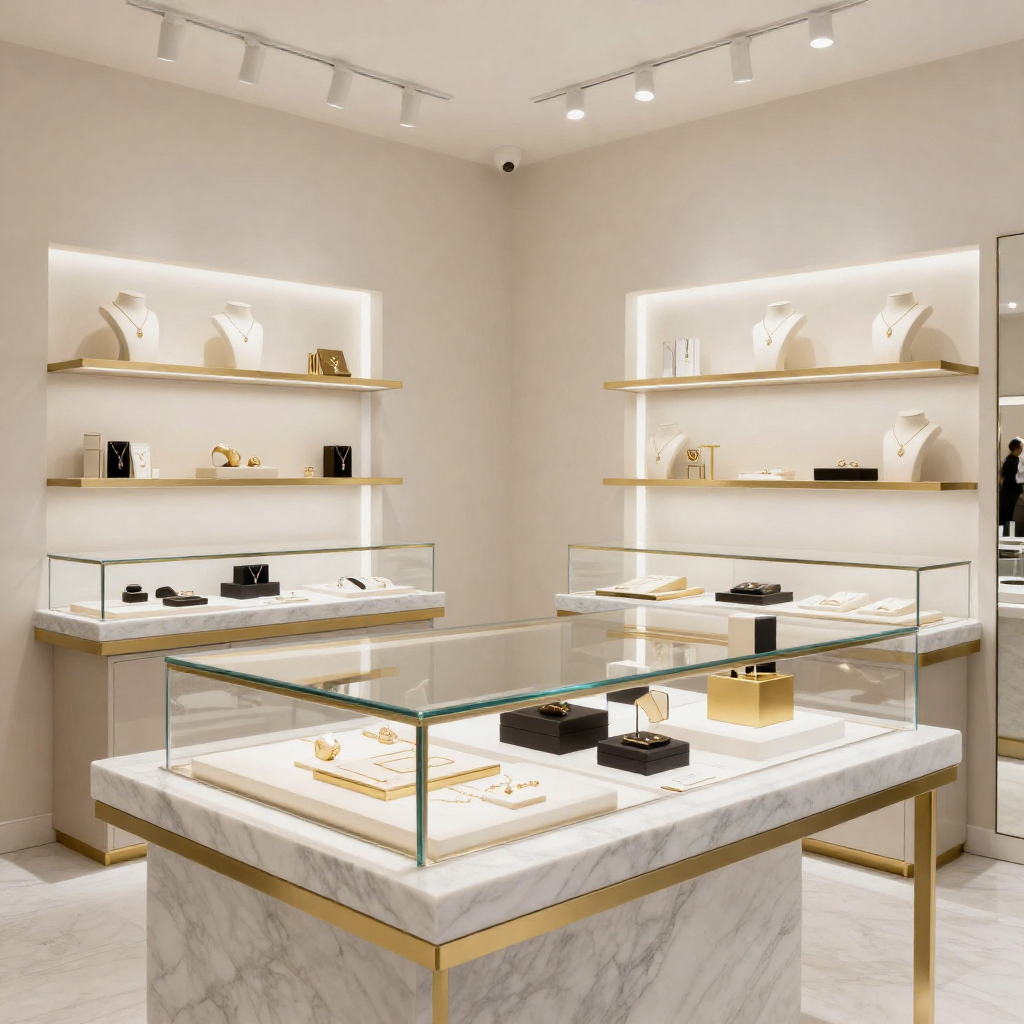
- Contextual framing — how products are displayed, lit, and positioned in physical and digital environments
Each of these dimensions sends psychological signals to the customer about the nature and value of what they’re receiving. The most successful luxury brands engineer all of them — not some of them.
The Psychology of Perceived Quality
One of the most counterintuitive findings in consumer psychology is that customers cannot reliably distinguish product quality through the product alone. Instead, they use surrounding cues — presentation, packaging, brand environment — to infer quality. This is called peripheral processing, and it operates below conscious awareness.
The most famous demonstration of this is the wine bottle weight study: identical wine poured from heavier bottles is consistently rated as higher quality by test subjects who are unaware of the manipulation. The same mechanism applies universally across luxury product categories. A perfume in a weighty glass bottle with a precision-machined cap is perceived as more sophisticated than the same fragrance in a lighter vessel — before it has even been smelled.
For business owners, this finding has a direct commercial implication: investment in presentation quality is not an aesthetic indulgence. It is a lever for increasing the perceived value of your product in the customer’s mind — which translates directly into willingness to pay, satisfaction with the purchase, and likelihood of return.
“Customers don’t evaluate quality in isolation. They evaluate quality through the lens of everything surrounding the product — and presentation is the most powerful lens you control.”
Emotional Triggers That Drive Luxury Buying Decisions
Purchasing decisions — especially in premium markets — are fundamentally emotional. The rational mind may justify the decision after the fact with reasoning about quality, durability, or value, but the initial impulse is almost always emotional. Luxury product presentation is designed to trigger specific emotional states that make purchasing feel not just desirable but necessary.
The Four Primary Emotional Triggers in Luxury Presentation
- Desire — premium presentation creates a visceral want through beauty, rarity cues, and aesthetic pleasure. The customer doesn’t just want the product; they want the experience of owning it
- Trust — considered, high-quality presentation communicates that the brand takes its craft seriously. It is a non-verbal promise of the product quality inside
- Status — presentation that signals exclusivity and premium positioning allows customers to feel they are part of a discerning group. The package itself becomes a social signal
- Anticipation — the architecture of a well-designed unboxing experience — the layering, the sequencing, the reveals — triggers the same neurological pleasure as receiving a gift, regardless of whether the customer bought it for themselves
Understanding which of these emotional triggers your brand is — or should be — activating is fundamental to designing a presentation strategy that actually works. Different categories weight these triggers differently. Jewelry brands lead with desire and status. Skincare brands lead with trust and desire. Fashion brands often lead with identity and status. Understanding your category’s emotional hierarchy is the starting point for intentional presentation design.
The Role of Colour, Texture, and Design in Customer Psychology
The visual and tactile elements of product presentation are not neutral design choices. Each one communicates something specific to the customer’s subconscious, and the most sophisticated luxury brands choose them with exactly that intentionality.
Colour Psychology in Luxury Branding
Colour is perhaps the most researched element of consumer psychology, and its effects in luxury branding are well established. Black communicates authority, sophistication, and premium positioning — Chanel’s iconic packaging is a masterclass in this. Deep navy signals trust and intelligence. Matte white communicates purity and minimalism. Burgundy and deep green evoke heritage and exclusivity. The choice of colour palette is not an aesthetic preference — it is a brand positioning decision with measurable impact on customer perception.
Texture and Tactile Experience
Tactile experience is one of the most underutilised tools in luxury brand presentation — and one of the most powerful. Research in haptic psychology shows that touching a product or its packaging directly influences quality assessment and purchase intent. Matte finishes communicate restraint and sophistication. Soft-touch laminates trigger associations with comfort and care. Embossed logos invite the fingers to explore, creating a moment of physical connection between customer and brand that is both memorable and trust-building.
Spatial Design and Negative Space
In luxury visual branding psychology, what you remove is often more powerful than what you add. Premium brands use negative space — both in packaging design and physical retail environments — to communicate confidence. Overcrowded design signals anxiety; considered restraint signals authority. Apple’s packaging is perhaps the most studied example: minimal, precise, and deliberately empty of anything unnecessary. That emptiness communicates that what’s inside is worth the space it occupies.
Packaging and the Unboxing Experience: Where Emotion Peaks
The unboxing moment has become one of the most commercially significant touchpoints in luxury retail — and its psychological mechanisms are well understood. When a customer opens a premium package, they are not simply accessing a product. They are experiencing a ritual that their brain processes similarly to receiving a gift: a moment of anticipation, followed by reveal, followed by emotional response.
The architecture of this experience — the sequence in which elements are encountered, the resistance of the opening mechanism, the layers of material between the customer and the product — determines the emotional intensity of that response. Brands that engineer this sequence thoughtfully create memorable experiences. Brands that treat packaging as a container rather than a communication create forgettable ones.
For premium product categories — jewelry, cosmetics, high-end fashion accessories — this translates directly into measurable business outcomes. A cosmetic brand that ships its products in a weighted custom rigid box with a magnetic closure and silk ribbon pull creates a tactile experience that signals quality long before the customer has seen the product inside. That signal affects satisfaction, perceived value, willingness to pay, and the likelihood of the customer sharing the experience with their network — organically extending the brand’s reach.
The shareable dimension of unboxing has added a new layer of commercial value to premium packaging. An experience that customers feel compelled to photograph and share is earned media — brand storytelling delivered by the customer, to their audience, at no direct cost to the brand. This dynamic has made unboxing experience design a strategic priority for forward-thinking luxury businesses.
“The unboxing moment is the luxury brand’s most intimate customer interaction. What happens in those thirty seconds can determine whether a buyer becomes a loyalist — or a one-time customer.”
Brand Consistency: The Foundation of Customer Trust
Premium presentation is not a campaign or a season. It is a standard — and its power is cumulative. Every touchpoint a customer encounters either reinforces or weakens the mental model they hold of your brand. Consistency is what makes that model stable, predictable, and trustworthy.
Luxury brands understand this with unusual discipline. The same precision of typography in a receipt as in a billboard. The same quality of paper in an in-store card as in a lookbook. The same warmth of tone in a returns communication as in a launch email. This level of consistency is not accidental — it is the result of brand standards that are enforced at every level of the business.
Where Inconsistency Most Often Damages Luxury Perception
- Digital vs physical brand experience — a beautifully curated boutique undone by a generic, low-resolution website
- Post-purchase communication — transactional, impersonal emails following a premium in-store or unboxing experience
- Customer service tone — cold or scripted responses that contradict the brand’s human, considered presentation
- Packaging variation across product lines — when different products receive demonstrably different levels of presentation care
For business owners growing into premium positioning, the discipline of consistency is often the most challenging to maintain at scale — and the most important. Every customer whose experience reveals an inconsistency is a customer whose trust in your premium promise has been fractionally, but measurably, reduced.
First Impressions and the 50-Millisecond Judgement
The cognitive science of first impressions is both humbling and motivating for luxury brand owners. Studies at Princeton University found that impressions of trustworthiness form within 100 milliseconds of exposure to a new face — and similar research applied to brand environments suggests comparable timescales for product and packaging judgements.
This means that before a customer has read your product name, understood your value proposition, or assessed your price point, they have already formed a provisional verdict on your brand’s trustworthiness and quality. That verdict is formed by the visual presentation they see in those first fractions of a second.
The practical implication is that presentation investment pays its return before the customer has engaged with any other aspect of your marketing or sales effort. It is the first conversation your brand has — and it is conducted entirely in the language of aesthetics, material, and design.
How Premium Presentation Builds Long-Term Customer Loyalty
Customer loyalty in luxury markets is built differently than in mainstream retail. Price promotions and points schemes that drive repeat purchase in mass-market categories are largely ineffective — and often counterproductive — in premium positioning. What builds loyalty in luxury is consistent emotional experience: the reliable, repeated feeling of being valued, surprised, and well-served.
Premium presentation is central to this. When every interaction with a brand — every package received, every piece of collateral read, every store entered — delivers a consistent level of considered quality, customers develop what psychologists call affective trust: an emotional rather than purely rational confidence in the brand. Affective trust is far more durable than cognitive trust, far less vulnerable to competitor activity, and far more likely to generate the advocacy that drives luxury brand growth.
Research consistently shows that emotionally connected customers in luxury categories spend significantly more over their lifetime, are markedly less price-sensitive, and are dramatically more likely to refer others. Premium presentation — as the primary driver of emotional connection — is therefore not a cost of doing business in luxury markets. It is the single highest-return investment available.
Common Mistakes Brands Make in Premium Presentation
Understanding the psychology of high-end presentation is only half the challenge. The other half is avoiding the consistent errors that undermine premium positioning — even in brands that understand the principles.
The Most Damaging Presentation Errors
- Prioritising product investment over presentation investment — a superior product delivered through average packaging creates dissonance that reduces perceived quality of both
- Treating sustainability and premium presentation as incompatible — increasingly, considered sustainable materials communicate luxury intelligence rather than compromise
- Copying competitor aesthetics — in luxury retail psychology, derivative visual language reads as exactly that; discerning customers recognise it and penalise it
- Inconsistency between digital and physical touchpoints — the standard of presentation must be maintained across every channel without exception
- Overcrowding the presentation — adding more elements in search of perceived value typically reduces it; restraint and precision are the signatures of genuine luxury
- Neglecting the post-purchase experience — premium presentation that ends at delivery, leaving the returns, follow-up, and aftercare experience to chance, breaks the trust it has built
How the World’s Best Luxury Brands Use Presentation Strategically
The most instructive examples of premium presentation done right share a common characteristic: intentionality. Every element is chosen, not defaulted to. The Tiffany blue box is not a packaging choice — it is a brand asset with measurable financial value. Hermès orange is not an aesthetic preference — it is a globally recognised trust signal. Apple’s white retail environment is not a design style — it is a deliberate communication of the product’s centrality.
These brands have understood that presentation is brand strategy made physical. And they protect, refine, and reinvest in it with the same rigour they apply to product development and marketing.
For smaller luxury businesses and e-commerce brands, the lesson is not to replicate these brands’ aesthetics but to replicate their approach: identify what your brand should make customers feel, design every presentation element to deliver that feeling, and protect its consistency with genuine discipline.
Future Trends in High-End Product Presentation
Sustainable Luxury Presentation
The next frontier of premium branding strategies involves reconciling the tactile richness of luxury presentation with the environmental values of a generation of consumers who hold both simultaneously. Brands that are finding ways to deliver exceptional sensory experience through certified sustainable materials are not compromising on luxury — they are redefining it in terms that resonate with younger premium buyers.
Digital-Physical Experience Integration
QR codes embedded in premium packaging that unlock personalised brand content, augmented reality product experiences, digital certificates of provenance — the physical luxury experience is becoming a gateway to richer digital engagement. Brands that integrate these elements seamlessly extend the emotional experience of the product far beyond the unboxing moment, creating ongoing touchpoints that deepen the relationship over time.
Hyper-Personalisation at Scale
Technology is enabling truly personalised luxury presentation at volumes that were previously impossible. Variable data printing, personalised packaging inserts, and AI-driven customer recognition systems are making it increasingly viable to deliver bespoke experiences to every customer — translating the emotional power of personal recognition into scalable business practice.
Sensory Branding Beyond the Visual
Leading luxury brands are expanding their presentation investment beyond the visual into signature scent, sound, and texture experiences that create deeper multi-sensory brand associations. Research consistently shows that multi-sensory experiences are more emotionally engaging, more memorable, and more likely to trigger the kind of deep loyalty that luxury businesses depend on for growth.
Conclusion
The psychology behind high-end product presentation is not a niche academic subject. It is the operational reality of how premium businesses win and retain customers in some of the most competitive markets in the world.
Presentation is not what happens after the product is made. It is part of the product — in many cases, the part that determines how the rest of it is experienced. Customers who receive a beautifully presented product are buying more than the physical item. They are buying a feeling of being valued, a confirmation of their own taste, and a moment they will associate with your brand for years.
For business owners in premium markets — whether you operate a luxury jewelry brand, a high-end cosmetics company, a boutique fashion label, or a premium e-commerce business — the directive is clear. Treat presentation as strategy. Invest in it with the same rigour you invest in product and marketing. Enforce its consistency with genuine discipline.
Because in the end, your brand is the sum of every experience your customer has ever had with it. And the most powerful of those experiences — the ones that build the deepest trust, the most durable loyalty, and the most enthusiastic advocacy — begin, always, with how something looks, feels, and opens.