

A short pause in price growth across parts of Australia’s housing market is creating what property expert Moxin Reza calls a rare window for buyers willing to act early.
Mr Reza says a number of suburbs with strong long-term fundamentals have seen modest price pullbacks over the past year, even as national home values continue to trend higher.
“What we are seeing is not a market turning negative,” Mr Reza said.
“It is selective cooling in suburbs that had strong runs previously, often driven by short-term factors like higher listings, investor sell-offs or buyer hesitation during interest rate uncertainty.”
Data from PropTrack shows 27 suburbs identified in the latest Hot 100 growth list recorded lower median prices over the past 12 months, despite being flagged for above-average growth potential in 2026 and beyond.
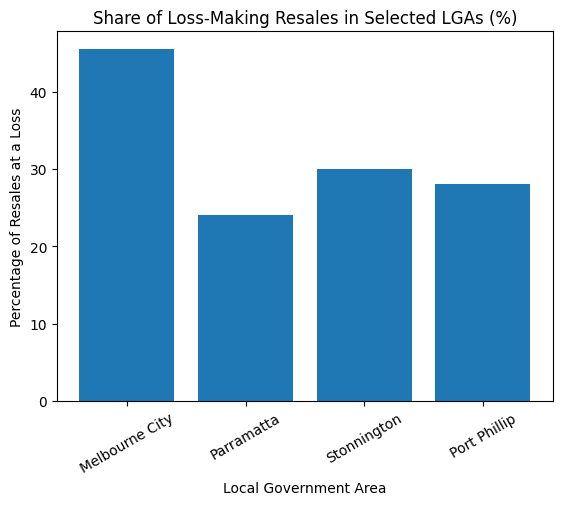
Nationally, Australia’s median home value rose about 8.7 per cent over the same period, highlighting how localised these declines have been.
According to Mr Reza, that contrast is exactly what creates opportunity.
“When prices soften in suburbs that still have population growth, infrastructure investment, tight rental markets and strong owner-occupier appeal, it often signals timing rather than weakness,” he said.
“These are the moments long-term investors and strategic buyers look for.”
How far have prices eased?
The scale of price declines varies widely. In the house market, some regional Victorian locations recorded falls approaching 20 per cent, while parts of Sydney’s outer west and inner-city Melbourne saw marginal declines of less than 1 per cent. Mr Reza said larger falls were often linked to temporary oversupply or investors exiting after earlier gains.
“In many cases, listings increased at the same time borrowing capacity tightened,” he said.
“That combination can suppress prices briefly, even though demand underneath remains strong.”
He pointed to suburbs where buyer enquiries are already rising again, even while prices remain below last year’s levels.
“That is usually the first sign a rebound is forming,” he said.
Units tell a similar story
In the unit market, several suburbs recorded sharper price adjustments, particularly in inner-city and lifestyle locations that had surged in previous years. Mr Reza said this was not unusual following rapid growth.
“Units tend to move in cycles,” he said. “When prices run hard, they often pause or pull back before the next phase of growth, especially when new supply or investor selling enters the market.”
Importantly, demand indicators in many of these suburbs are improving, with enquiry levels rising even as prices remain below recent peaks.
“That combination matters more than the headline price change,” Mr Reza said. “It tells you buyers are active and watching closely.”

Value still attracts buyers
Mr Reza said one consistent theme across the data is buyers gravitating toward suburbs that offer relative value within their broader city or region.
“In places like Sydney and Melbourne, buyers are moving laterally rather than stepping away from the market,” he said. “They are choosing suburbs where their money stretches further, even if the median price is still high in absolute terms.”
He said suburbs within 10 kilometres of major CBDs, particularly those benefiting from transport upgrades or lifestyle amenities, remain highly attractive once prices stabilise. “For many buyers, a five or six per cent pullback can be the difference between sitting on the sidelines and stepping in,” he said.
Demand is already returning
PropTrack data shows enquiry levels rising sharply in several suburbs where prices declined over the past year, including parts of Melbourne’s west, Canberra’s south, Hobart’s outer suburbs and regional centres such as Bathurst.
Mr Reza said this pattern often appears just before prices begin to recover.
“Price growth usually lags demand,” he said. “When enquiry numbers lift and listings start to tighten, prices tend to follow.” He added that first-home buyers and long-term investors are often the earliest movers in these conditions. “They are less focused on short-term noise and more focused on securing a foothold,” he said.
A narrow window
While Mr Reza believes opportunities exist, he cautioned buyers against assuming prices will remain subdued for long.
“With interest rates lower than a year ago, population growth still strong and housing supply constrained, the broader market pressure is upward,” he said. “These softer patches do not usually last.”
For buyers prepared with finance and a clear strategy, he said the current conditions offer a chance to buy into strong suburbs before competition intensifies again.
“The window is not about chasing discounts,” Mr Reza said. “It is about buying quality assets when the market briefly gives you breathing room.”
“As history shows, those windows tend to close quietly, then people look back and wish they had moved sooner.”