
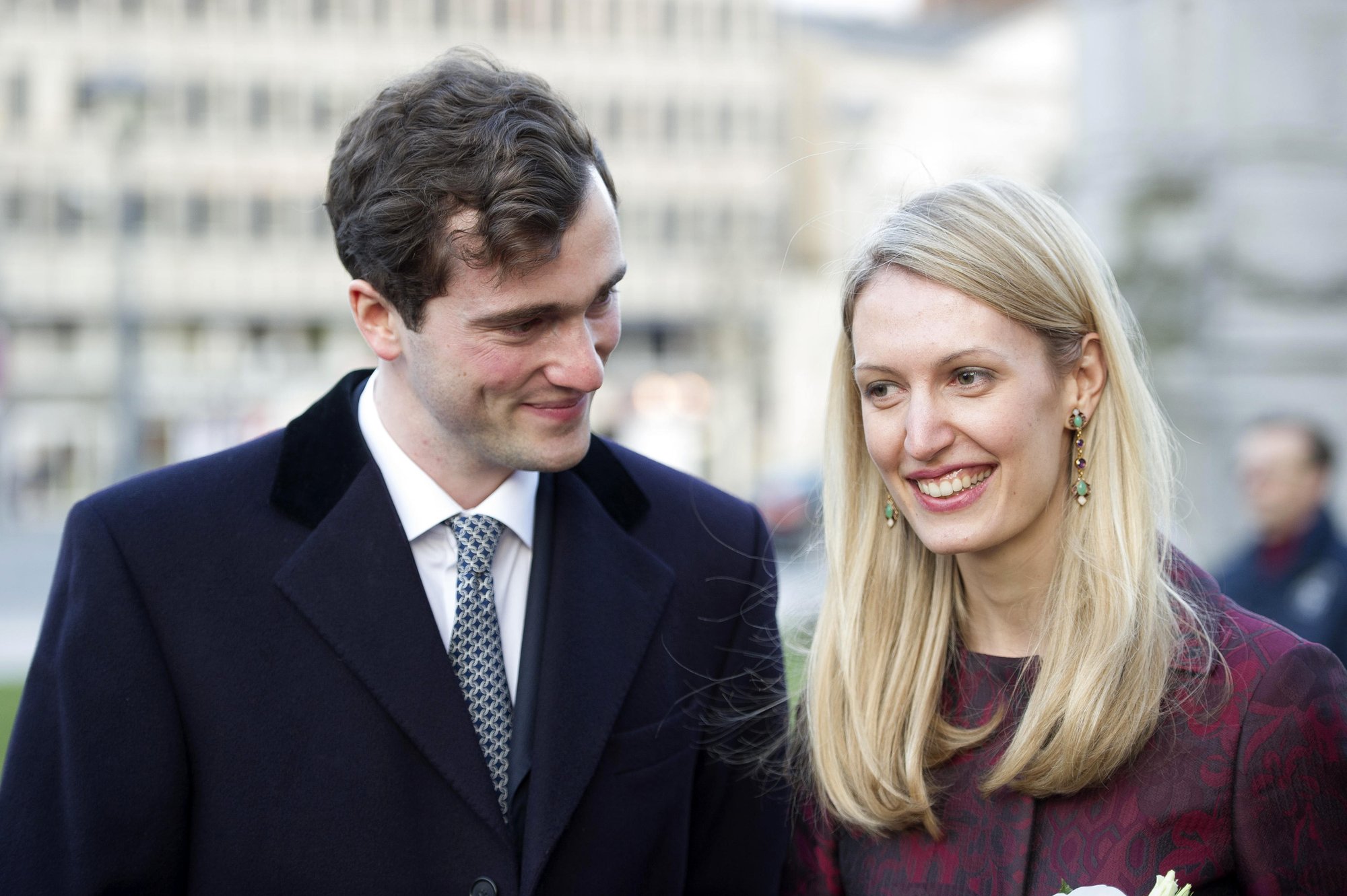
In the intricate tapestry of European royalty, few figures embody the continent’s interconnected aristocratic heritage quite like Prince Amedeo of Belgium . He carries a name that spans nations, dynasties, and centuries of history. As the nephew of the reigning King Philippe of Belgium and a grandson of the former King Albert II, he holds a significant place in the Belgian royal family. Yet his lineage extends far beyond Brussels, reaching into the storied House of Habsburg through his father, making him not just a Belgian prince but also an Archduke of Austria-Este.
Prince Amedeo navigates a unique position—royal by blood on both sides, yet deliberately carving a life that balances tradition with modern professional ambition. He is neither a full-time working royal nor a completely private citizen, existing in that delicate space between duty and independence. This article explores his fascinating dual heritage, his education, his career in finance, his marriage to an Italian aristocrat, and what his life represents for the future of European monarchy.
Birth and Dual Heritage: A Prince of Two Realms
Prince Amedeo Marie Joseph Carl Pierre Philippe Paola Marcus d’Aviano of Belgium was born on February 21, 1986, at the Saint-Luc University Hospital in Woluwe-Saint-Lambert, Brussels. His birth was celebrated as a joyous addition to the Belgian royal family, but his very name tells a story far more complex than a simple national narrative.
The Belgian Royal Connection
Amedeo is the eldest child of Princess Astrid of Belgium, the only daughter of King Albert II and Queen Paola, and the sister of the current monarch, King Philippe. This makes Amedeo a direct nephew of the reigning king and places him firmly within the Belgian line of succession. At the time of his birth, he was third in line to the throne, though subsequent births have since moved him further down the order.
His Belgian heritage connects him to a relatively young monarchy, established in 1831 with King Leopold I. The Belgian royal family, of the House of Saxe-Coburg and Gotha, was specifically created to provide a stable constitutional monarchy for the newly independent nation. This pragmatic origin has shaped the family’s character—less steeped in ancient mystique than some European houses, but deeply woven into the fabric of modern Belgian identity.
The Habsburg Legacy Through His Father
If the Belgian side of Amedeo’s lineage represents modern constitutional monarchy, his paternal heritage reaches back into the mists of European empire. His father is Prince Lorenz of Belgium, born an Archduke of Austria and a member of the House of Habsburg-Lorraine. The Habsburgs were, for centuries, one of the most powerful dynasties in world history, ruling the Holy Roman Empire, the Austrian Empire, and, through the cadet branch of Austria-Este, holding claim to territories across Europe.
Key elements of Amedeo’s Habsburg heritage:
| Aspect | Significance |
| Archduke of Austria-Este | A title connecting him to the historic Duchy of Modena and Reggio |
| Prince of Hungary and Bohemia | Reflecting the vast reach of the former Austro-Hungarian Empire |
| House of Habsburg-Lorraine | One of Europe’s oldest and most influential royal houses |
| Prince Lorenz’s status | A respected figure in European aristocratic circles, known for his work in finance and his dedication to family |
This dual heritage makes Amedeo a living bridge between two distinct royal traditions—one relatively modern and constitutionally focused, the other ancient, imperial, and steeped in the grand sweep of European history. He is, in his very person, a reminder of the interconnectedness of European royalty.
Education: Building a Foundation for a Modern Life
Prince Amedeo’s parents, Princess Astrid and Prince Lorenz, have consistently prioritized education and personal development for all their children. Amedeo’s academic journey reflects this commitment and provides insight into the kind of life he was being prepared to lead.
Early Schooling in Belgium
Amedeo completed his primary and secondary education in Belgium, attending Jesuit schools renowned for their academic rigor and emphasis on character formation. The Jesuit educational philosophy, with its focus on discipline, critical thinking, and service to others, left a lasting imprint on the young prince.
Military Service
Following in a proud family tradition of military service, Amedeo completed his training at the Royal Military Academy in Belgium. Military service is a common thread among Belgian royals; his grandfather, King Albert II, served in the Belgian Navy, and his uncle, King Philippe, trained as a fighter pilot. Amedeo’s time in the military instilled discipline and a sense of duty that would serve him well in his future endeavors.
University and Advanced Studies
Amedeo pursued higher education at some of the world’s most prestigious institutions:
- He studied at the London School of Economics and Political Science (LSE) , one of the leading social science universities globally.
- He completed studies at Columbia Business School in New York, earning an MBA from this Ivy League institution.
- He also attended the University of St. Gallen in Switzerland, known for its excellence in business and economics.
This international education, spanning London, New York, and Switzerland, equipped Amedeo with a global perspective and a skill set tailored for the world of finance and business. It also signaled that his future would likely involve a professional career rather than full-time royal duties.
A Career in Finance: The Professional Prince
Unlike some royals who dedicate themselves entirely to official engagements and charitable patronages, Prince Amedeo chose a different path. Since completing his education, he has built a career in the private sector, specifically in the world of banking and finance.
Professional Trajectory
Amedeo began his career working for major financial institutions, gaining experience in investment analysis, corporate strategy, and asset management. His roles have taken him across Europe and to the United States, reflecting the global nature of modern finance and his own international upbringing.
His career choices demonstrate several key priorities:
- Independence: Building a professional identity separate from his royal status
- Competence: Earning positions through qualification rather than title
- Privacy: Working in an environment where results matter more than lineage
- Stability: Creating a secure foundation for his growing family
Balancing Royal Duties and Professional Life
While Amedeo is not a full-time working royal, he does not completely absent himself from royal life. He attends major family events, including Belgian National Day celebrations, royal weddings, and significant state occasions. His presence at these events maintains his connection to the monarchy and the Belgian people, while his professional career allows him a degree of normalcy rarely afforded to direct heirs.
This hybrid existence—royal when necessary, private when possible—represents an emerging model for extended royal family members in the 21st century. As European monarchies slim down their official households, more princes and princesses will likely follow Amedeo’s example.
Marriage and Family: A Love Story Across Borders
On July 5, 2014, Prince Amedeo married Elisabetta “Lili” Maria Rosboch von Wolkenstein in a stunning ceremony at the Basilica of Santa Maria in Trastevere, Rome. The wedding was a quintessentially European royal affair, uniting Belgian royalty, Austrian imperial heritage, and Italian aristocracy in one celebration.
Who Is Lili?
Elisabetta Rosboch von Wolkenstein brings her own distinguished lineage to the marriage:
- She is the daughter of Ettore Rosboch von Wolkenstein, an Italian film producer
- Her mother is Countess Lilia de Smecchia
- She comes from a noble Italian family with roots in the South Tyrol region
- She worked professionally as a journalist for Bloomberg News before her marriage
Educated, accomplished, and poised, Lili has proven a perfect match for Amedeo. She understands both the privileges and the scrutiny that come with marrying into a royal family, and she has navigated her role with grace and discretion.
Their Growing Family
Amedeo and Lili have built a beautiful family together. They are parents to three children:
- Archduchess Anna Astrid — Born in 2016, the first grandchild for Princess Astrid and Prince Lorenz
- Archduke Maximilian — Born in 2019, adding a son to the family
- Archduchess Alix — Born in 2023, the newest addition, whose name was revealed with delight by the Belgian Royal Palace
The family resides primarily in Brussels, though Amedeo’s career has at times taken them abroad. They maintain a relatively private family life, with carefully managed public exposure. The children’s appearances are rare and typically limited to official family photographs released on special occasions.
The Children’s Titles
Interestingly, Amedeo and Lili’s children hold the titles of Archduke and Archduchess of Austria-Este, Prince and Princess of Belgium, though the practical use of these titles varies. This again reflects the dual heritage that defines their branch of the family.
Place in the Line of Succession
Prince Amedeo’s position in the Belgian line of succession has evolved over time. At birth, he was third in line, after his uncle Philippe and his mother Astrid. Today, with King Philippe’s four children and the births within his own family line, Amedeo sits further down the order.
Current Succession Facts:
- His uncle, King Philippe, is the reigning monarch
- His cousin, Princess Elisabeth, Duchess of Brabant, is the heir apparent
- Amedeo remains in the line of succession but is unlikely to ever ascend the throne
- This distance from the crown has allowed him the freedom to pursue a private career without the weight of direct succession on his shoulders
This position is, in many ways, ideal. He retains the dignity, heritage, and connections of royal status without the relentless public scrutiny and constitutional constraints faced by those closer to the throne. He can honor his family’s legacy while building his own.
The Significance of Prince Amedeo Today
In an era when the relevance of monarchy is increasingly questioned, figures like Prince Amedeo demonstrate how royal families can adapt and remain meaningful. He represents a model of what a 21st-century prince can be: educated, professionally accomplished, privately devoted to family, and publicly present when it matters most.
What He Embodies:
- European Unity: His very existence bridges Belgium, Austria, Italy, and the broader European aristocratic network—a living symbol of the continent’s shared heritage.
- Modern Adaptation: He shows that royals can work, earn, and contribute outside the palace walls without diminishing their heritage.
- Quiet Dignity: In a world of social media influencers and attention-seeking behavior, Amedeo’s discretion and professionalism stand out.
- Family Values: His dedication to Lili and their children reflects the stabilizing, continuity-providing function that royal families have always served.
Prince Amedeo of Belgium, Archduke of Austria-Este, will likely never be a head of state. He will probably never deliver a throne speech or host a state banquet. But in his quiet, consistent way, he is doing something equally important: proving that royal identity and modern professional life are not mutually exclusive, and that dignity, discretion, and dedication remain valuable currencies in any era.
Frequently Asked Questions
Who is Prince Amedeo of Belgium?
Prince Amedeo is the eldest child of Princess Astrid of Belgium and Prince Lorenz. He is the nephew of King Philippe, a grandson of former King Albert II, and holds the title Archduke of Austria-Este through his Habsburg paternal lineage.
When was Prince Amedeo born?
He was born on February 21, 1986, at the Saint-Luc University Hospital in Brussels, Belgium.
Who did Prince Amedeo marry?
He married Elisabetta “Lili” Maria Rosboch von Wolkenstein, an Italian aristocrat and former journalist, on July 5, 2014, in Rome, Italy.
How many children does Prince Amedeo have?
He and his wife Lili have three children: Archduchess Anna Astrid (born 2016), Archduke Maximilian (born 2019), and Archduchess Alix (born 2023).
What does Prince Amedeo do for a living?
Prince Amedeo works in the private sector, specifically in banking and finance. He earned an MBA from Columbia Business School and has held positions at major financial institutions across Europe.
Is Prince Amedeo in line for the Belgian throne?
Yes, he is in the line of succession, though he now sits further down the order following the births of King Philippe’s children and his own children. His cousin, Princess Elisabeth, is the heir apparent.
Conclusion: A Life of Quiet Balance
Prince Amedeo of Belgium has masterfully navigated a life that could easily have been pulled in contradictory directions. On one side, the weight of two great European dynasties—the Belgian royal house and the imperial Habsburg legacy—presses upon him with centuries of expectation. On the other, the realities of the modern world demand education, professional competence, and personal authenticity. Rather than choosing one path over the other, he has woven them together into a life of quiet balance.
He honors his heritage through his presence at royal occasions and his continued connection to the Belgian monarchy. He embraces modernity through his career in finance, his international education, and the privacy he fiercely protects for his wife and children. In doing so, he offers a compelling template for how extended royal family members can remain relevant, respected, and genuinely useful in the 21st century. Prince Amedeo may not command headlines or dominate state occasions, but in a world that often mistakes visibility for value, his story is a powerful reminder that quiet dedication, strong family bonds, and personal integrity are legacies worth building.