
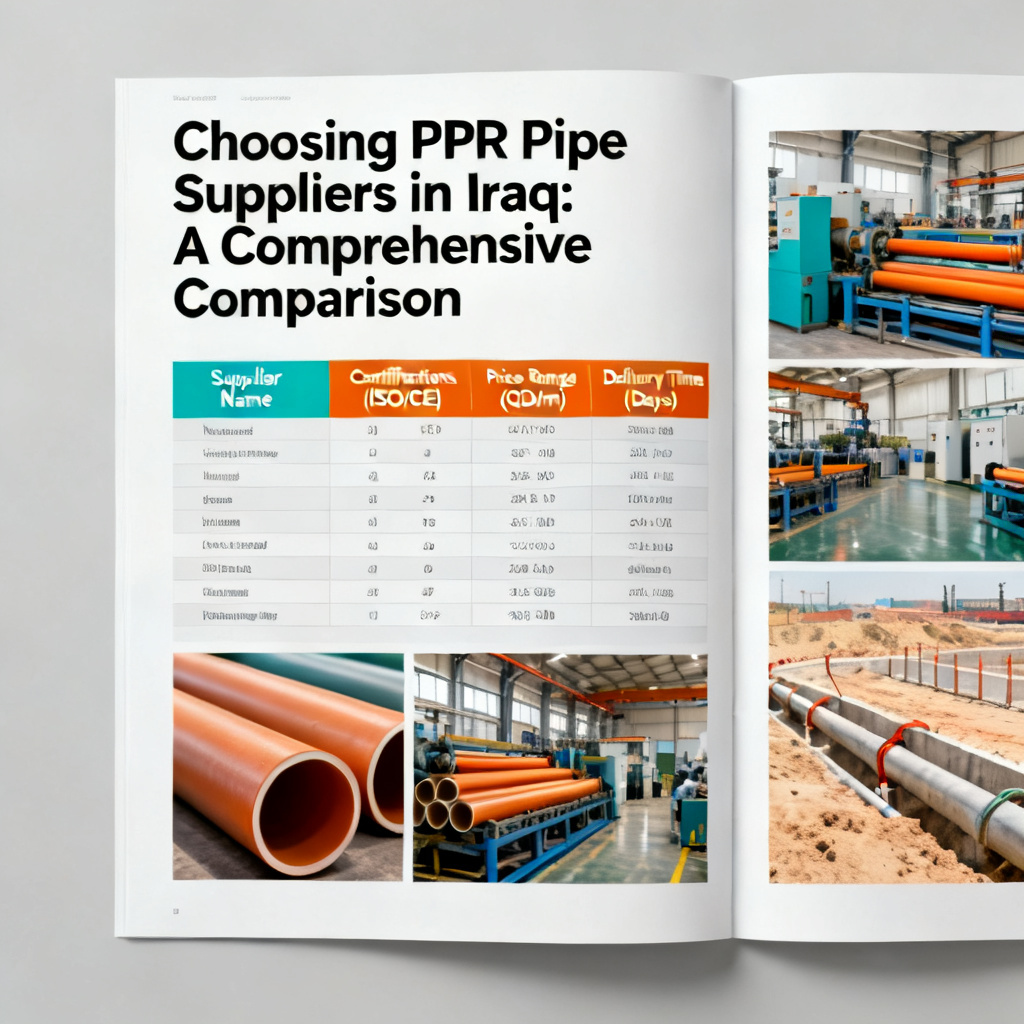
Iraq is currently undergoing a massive construction boom. From the rising towers in Erbil to the sprawling residential projects in Baghdad and Basra, the demand for high-quality infrastructure has never been higher. Yet, a building is only as good as the veins that run through it—its plumbing.
The problem? The Iraqi market is often flooded with substandard materials that can’t handle the extreme temperature fluctuations or the specific chemical composition of local water. Choosing the wrong piping can lead to leaks, wall damage, and expensive retrofits just years after completion.
The solution is the move toward PPR (Polypropylene Random Copolymer) systems. In this guide, we’ll explore the landscape of PPR pipe suppliers in Iraq, helping you identify the brands and distributors that offer the durability and safety your project deserves.
Why PPR is the Gold Standard for Iraq’s Climate
In a country where summer temperatures can soar above 50°C and winter nights can be biting, piping materials face immense stress. Traditional galvanized pipes or lower-grade plastics often fail under these conditions.
PPR pipe suppliers in Iraq have seen a surge in demand because PPR offers:
- Heat Resistance: It maintains integrity in high-temperature water systems.
- Corrosion-Free Life: Unlike metal, it won’t rust or scale, ensuring clean water for decades.
- Leak-Proof Joints: Through heat fusion welding, the pipe and fitting become a single solid piece.
Key PPR Pipe Suppliers and Brands in Iraq
Finding a reliable partner is about more than just the lowest price. Here are some of the most prominent names and brands currently shaping the Iraqi market:
1. Atlas Plast
With over 45 years of experience, Atlas Plast is a titan in the Iraqi plumbing sector. They don’t just supply; they educate, often holding training sessions for local plumbers. They distribute top-tier brands like Polymelt and Aquapa, providing a warranty that often stretches up to 50 years.
2. Sawahil Al-Rafidain
Based in Erbil, Sawahil Al-Rafidain has positioned itself as a premier destination for construction supplies. They are known for a wide range of PPR fittings and pipes that meet international standards, catering specifically to large-scale industrial and residential projects.
3. Bunyan Al Asar
This supplier is a go-to for German-engineered solutions. They bring in global leaders like Aquatherm and Viega. If your project requires high-performance PPR (such as fiber-reinforced pipes for HVAC), this is a name to trust.
4. Aysan Erbil
A local powerhouse, Aysan Pipe Company in Erbil focuses on high-tech manufacturing. While they are famous for corrugated pipes, their distribution network for plastic piping systems across the Kurdistan region and beyond is highly efficient.
How to Evaluate a Supplier: Expert Insights
As an expert in the field, I’ve seen many contractors make the mistake of “brand chasing” without checking the supplier’s actual capabilities. When vetting PPR pipe suppliers in Iraq, use this checklist:
Check the Certifications
Don’t take their word for it. Ask for documentation. A reputable supplier should provide:
- ISO 9001 for quality management.
- DIN 8077/8078 (German standards for PPR).
- NSF/ANSI 61 if the pipes are for potable (drinking) water.
Assess the Inventory Depth
There is nothing worse than starting a project and finding out the supplier is out of 32mm elbows. Ensure your supplier carries a full range of:
- PN16 and PN20 pressure rated pipes.
- Fiber-reinforced PPR (for reduced thermal expansion).
- Specialty fittings like bypass bends and stop valves.
Local Technical Support
The best PPR pipe suppliers in Iraq provide more than just a delivery truck. Do they offer fusion machine rentals? Do they have a technician who can visit the site if a joint fails? Local expertise is worth more than a 5% discount on the invoice.
The “Iraqi Factor”: Dealing with Water Quality
In many parts of Iraq, the water contains high levels of minerals and salts. This “hard water” is the enemy of metal pipes, causing rapid scaling and blockages.
When talking to PPR pipe suppliers in Iraq, ask about the inner surface roughness of their pipes. High-quality PPR has an incredibly smooth bore (k=0.007 mm), which prevents lime deposits from sticking. This keeps your water pressure consistent for the life of the building.
Cost vs. Value: Don’t Let “Cheap” Cost You Everything
It’s tempting to go with unbranded PPR from the local bazaar. However, the price difference between “no-name” and “certified” is usually less than 20%.
Consider the math: If a pipe fails inside a tiled bathroom wall, the cost of the pipe is less than 1% of the total repair bill. You are paying for the labor, the new tiles, the demolition, and the headache. Reliable PPR pipe suppliers in Iraq offer peace of mind that a cheap alternative simply cannot.
Future Trends: Fiber-Reinforced PPR (PPR-FG)
In 2026, we are seeing a major shift toward Fiber-Glass Reinforced PPR. Standard PPR expands significantly when hot water runs through it, leading to “snaking” pipes.
Suppliers like Bunyan Al Asar and Atlas Plast are now pushing PPR-FG, which has a 70% lower expansion rate. This is perfect for the exposed plumbing often seen in Iraqi commercial buildings, as it keeps the pipe runs straight and aesthetically pleasing.
Conclusion
Choosing from the many PPR pipe suppliers in Iraq is a decision that defines the longevity of your construction. By focusing on established names like Atlas Plast or Sawahil Al-Rafidain, and insisting on German or international standards, you protect your investment from the harsh local environment.
Don’t just buy a product; buy a system backed by a warranty and local technical support. Your building—and its future inhabitants—will thank you.
Frequently Asked Questions
1. How can I tell if a PPR pipe is high quality?
Look for clear, laser-printed markings on the pipe including the brand, DIN standard, pressure rating (PN), and production date. The inner wall should be perfectly smooth and the color should be uniform without streaks.
2. Is green PPR better than white or grey?
Color is usually just a manufacturer’s preference or branding and does not indicate quality. However, in Iraq, green is the most common for high-end European brands, while white is often used by local or regional manufacturers. Always check the PN rating rather than the color.
3. Do PPR pipe suppliers in Iraq offer warranties?
Top-tier suppliers offer warranties ranging from 20 to 50 years, but these are often contingent on using the same brand of fittings and following correct installation (heat fusion) procedures.
4. Can I mix different brands of PPR?
It is strongly discouraged. Different manufacturers may use slightly different chemical formulations or tolerances. Mixing brands can lead to weak fusion joints, which are the primary cause of leaks in PPR systems.
5. Where are most PPR pipes in Iraq imported from?
While there is growing local production in Erbil and Baghdad, a large portion of premium PPR is imported from Germany, Turkey, and Saudi Arabia.