

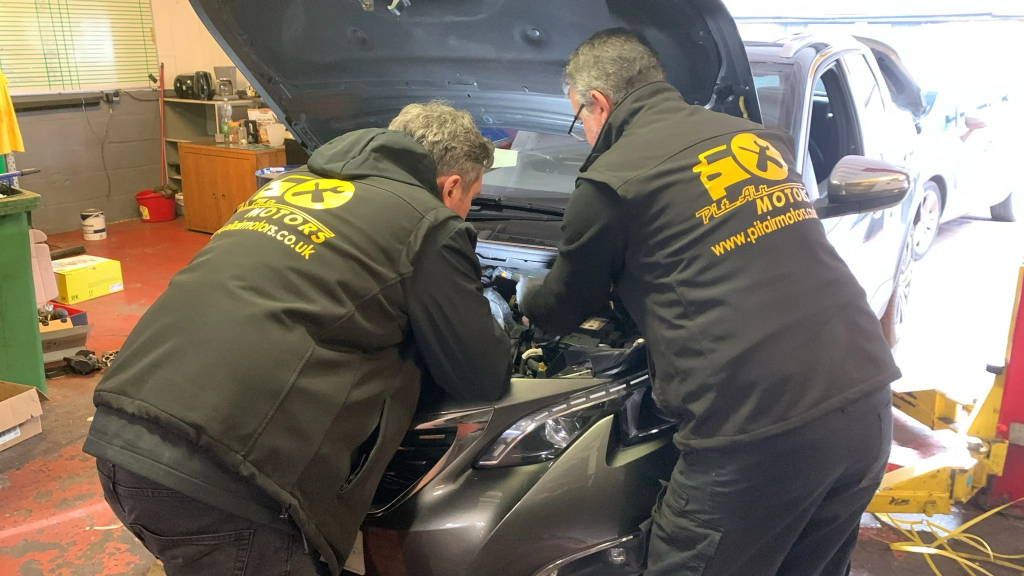
We get asked this question fairly regularly, usually by someone who is thinking about buying a used car and trying to work out which type of engine is going to cost them less to run. It is a reasonable thing to want to know. The answer is not as simple as petrol is cheaper or diesel is cheaper, because it genuinely depends on how the car is used, how well it has been maintained, and which specific faults each engine type tends to develop. What we can do is share what we actually see in the workshop at Pit-Air Motors, because after years of doing engine repair near me work on both types, we have a pretty clear picture of where the costs tend to sit and why.
Diesel Engines Are Generally More Expensive to repair when things go wrong.
That is the headline, and it is worth being upfront about it. Diesel engines are more complex than petrol engines in several important ways, and that complexity costs money when something fails. The fuel injection system on a modern diesel is a good example. High pressure diesel injection systems operate at pressures that petrol injectors simply do not, and the components involved, injectors, high pressure fuel pump, fuel rail, are expensive individually and more so collectively.
A set of diesel injectors on a common rail system can cost a significant amount just in parts, before you factor in the labour to remove, clean, test, and refit or replace them. On a petrol car, injector problems are generally a much smaller bill. The same pattern repeats across several other diesel-specific components. The turbocharger, which most modern diesels have, is another one. Turbo failures on diesels are not uncommon, particularly on cars that have been used mainly for short trips where the turbo never properly gets up to temperature. Replacing a turbocharger is a substantial job.
The DPF Issue That Catches a Lot of Diesel Owners Off Guard
The diesel particulate filter is something that causes a lot of headaches and a lot of expense for diesel owners, particularly those who do mainly short urban journeys. The DPF traps soot particles from the exhaust and periodically burns them off in a process called regeneration. That regeneration needs the engine and exhaust to reach a certain temperature, which happens on longer runs at higher speeds. Short trips around town, school runs, quick trips to the shops, these do not give the DPF a chance to regenerate properly.
Over time the filter blocks up. The car goes into a warning mode and eventually it will not start or run properly. Clearing a blocked DPF can be done in some cases through a forced regeneration process, but if it has been left too long it may need replacement, and DPFs are not cheap parts. We see this regularly at Pit-Air Motors, and it is almost always on cars used predominantly in urban stop-start conditions.
If you drive a diesel mainly around town and rarely do longer runs, this is a genuine ongoing cost consideration. It is not a reason to avoid diesel entirely, but it is something to factor in and to be aware of.
Where Petrol Engines Tend to Cost More
Petrol engines have their own areas of expense. Timing chain problems show up more frequently on certain petrol engines than on their diesel equivalents. Some petrol engines, particularly certain 1.2 and 1.4 litre units from European manufacturers that were popular in the 2000s and 2010s, developed a reputation for timing chain stretch and timing chain tensioner failures. When the timing chain goes on an interference petrol engine, the damage can be severe and the repair bill reflects that.
Carbon build-up is another issue that affects direct injection petrol engines in particular. On older port injection systems, fuel washed over the intake valves and kept them clean. On direct injection engines it does not, and carbon deposits build up on the intake valves over time. Cleaning them requires either walnut blasting or removal, and it is a job that needs doing periodically on affected engines. Not a crisis repair, but an ongoing maintenance cost that petrol direct injection owners should know about.
Head gasket failures also crop up more often on certain petrol engines. Some engines are simply more prone to it than others, and a head gasket repair on a petrol engine is not a small job regardless of which car it is on.
Maintenance Matters More Than Fuel Type
This is the honest truth of it. The biggest predictor of engine repair costs is not whether the car is petrol or diesel, it is how well the car has been maintained. A diesel that has had regular oil changes, had its DPF problems addressed early, and been driven in a way that suits the engine type will generally give its owner far fewer expensive problems than a petrol that has been neglected, run low on oil, had its service intervals stretched, and had warning lights ignored.
We see expensive petrol engine repairs and expensive diesel engine repairs in roughly equal measure at Pit-Air Motors, and the common thread between most of them is maintenance that was not done or problems that were not addressed when they first appeared. The type of fuel is almost a secondary consideration.
The engine repair services we carry out cover both petrol and diesel engines comprehensively. Diesel injection work, DPF cleaning and replacement, turbocharger repairs, petrol timing chain replacements, head gasket repairs, full rebuilds on both engine types. We do not have a preference for one over the other because both keep us busy and both reward proper diagnosis and proper repair work.
What to Think About If You Are Buying a Used Car
If you are trying to decide between a petrol and a diesel for a used car purchase, the most useful question is not which type is cheaper to repair in general, it is which type suits how you are actually going to use the car. Mainly urban short trips, the diesel’s DPF requirements work against you and a petrol makes more practical sense. Motorway miles and longer runs, a diesel can work well and the fuel economy advantage is real.
Beyond that, service history matters enormously. A petrol with a full service history is a much safer used buy than a diesel with gaps in its history and an unclear maintenance record. Whatever the engine type, knowing what has been done to the car and when is the best protection against inheriting someone else’s neglect.
If you are unsure about a car you are thinking of buying and want an independent check before you commit, we can do a pre-purchase inspection. It takes a couple of hours and gives you a clear picture of the car’s condition before any money changes hands. A lot of people find that worth doing, particularly on higher mileage or older vehicles.
Frequently Asked Questions
My diesel DPF warning light has come on. What should I do?
Do not ignore it. The first thing to try is a longer run at motorway speeds, thirty to forty minutes if possible, which may allow the DPF to complete a passive regeneration and clear the light. If that does not clear it, bring the car in. We can carry out a forced regeneration using diagnostic equipment in many cases. If the filter is too blocked for that, we will advise you on the options. Leaving a DPF warning unaddressed usually makes the situation worse and more expensive.
Is it worth buying a diesel if I mainly drive short distances?
Honestly, probably not. Short urban driving is genuinely hard on diesel engines, particularly the DPF. The fuel economy advantage of diesel largely disappears on short trips anyway because the engine spends more time cold. A modern petrol engine, particularly a turbocharged small capacity one, is a better fit for that kind of use.
Which engine type lasts longer overall?
Both can last a very long time with proper maintenance. Diesel engines are built to handle higher compression and are often physically more robust, but they also have more systems that can go wrong expensively. A well-maintained petrol engine on the right type of use can easily cover two hundred thousand miles without major engine work. The maintenance is the deciding factor far more than the fuel type.
Can you work on turbocharged petrol engines as well as diesel turbos?
Yes. We work on turbocharged petrol and diesel engines. Turbocharger diagnosis, repair, and replacement is part of the engine work we do at Pit-Air Motors. If you are having turbo-related symptoms, bring the car in and we will assess it properly.
Do petrol engines need as much maintenance as diesel?
Both need regular maintenance, but the maintenance requirements differ. Diesels have more systems that need attention, DPF health, injector condition, turbocharger care. Petrol engines have their own maintenance needs, timing belt or chain intervals, spark plugs, ignition components. Neither type can be run on minimal maintenance and expected to stay trouble free.
Can you do a pre-purchase inspection on a used car before I buy it?
Yes. If you are considering buying a used car and want it checked over by an independent mechanic before you commit, bring it in or arrange for us to look at it. We will give you an honest assessment of the engine condition and flag anything that needs attention. It is a straightforward way to avoid buying someone else’s problem.
Petrol or Diesel: We Work on Both
Whatever engine your car has, if it needs attention come into Pit-Air Motors at 520B Purley Way, Croydon. Call us on 0208 286 6715 or book through the website. We will diagnose it properly and give you a straight answer on what it needs and what it will cost.