
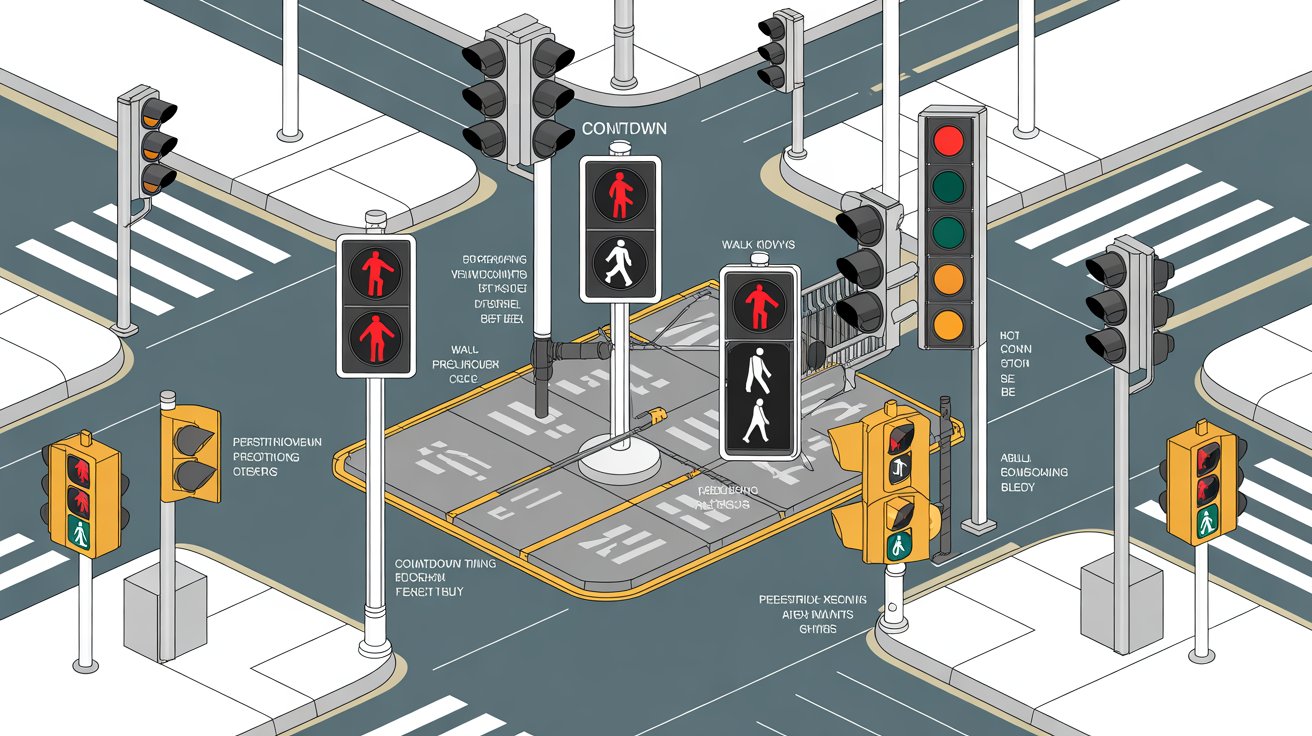
For traffic engineers and infrastructure planners responsible for the safety of pedestrians at signalized crossings, the pedestrian walking light represents one of the most critical decisions in signal system design. The quality, reliability, and accessibility compliance of pedestrian signal equipment directly affects the safety outcomes delivered by the broader traffic management system.
This guide provides a technical and practical overview of pedestrian walking light systems designed specifically for professionals involved in specifying, installing, and managing pedestrian crossing infrastructure.
Technical Specifications That Matter in Pedestrian Walking Light Selection
Selecting pedestrian walking light equipment for infrastructure projects requires careful evaluation of technical specifications that determine real-world performance. Understanding which specifications matter most helps specifiers ask the right questions and make better-informed purchasing decisions.
Luminous intensity determines how visible the signal display is under adverse ambient light conditions including direct sunlight. Pedestrian walking light heads must maintain adequate display visibility even when viewed in direct sunlight, which can make poorly designed or underpowered displays effectively invisible. Evaluate luminous intensity specifications carefully and look for products tested under direct sunlight simulation conditions rather than only in controlled indoor test environments.
Color accuracy ensures that the walking and standing figure displays communicate their intended meaning clearly to all users including those with color vision deficiencies. While pedestrian signals use symbolic displays that communicate through shape rather than exclusively through color, the color quality of the display affects legibility and recognition speed. International standards specify minimum color coordinate requirements for traffic signal displays that quality pedestrian walking light products consistently meet.
Ingress protection rating indicates the degree of protection against water and dust ingress that the signal housing provides. Outdoor pedestrian signal equipment must withstand rain, snow, ice, cleaning operations, and the general moisture exposure of outdoor environments throughout a service life of ten years or more. Minimum IP65 rating is generally considered appropriate for pedestrian signal heads in most climates. More demanding environments may require IP66 or IP67 ratings.
Operating temperature range must encompass the full range of ambient temperatures experienced at the installation location. Extreme cold affects battery performance in wireless systems and can affect LED driver electronics if not properly designed for cold weather operation. Extreme heat affects electronic component reliability and can cause premature failure in poorly designed systems. Verify that the operating temperature range of specified pedestrian walking light equipment encompasses the full temperature range expected at the installation location.
Accessible Pedestrian Signal Requirements in Modern Infrastructure
Accessibility compliance is a mandatory requirement in most developed jurisdictions for new pedestrian walking light installations and for significant upgrades to existing crossing infrastructure. Understanding the specific requirements helps specifiers ensure compliance and avoid the cost and disruption of retrofitting non-compliant installations after project completion.
In the United States, the Americans with Disabilities Act and the Manual on Uniform Traffic Control Devices establish requirements for accessible pedestrian signals at signalized intersections. These requirements include audible walk indication, vibrotactile walk indication, speech push button information messages, and tactile arrow indicators that orient visually impaired pedestrians in the direction of crossing. Pedestrian walking light systems specified for US installations must include accessible pedestrian signal heads that meet these requirements.
The European Union’s EN 12675 standard for traffic signal controllers and related EN standards for signal heads establish accessibility requirements applicable to pedestrian walking light installations across EU member states. While specific requirements vary between member state national standards, the general direction across European jurisdictions is toward comprehensive accessible pedestrian signal provision at all new signalized crossing installations.
Energy Management in LED Pedestrian Walking Light Systems
Energy efficiency is an important consideration in pedestrian walking light system specification, driven by both operational cost reduction objectives and sustainability commitments in public infrastructure procurement.
Modern LED pedestrian walking light heads consume a fraction of the energy of equivalent incandescent systems. A standard LED pedestrian signal head typically consumes between 8 and 15 watts compared to 60 to 100 watts for an equivalent incandescent unit. For a jurisdiction managing hundreds or thousands of pedestrian signal heads, this energy reduction translates into substantial annual electricity cost savings and meaningful carbon emission reductions.
Dimming control systems further reduce energy consumption in pedestrian walking light systems by reducing display brightness during nighttime hours when ambient light levels are lower and maximum display brightness is not required for adequate visibility. Properly implemented nighttime dimming can reduce signal energy consumption by 50 percent or more during nighttime operating periods without compromising the visibility performance that safety demands.
Procurement and Project Management Considerations
Successful pedestrian walking light infrastructure projects require careful procurement planning and project management to ensure that specified equipment is delivered on schedule, meets compliance requirements, and is installed correctly by qualified personnel.
Long lead times for specialized traffic signal equipment require early procurement action in project planning. Pedestrian walking light systems from quality manufacturers with rigorous quality control processes sometimes have lead times of eight to sixteen weeks from order to delivery. Project schedules must account for these lead times to avoid construction delays caused by late equipment delivery.
Factory acceptance testing of critical equipment before shipment provides additional confidence that specified performance requirements are met before equipment is incorporated into infrastructure projects. For large projects involving significant numbers of pedestrian walking light heads, formal factory acceptance testing protocols help identify any production or quality issues before equipment leaves the factory, avoiding the more costly and disruptive process of dealing with non-conforming equipment after delivery.
Conclusion
Pedestrian walking light system selection and specification requires careful attention to technical performance, accessibility compliance, energy efficiency, and procurement management. Getting these decisions right ensures that pedestrian crossing infrastructure delivers the safety outcomes communities expect and meets the regulatory compliance requirements that govern public infrastructure in most jurisdictions. Traffic Solution offers a comprehensive range of professional-grade pedestrian walking light products designed to meet the demanding requirements of modern infrastructure projects, backed by technical documentation, compliance certification, and the manufacturing quality standards that serious infrastructure procurement demands.
