
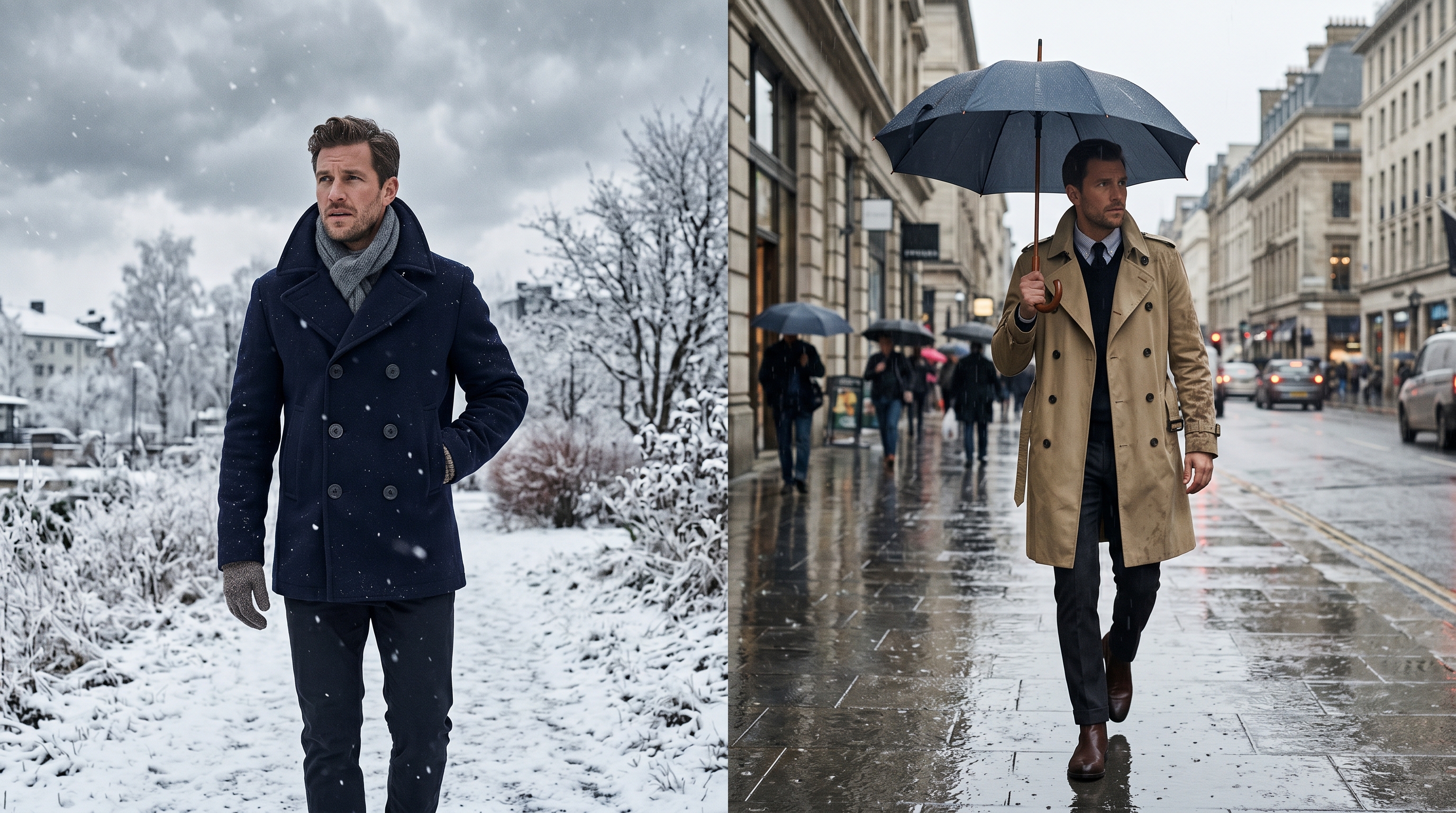
Quick Answer
A peacoat is a short, double-breasted wool coat built for warmth in freezing dry weather. A trench coat is a longer, belted water-resistant coat designed for wind and rain. Choose a peacoat for winter cold and a trench for transitional seasons.
Both coats have survived world wars, naval decks, and every fashion cycle since the 1800s. But when you’re standing in front of a coat rack in 2026 trying to decide between a peacoat vs trench coat, the answer isn’t about which one looks better it’s about what weather you’re dressing for and what your wardrobe actually needs.
This guide gives you the direct answer with no padding. Materials, warmth, weather function, body type guidance, and 2026 styling combinations all covered below.
What Is a Trench Coat? | History, Materials & Purpose
The trench coat started as military outerwear. British officers wore early versions during the Crimean War, but it was WWI that locked in the silhouette we still recognize today. According to the National Army Museum, the coat was issued exclusively to officers the epaulettes on the shoulders displayed rank, not decoration.
Thomas Burberry patented cotton gabardine in 1879, and that tightly woven, water-resistant fabric became the defining material for decades. The belted waist, storm flap, raglan sleeves, and double-breasted button run were all functional military decisions they just happen to look sharp a century later.
In 2026, the trench coat comes in three primary materials, each shifting the coat’s personality considerably:
Leather Trench Coat
More structured and wind-resistant than cotton. The leather trench coat has become the dominant street style choice in 2026 better for urban wind than sustained rain. Leather seams absorb moisture over time, so it’s not a substitute for a rain jacket.
Suede Trench Coat
Softer, more textured, and visually warmer in appearance. Best in dry autumn conditions. Suede and heavy rain are a bad combination treat the fabric before wearing it in unpredictable weather.
Cotton Gabardine Trench
The closest to the original military design. Water-resistant, lightweight, and the most versatile for actual wet weather. If you want one trench coat that handles spring and autumn across both rain and wind, this is it.
What Is a Peacoat? | Naval Heritage & Construction
The peacoat has a simpler origin story than the trench. Dutch sailors who worked the rigging of tall ships needed a coat short enough to stay clear of the lines, heavy enough to block North Sea winds, and structured enough to stay functional in rough conditions.
They called it a pijjekker pij meaning coarse wool cloth and jekker meaning jacket according to the Online Etymology Dictionary. English speakers eventually landed on “peacoat,” and the name stuck.
“The design hasn’t changed much because it didn’t need to. Dense Melton wool and a double-breasted front that combination kept sailors alive on the North Sea and it will keep you warm on your commute.”
A genuine wool peacoat is hip-length, double-breasted, and built from dense Melton wool. The overlapping front panels aren’t a style decision they put two layers of heavy wool directly over your chest, which is exactly where cold wind hits hardest.
Peacoat vs Trench Coat | Side-by-Side Breakdown
Material choice determines everything downstream warmth, water resistance, weight, and real-world usefulness. Here’s where the two coats genuinely separate.
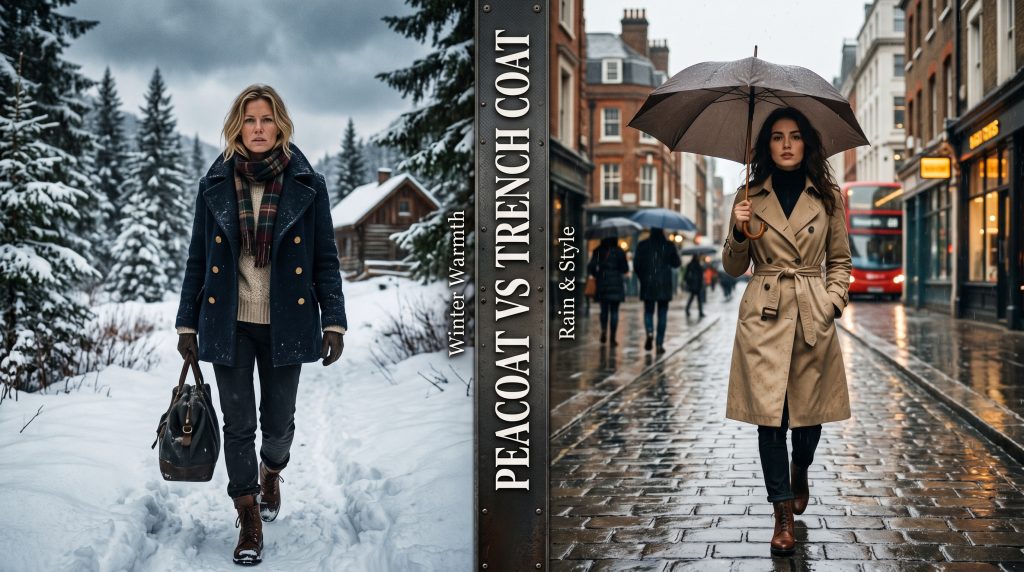
| Feature | Trench Coat | Peacoat |
|---|---|---|
| Primary Material | Cotton gabardine, leather, or suede | Heavy Melton wool or wool-fleece blend |
| Standard Length | Knee to ankle (long) | Hip-length (short/medium) |
| Weight | Light to medium | Heavy |
| Water Resistance | Good (gabardine / leather) | Poor — wool absorbs moisture |
| Insulation / Warmth | Minimal | Excellent |
| Best Weather | Rainy, windy, mild (5–15°C) | Dry, freezing, cold (below 5°C) |
| Best Season | Spring / Autumn | Late Autumn / Winter |
| Closure Style | Belt + buttons, storm flap | Double-breasted, anchor buttons |
| Formality | Smart casual to formal | Casual to smart casual |
Trench Coat Women | How to Wear It in 2026
For women, the trench coat is one of the most adaptable outerwear pieces available. The belted waist is the key functional detail it creates definition at the narrowest point and works with nearly every body type when used correctly.
The belt technique matters more than most people realize. Knotting it behind your back creates a long, clean front line that lengthens the silhouette. Tying it at the front defines the waist. Letting it hang works for a relaxed, open feel over casual layering.
In 2026, pairing a women’s trench coat over a hoodie and sneakers is one of the most-worn street style combinations the contrast between structured outerwear and casual basics is entirely intentional. For office wear, a leather trench over a pencil skirt or tailored trousers is the sharper alternative.
trench coat women 2026how to wear a trench coatbelted coat womenwomen’s outerwear springleather trench coat women
Trench Coat Men | Styling the Modern Version
The trench coat men are reaching for in 2026 isn’t the film-noir detective look. It’s leaner, often in beige, stone, or camel, and worn as a layering piece over simple basics not as a statement on its own.
The most direct combination: a beige gabardine trench over a white shirt and dark chinos. Clean, proportional, and works across most professional and casual settings. For something sharper, a long leather trench coat over a tailored suit creates a high-fashion result without being costume-level obvious.
The belt is the variable leave it hanging for relaxed, knot it at the back for a slim open look, or cinch it at the waist for a more deliberate, formal silhouette.
Peacoat Mens | The Winter Coat That Adds Shoulder
The mens peacoat has one structural advantage no other short coat matches: the double-breasted front and wide lapels naturally add visual width across the chest and shoulders. For men with leaner frames, this is the most flattering outerwear silhouette available no shoulder padding, no layering tricks required.
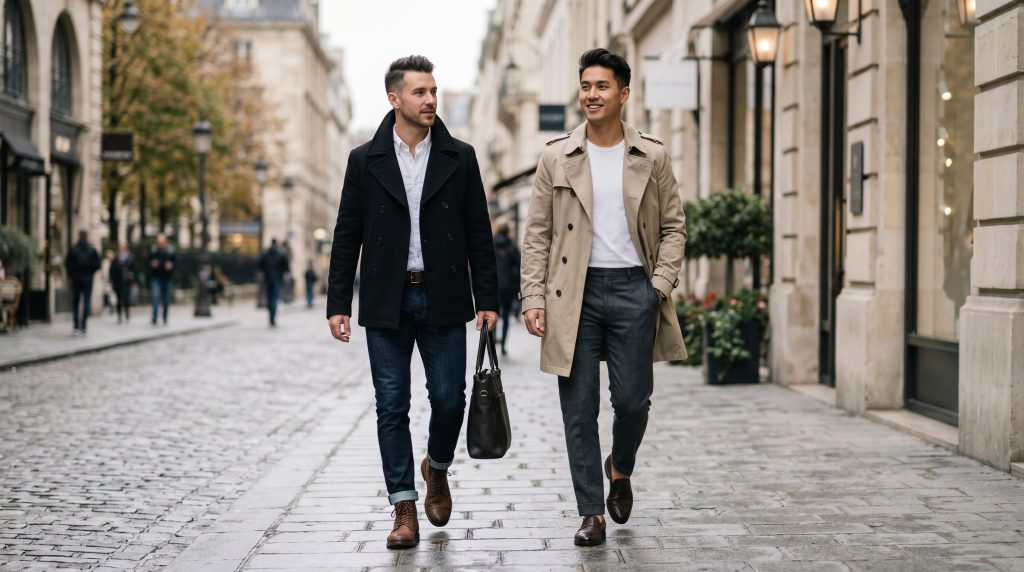
Navy peacoat: The original colorway. Pairs with denim, grey wool trousers, and olive chinos equally well. The most versatile shade in the peacoat range.
Black peacoat: More urban in feel, less nautical. A black wool peacoat transitions from city commute to weekend wear without any adjustment.
Keep your bottom half lean when wearing a peacoat the coat carries visual weight through the upper body, so slim-fit trousers and leather boots balance it out cleanly. Heavy bottom layers underneath a peacoat make the outfit look stacked and bulky.
mens peacoatnavy peacoat menblack peacoat outfitwool coat men winterdouble-breasted mens coatpeacoat vs overcoat
Peacoat Women | Nautical Chic in 2026
The women’s peacoat differs from the men’s version in one practical way: the waist is typically tapered. This removes the boxy silhouette issue that puts some women off the traditional naval cut, giving the coat a more defined shape without sacrificing warmth.
Women who find full-length trench coats visually heavy for their frame tend to work well in a hip-length peacoat. The shorter silhouette keeps proportions balanced without requiring the height that a long trench demands. Pair it with slim-fit jeans, ankle boots, and a fitted roll-neck for the cleanest version of the nautical chic look.
Browse the full women’s peacoats from classic navy to bolder seasonal colorways.
Which Coat Suits Your Body Type? | A Practical Guide
The length difference between these two coats is the biggest silhouette factor. Here’s how to match each coat to your natural frame.
Hourglass & Pear Shapes
The belted trench coat is the stronger choice. The cinched waist emphasizes natural proportions, and the longer length adds a clean vertical line below the hips.
Tall & Slender Frames
The mens peacoat adds visual mass in the right places. Wide lapels and the double-breasted button row create the impression of a broader, more powerful upper body.
Apple & Fuller Torso
A single-breasted leather trench worn open creates long, unbroken vertical lines. Avoid belting tightly at the midsection that pulls attention to the widest point.
Petite Frames
Full-length trenches can cut the visual leg line too high. A short trench or hip-length peacoat keeps proportions balanced without overwhelming the frame.
When to Wear Trench Coat vs Peacoat | The Climate Check
This is the simplest decision framework in the entire debate. Look at the weather forecast and apply this directly:
Choose the Trench Coat When
- Rain or drizzle is forecast
- Temperatures sit between 5–15°C
- Layering over a blazer or jumper
- Wind is the main problem
- Spring or autumn dressing
Choose the Peacoat When
- Air is freezing and dry
- Temperatures drop below 5°C
- Snow is possible
- You need warmth, not water resistance
- Late autumn or winter dressing
The trench coat is not a winter coat. It’s a transitional-season coat with weather-resistant properties. In genuine sub-zero conditions, even the best cotton gabardine trench won’t provide enough insulation. That’s exactly where the wool peacoat earns its place the same dense Melton fabric that kept 19th-century Dutch sailors functional on North Sea routes will handle your winter commute without issue.
How to Style Each Coat in 2026 | Combinations That Work
How to Style a Trench Coat
According to GQ Style, the trench coat’s versatility in 2026 comes from its structure — it does the visual work regardless of what’s underneath. Three combinations worth knowing:
Casual urban: Black trench coat + hoodie + white sneakers. The contrast between sharp outerwear and casual basics is intentional. Leave the belt hanging or knot it at the back for a relaxed open line.
Office-ready: Long leather trench over tailored trousers or a pencil skirt. Belt cinched, collar down. Sharp and professional without needing anything else.
Smart weekend: Beige gabardine trench over a roll-neck and slim-fit jeans. Works in virtually any temperature range between 5°C and 15°C.
How to Style a Peacoat
Peacoat styling has one consistent rule: because the coat is thick, structured, and visually heavy through the top, keep everything underneath lean and direct. The coat carries the outfit you don’t need to build around it.
The urban classic: Black wool peacoat + slim-fit dark jeans + white tee + leather boots. Clean and direct no accessories needed.
The smart casual: Navy peacoat + grey wool trousers + burgundy roll-neck + brown leather oxford shoes. Works for most professional settings that don’t require a suit.
The relaxed winter: Charcoal peacoat + olive trousers + chunky knit + clean white sneakers. The peacoat brings enough structure to make the casual elements look intentional.
how to style a trench coat 2026how to wear a peacoattrench coat outfit ideaspeacoat outfit menwhat to wear under a trench coatlayering with a peacoat
The Final Verdict | Peacoat vs Trench Coat
Neither coat is objectively better. They solve different problems and buying the wrong one for your climate is the most common mistake people make with outerwear.
If your winters are wet, mild, and windy, the trench coat is the right call. It’s lighter, more versatile in professional settings, and works across more body types when the belt is used correctly. Browse the full trench coat, leather, suede, and cotton options across men’s and women’s sizing.
If your winters are genuinely cold, dry, and freezing, the peacoat wins without question. The Melton wool construction and double-breasted design have kept people warm in harsher conditions than any modern commute. See the full range of celebrity-inspired outerwear for both coat types.
Buy for climate first. Style second. Both coats earn their place just not in the same weather.
Find Your Coat at TV Jackets
From navy wool peacoats to leather trench coats, celebrity-inspired styles built to last.
Frequently Asked Questions
The main difference is length, material, and weather function. A peacoat is short, wool-based, and built for freezing dry cold. A trench coat is longer, made from cotton gabardine or leather, and designed to repel wind and light rain. They solve different problems buy based on your climate first.
Two reasons: dense Melton wool and double-breasted construction. The wool traps air between its fibers, providing natural insulation. The overlapping front panels add a second layer of fabric directly over the chest the most exposed area in cold wind.
Modern cotton gabardine and leather trench coats offer solid water resistance against light rain and drizzle. They are not fully waterproof sustained heavy rain will eventually penetrate cotton. Leather handles wet conditions better than cotton over time, but neither replaces a proper rain jacket.
Wear a trench coat during spring and autumn when temperatures are mild but wet or windy — roughly 5°C to 15°C. It layers well over suits, blazers, and sweaters and is the strongest choice when rain or wind is the main concern rather than sub-zero cold.
The name comes from the Dutch word pijjekker pij meaning coarse wool cloth and jekker meaning jacket. Dutch sailors wore the coat on naval vessels from the 1800s onward, and the English adaptation of the name eventually became “peacoat.”
A hip-length peacoat or a short trench coat. Full-length trench coats cut the visual leg line too high on petite frames, making you appear shorter. Keeping hemlines at or above mid-thigh solves the proportion issue on both coat styles.