

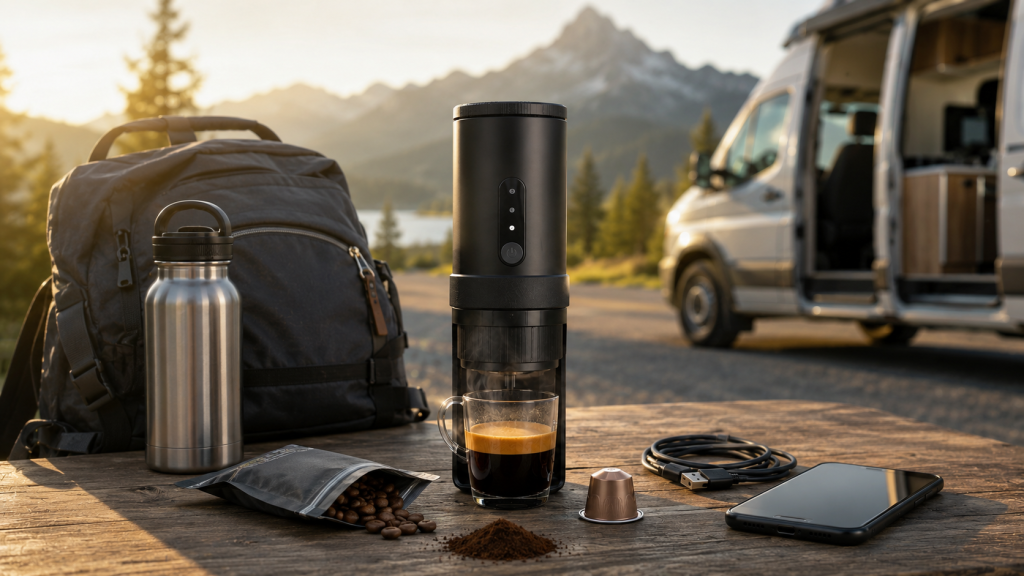
Finding a practical way to make espresso while traveling can be difficult, especially when a kitchen, kettle, or standard coffee machine is not available. The OutIn Nano Portable Espresso Machine is designed for this type of situation, combining electric water heating and coffee extraction in a compact device. For travelers, commuters, campers, office workers, and people who regularly move between locations, it offers an alternative to carrying several separate pieces of coffee equipment.
This review looks at the product from a practical buying perspective. It covers manufacturer listed features, likely use cases, everyday considerations, and limitations. No personal testing claims are made. Specific product details are attributed to OutIn or described based on the listed specifications.
What Is the OutIn Nano Portable Espresso Machine?
The OutIn Nano is a compact electric coffee device designed to prepare espresso away from a traditional kitchen setup. Unlike a basic manual portable coffee maker, it includes an electric heating system and a rechargeable battery.
According to OutIn, the machine can work with cold water or hot water. When cold water is added, the device is designed to heat it before extraction. This can be useful in locations where a kettle or stove is unavailable.
The manufacturer also states that the machine supports both ground coffee and compatible coffee capsules. This gives users a choice between greater control over their coffee and the convenience of pre portioned capsules.
The main idea is simple: combine several steps of portable espresso preparation in one compact unit.
Key Specifications at a Glance
Based on manufacturer information, the OutIn Nano includes the following notable specifications:
| Feature | Manufacturer Listed Information |
| Weight | Approximately 670 g |
| Pressure | Up to 20 bar |
| Heating temperature | About 92°C or 198°F |
| Water options | Hot or cold water |
| Coffee formats | Ground coffee and compatible capsules |
| Power | Rechargeable battery system |
| Charging | USB charging support |
| Main purpose | Portable espresso preparation |
Specifications should always be checked against current product information before purchase, as manufacturers may update accessories, compatibility details, charging guidance, or product versions.
Design and Portability
Portability is one of the strongest reasons someone may consider the OutIn Nano. At approximately 670 g according to the manufacturer, it is much lighter and smaller than a typical countertop espresso machine.
This size can make it easier to place in luggage, a work bag, a vehicle storage compartment, or a camping coffee setup. It may also suit people staying in hotels or temporary accommodation where counter space is limited.
The compact format does not mean users can travel with the machine alone. A complete setup may still require:
- Clean drinking water
- Ground coffee or compatible capsules
- A suitable cup
- Charging equipment
- A method for storing used coffee
- Basic cleaning supplies
For car travel, business trips, and office use, these additional items may be easy to manage. For lightweight hiking or backpacking, every extra item matters, so a simpler manual brewer may be more appropriate.
Heating Cold Water Away From a Kitchen
One of the most practical features of the OutIn Nano is its ability to heat water. According to the manufacturer, the device can heat cold water to approximately 92°C or 198°F.
This matters because many compact coffee brewers require a separate source of hot water. A small manual brewer may be easy to pack, but the user still needs access to a kettle, stove, or another heating method.
An integrated heating system may help in places such as:
- Hotel rooms without reliable coffee equipment
- Offices with limited kitchen facilities
- Campsites with suitable charging access
- Parked vehicles during planned road trip breaks
- Temporary work locations
- Outdoor areas where carrying a separate kettle is inconvenient
The main tradeoff is energy use. Heating cold water generally requires more battery power than brewing with water that is already hot. People planning longer trips should consider this carefully.
Pressure and Espresso Extraction
According to OutIn, the Nano uses a pressure system rated at 20 bar. This is one of the main specifications highlighted for the product.
Pressure is important in espresso preparation because hot water is pushed through coffee under force. However, buyers should avoid judging espresso quality from a pressure number alone.
Several factors can influence the final cup, including:
- Coffee freshness
- Grind size
- Coffee dose
- Water quality
- Coffee format
- Preparation method
- Cleaning and maintenance
A listed 20 bar pressure system describes the machine design, but it does not guarantee identical results with every coffee. Ground coffee users in particular may need to pay attention to preparation.
The practical benefit of an electric pressure system is convenience. Users do not need to create pressure manually, which may appeal to people looking for a simpler travel espresso maker.
Using Ground Coffee
Ground coffee compatibility gives users more control over what they brew. Someone who already buys coffee from a preferred roaster can continue using familiar beans or grounds instead of depending entirely on capsules.
This approach may suit buyers who care about:
- Roast preference
- Coffee origin
- Freshness
- Grind selection
- Variety
- Personal taste
There are practical considerations, especially during travel. Loose coffee must be stored properly, measured, loaded into the appropriate basket, and removed after brewing. Used grounds can also create more mess than a capsule if cleaning facilities are limited.
For office use or hotel stays, this may not be a major problem. During outdoor activities, users should plan how to store and dispose of coffee waste responsibly.
Using Coffee Capsules
According to manufacturer information, the OutIn Nano also supports compatible coffee capsules. Buyers should confirm current compatibility guidance before purchasing capsules, since not every capsule format should be assumed to fit.
Capsules can be convenient for travel because they are pre portioned and easy to pack. A commuter can carry a few capsules without bringing a separate coffee container or measuring equipment.
This option may appeal to people who value:
- Faster preparation
- Simple portioning
- Less handling of loose coffee
- Easier packing
- More predictable preparation
The tradeoffs include capsule availability, compatibility, packaging waste, and less control over coffee preparation compared with using your own grounds.
The ability to choose between ground coffee and compatible capsules is useful because different situations may call for different methods. A person may prefer fresh grounds at home or in the office but use capsules during a road trip.
Battery and Charging Considerations
The OutIn Nano uses a rechargeable battery system. According to manufacturer information, it also supports USB charging.
This is useful for a battery powered espresso maker because many travelers already carry USB charging equipment. Depending on the current product requirements and available accessories, users may be able to plan charging around suitable wall adapters or other compatible power sources.
However, battery planning is important.
Heating cold water places greater demand on a battery than starting with water that is already hot. Someone making several coffees during a long trip should not assume unlimited use between charges.
Before traveling, it is sensible to consider:
- Expected number of brewing sessions
- Use of cold or hot water
- Access to charging
- Trip duration
- Charging time
- Availability of a suitable power source
Buyers should follow current manufacturer guidance for compatible charging equipment and battery care.
Cleaning and Daily Maintenance
Portable does not mean maintenance free. Any coffee machine that comes into contact with water and coffee residue requires regular cleaning.
After using ground coffee, the basket and related components may need attention. Capsules also need to be removed after brewing. Areas exposed to coffee should not be left dirty for extended periods.
For travelers, a simple routine can help:
- Remove used coffee after brewing.
- Clean the relevant removable components.
- Allow damp parts to dry when practical.
- Avoid packing the device with old coffee residue inside.
- Follow the manufacturer instructions for deeper cleaning.
Cleaning may be easy in a hotel or office with access to a sink. It can be less convenient during hiking or remote camping. This is a realistic factor to consider before buying any portable coffee machine.
Best Use Cases for the OutIn Nano
The OutIn Nano is likely to make more sense for some users than others.
Travel and Hotel Stays
Travelers often face inconsistent coffee options. A compact coffee machine can provide more control over coffee choice while taking up less space than a conventional machine.
Road Trips
A portable electric espresso machine may fit well into a road trip setup. It can be stored with other travel supplies and used during safe, planned stops while the vehicle is parked.
Office Work
Some workplaces provide basic instant coffee or no coffee facilities at all. A personal compact device may be useful for someone who prefers espresso style drinks and has an appropriate place to prepare and clean the equipment.
Camping
For car camping, established campsites, and outdoor trips with a charging plan, the Nano may be useful as a camping coffee machine. Remote trips require more careful thought about battery life, water, cleaning, and storage.
Commuting
People with long commutes may appreciate a portable option, particularly if they spend time at multiple work locations. Preparation should take place in a safe and stable location rather than while driving.
Remote Work
Remote workers may move between coworking spaces, rented rooms, temporary offices, and other locations. A compact personal coffee setup can provide some consistency across these environments.
Potential Limitations to Consider
A balanced review should also consider where the product may not be ideal.
Battery Dependence
Electric heating and extraction require stored power. Long trips without charging access may be challenging, particularly when repeatedly heating cold water.
Smaller Capacity
A compact travel device naturally has different capacity limits from a home machine. It may be more suitable for individual servings than preparing several drinks quickly for a group.
Cleaning Is Still Necessary
Ground coffee can create residue, and used components need regular care. Outdoor users may find cleaning more difficult when water is limited.
Charging Requires Planning
USB support is convenient, but users still need compatible equipment and sufficient time to recharge.
It Does Not Replicate a Full Coffee Station
A portable device focuses on mobility. It does not provide the same broad workflow, capacity, control, or milk preparation setup that some full size home espresso systems offer.
How It Compares With a Full Size Home Espresso Machine
The OutIn Nano and a traditional home espresso machine serve different needs.
| Consideration | OutIn Nano | Full Size Home Machine |
| Portability | Designed for travel | Usually stationary |
| Size | Compact | Larger |
| Battery operation | Yes | Usually no |
| Cold water heating | Integrated | Common through machine boiler or heating system |
| Serving workflow | Individual portable use | Better suited to repeated home use |
| Coffee formats | Ground coffee and compatible capsules | Depends on machine |
| Travel practicality | High | Low |
| Counter space | Limited requirement | Usually requires dedicated space |
A home machine may be preferable for someone who wants frequent drinks, detailed control, milk steaming, and a permanent coffee station. The Nano is more relevant when portability and access away from a kitchen are the main concerns.
Who Should Consider Buying It?
For buyers comparing portable espresso options, the OutIn Nano may suit people who regularly travel and specifically want espresso style coffee rather than filter coffee.
It may be worth considering for:
- Frequent travelers
- Road trip enthusiasts
- Car campers
- Office workers
- Remote workers
- Long distance commuters
- People staying in hotels regularly
- Coffee drinkers who value both grounds and capsule options
It may be less suitable for people who want to prepare many drinks in quick succession, avoid battery dependence completely, or need the full capabilities of a countertop espresso setup.
Final Verdict
The OutIn Nano Portable Espresso Machine has a clear purpose. It is designed to make espresso preparation more practical in locations where a standard machine, kettle, or full kitchen setup may not be available.
Based on the listed specifications, its main strengths include compact size, approximately 670 g weight, electric water heating, a pressure system rated at 20 bar, rechargeable operation, USB charging support, and compatibility with both ground coffee and compatible capsules.
The most useful feature for many travelers may be the ability to work with cold water. Integrated heating reduces dependence on separate equipment, although it also increases the importance of battery planning.
The product is not without limitations. Capacity is naturally more restricted than a full size machine, cleaning is still required, and longer trips may demand careful charging decisions. People who need several drinks quickly may prefer a larger setup.
For someone who regularly moves between hotels, offices, campsites, road trip stops, and temporary workspaces, the concept is practical. Buyers interested in checking current specifications, accessories, and compatibility information can review the OutIn product details and compare them with their own coffee habits before making a decision.
Overall, the Nano appears best suited to buyers who value mobility and integrated electric brewing more than large capacity or the extensive controls of a home espresso station. The right decision depends on how often the machine will be used away from a kitchen, access to charging, preferred coffee format, and expectations around serving size.
Frequently Asked Questions
1. Can the OutIn Nano heat cold water?
According to OutIn, yes. The machine is designed to heat cold water to approximately 92°C or 198°F before extraction. Heating cold water generally requires more battery energy than brewing with water that is already hot.
2. Does the OutIn Nano work with ground coffee and capsules?
According to manufacturer information, it supports ground coffee and compatible coffee capsules. Buyers should check current compatibility information before purchasing capsules.
3. Is the OutIn Nano suitable for camping?
It may suit car camping, established campsites, and other trips where users can manage battery charging, clean water, and maintenance. For long remote trips without power access, a manual brewing method may be simpler.
4. How much pressure does the OutIn Nano provide?
The manufacturer lists a 20 bar pressure system. Actual coffee results can still depend on grind size, coffee freshness, dose, water, preparation, and other factors.
5. Can the OutIn Nano replace a home espresso machine?
That depends on the user’s needs. It is designed around portability and compact brewing. A full size home machine may offer greater capacity, more controls, milk preparation features, and a workflow better suited to repeated daily use.