

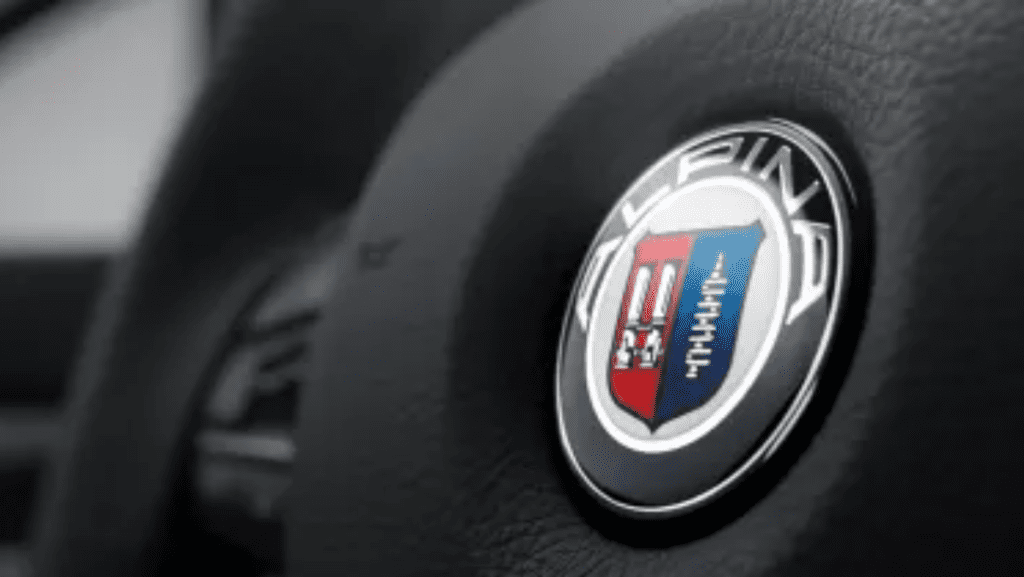
When Alpina formally transferred all brand and naming rights to BMW Group, the announcement closed one of the most distinctive chapters in modern automotive history. Alpina had long existed in a space few companies ever occupied successfully: legally independent, technically specialised, yet operationally inseparable from a global manufacturer. The transfer of rights did not arrive suddenly. It was the result of structural pressures that have reshaped how performance brands survive in a tightly regulated, software-driven industry.
This transition matters because Alpina was never just another tuning house. It represented a disciplined approach to performance that valued durability, composure, and mechanical balance. Understanding why Alpina chose to transfer its rights, and what BMW Group gains by receiving them, requires looking at the realities facing specialist manufacturers today.
Alpina’s identity before the transfer
Alpina was recognised as a manufacturer in its own right, despite building vehicles based on BMW platforms. Unlike aftermarket tuners, Alpina cars were assembled on BMW production lines before undergoing Alpina-specific development. Engines were recalibrated, transmissions refined, suspension geometry adjusted, and interiors finished to a distinct standard.
This model allowed Alpina to offer factory-level quality while maintaining an independent engineering voice. The company’s focus was not on extreme output or aggressive styling. Instead, Alpina vehicles delivered sustained performance with restraint. Power was accessible, torque was smooth, and long-distance comfort remained central.
This approach earned trust rather than attention. Alpina owners often chose the brand because it avoided excess and prioritised usability. However, that same low-volume, high-discipline model became increasingly difficult to sustain.
Regulatory pressure and the limits of independence
The modern automotive environment leaves little room for small manufacturers to operate independently. Emissions standards, safety regulations, cybersecurity requirements, and software validation now demand extensive resources. Even minor changes to engine management or driver assistance systems require certification across multiple jurisdictions.
For a specialist manufacturer like Alpina, meeting these obligations independently would have required disproportionate investment. The challenge was not engineering capability, but scale. Regulatory frameworks increasingly favour large manufacturers with global compliance infrastructure.
Transferring all rights to BMW Group resolved these constraints. It allowed Alpina’s engineering philosophy to continue within a structure capable of meeting future regulatory demands.
What transferring “all rights” actually means
The phrase “transferred all rights” is precise. BMW Group now controls the Alpina name, trademarks, intellectual property, and future product direction. This was not a licensing agreement or partial stake. It was a full transfer of ownership. This level of control provides certainty. Without it, Alpina faced the possibility of being unable to certify future vehicles as regulations tightened. With it, BMW can integrate Alpina development into its long-term planning for electrification, software platforms, and emissions compliance. For a detailed automotive perspective, see BMW acquires ALPINA brand (Car and Driver)
Importantly, ownership does not automatically erase identity. It creates the possibility for continuity, but only if managed carefully.
A detailed explanation of how this transfer was structured, and why BMW opted for full ownership rather than a limited partnership, is outlined by bmwsite.com, which tracks the legal and operational implications of the move:
Why BMW Group wanted full control
From BMW Group’s perspective, Alpina represented more than a badge. It embodied an alternative interpretation of performance that complemented existing offerings rather than competing with them. Alpina vehicles traditionally focused on refinement, balance, and mechanical longevity.
Securing full rights ensures that this philosophy is not lost or diluted due to uncertainty around licensing or future compliance. It also prevents the Alpina name from being fragmented or misused in ways that could undermine its reputation.
BMW Group has experience managing heritage brands within a corporate structure. The challenge is always the same: preserve what makes the brand distinct while integrating it into modern product development cycles.
Market perception and brand trust
Alpina’s reputation was built slowly, through consistency rather than marketing. Owners trusted the brand because its engineering choices aligned with real-world driving. That trust cannot be transferred automatically with ownership papers.
The market will judge BMW Group’s stewardship of Alpina by outcomes rather than announcements. Future vehicles will be evaluated on how they drive, how they age, and how faithfully they reflect Alpina’s traditional values.
Forbes has examined similar brand transitions across the automotive industry and notes that heritage performance brands retain value only when differentiation is protected rather than absorbed into generic product lines:
https://www.forbes.com/sites/forbesbusinesscouncil/2023/11/06/why-legacy-auto-brands-struggle-with-modernisation/
Impact on existing Alpina owners
For current Alpina owners, the transfer of rights does not invalidate existing vehicles. Cars produced under Alpina’s independent era remain part of that history. If anything, clarity around ownership may enhance long-term collectability by clearly defining the end of an era.
Service support may improve as BMW Group integrates Alpina more fully into its global infrastructure. Alpina vehicles have always relied on BMW components, but formal ownership allows for clearer long-term planning around parts availability and technical support.
There is no indication that BMW intends to retroactively alter branding or ownership recognition for vehicles already produced.
Future product direction under BMW Group
The most significant implications of the rights transfer concern future models. BMW Group now determines how Alpina evolves within its portfolio. This creates both opportunity and risk.
Access to BMW’s resources allows Alpina to adapt to electrification, advanced driver assistance systems, and software-defined platforms. At the same time, corporate constraints could limit the autonomy that once defined Alpina’s engineering decisions.
Success will depend on governance. If Alpina retains meaningful influence over calibration philosophy and vehicle character, it can continue to serve a distinct audience. If not, it risks becoming a styling exercise rather than an engineering one.
A changing definition of performance
The timing of this transfer reflects a broader shift in how performance is defined. Raw output figures matter less than integration, reliability, and usability. Electric drivetrains already deliver instant torque. Differentiation now comes from how power is managed, sustained, and translated into real-world confidence.
Alpina’s traditional emphasis on smooth torque delivery and long-distance composure aligns well with this shift. Whether BMW Group allows that philosophy to guide future development will determine whether Alpina remains relevant.
Risks that cannot be ignored
No acquisition is without risk. Corporate ownership can erode autonomy. Product planning can become constrained by platform-sharing requirements. Cost efficiencies can pressure uniqueness.
Acknowledging these risks is part of responsible analysis. The transfer of rights provides stability, but stability alone does not preserve identity. Execution matters more than intent.
A structural decision shaped by reality
The transfer of all Alpina rights to BMW Group should be understood as a structural response to modern automotive realities. It resolves regulatory challenges, secures intellectual property, and enables long-term planning in an increasingly complex industry.
Whether this decision strengthens or diminishes Alpina’s legacy will depend on how future vehicles are engineered and positioned. Enthusiasts will judge the brand by what it produces, not who owns it.
For now, the transfer marks the end of independence, but not necessarily the end of identity. In an industry where independence is increasingly difficult to sustain, that distinction matters.