
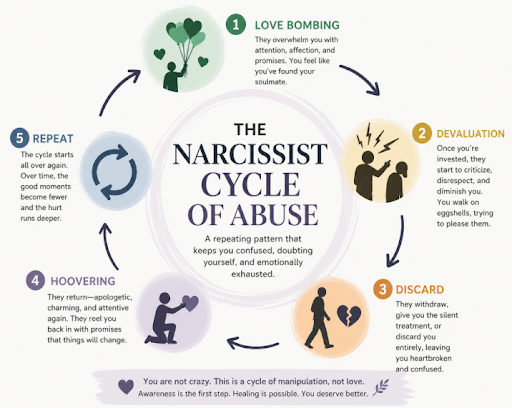
The narcissist cycle of abuse is a deeply damaging pattern that traps many individuals in toxic relationships without them even realising it at first. What often begins as intense affection and admiration can slowly evolve into manipulation, emotional harm, and confusion. Understanding this cycle is essential not just for recognising it, but for breaking free and reclaiming your emotional well-being.
In this guide, we’ll explore the stages of the narcissist cycle of abuse, its psychological and emotional impact, and practical healing steps to help you move forward.
What Is the Narcissist Cycle of Abuse?
The narcissist cycle of abuse is a repeating pattern of behavior used by individuals with narcissistic traits to gain control, maintain dominance, and keep their partner emotionally dependent. This cycle is not random it follows a predictable sequence that can repeat over months or even years.
Victims often stay in the cycle because of emotional attachment, confusion, hope for change, or lack of awareness about what’s happening.
The 4 Stages of the Narcissist Cycle of Abuse
1. Idealization (Love Bombing Stage)
This is where everything feels perfect.
At the beginning of the relationship, the narcissist showers their partner with excessive attention, compliments, and affection. This stage is often referred to as “love bombing.”
Common signs:
- Constant praise and admiration
- Rapid emotional attachment
- Over-the-top gestures and promises
- Making you feel “special” or “chosen”
During this phase, the narcissist creates an emotional high. The victim starts believing they’ve found a perfect partner, which later makes it harder to leave.
2. Devaluation
Once the narcissist feels secure in the relationship, the dynamic shifts.
The affection fades, and criticism begins. This stage can be subtle at first, making it difficult to identify.
Common signs:
- Passive-aggressive comments
- Gaslighting (making you question reality)
- Emotional withdrawal
- Blame shifting
- Comparing you to others
The victim often tries harder to “fix” things, not realizing the change is intentional. This stage creates self-doubt and emotional dependency.
3. Discard
At this stage, the narcissist may emotionally or physically distance themselves completely.
This can be sudden or gradual, leaving the victim confused and hurt.
Common signs:
- Ignoring or ghosting
- Sudden breakup or rejection
- Replacing you quickly with someone else
- Showing no empathy
The discard phase can feel devastating because it contradicts the intense love shown earlier. Victims often blame themselves and seek closure.
4. Hoovering
Just when the victim begins to move on, the narcissist may return.
This stage is called “hoovering,” where the narcissist tries to pull the victim back into the cycle.
Common signs:
- Apologies (often insincere)
- Promises to change
- Emotional manipulation
- Reaching out unexpectedly
If the victim re-engages, the cycle starts all over again often becoming more intense each time.
Why the Cycle Is So Hard to Break
The narcissist cycle of abuse is powerful because it manipulates both emotions and psychology.
1. Trauma Bonding
The alternation between love and pain creates a strong emotional attachment known as trauma bonding. The brain becomes conditioned to seek relief from the same person causing the pain.
2. Intermittent Reinforcement
Unpredictable rewards (love, attention) keep the victim hooked, similar to gambling behavior. You keep hoping things will go back to the “good phase.”
3. Loss of Self-Identity
Over time, victims may lose confidence, self-worth, and clarity about their own needs.
Emotional and Psychological Impact
Being trapped in the narcissist cycle of abuse can have serious long-term effects.
1. Anxiety and Depression
Constant emotional ups and downs create mental exhaustion, leading to anxiety and depressive symptoms.
2. Low Self-Esteem
Repeated criticism and blame make victims question their worth.
3. Confusion and Self-Doubt
Gaslighting leads to a distorted sense of reality, making decision-making difficult.
4. Emotional Dependency
Victims may feel unable to function without the narcissist, even if the relationship is harmful.
5. Trust Issues
Future relationships can become challenging due to fear and emotional scars.
Warning Signs You Should Never Ignore
Recognizing early signs can prevent deeper emotional damage.
- Excessive charm at the beginning
- Lack of accountability
- Constant need for validation
- Manipulative communication patterns
- Emotional inconsistency
If you notice a pattern rather than isolated incidents, it’s important to take it seriously.
Healing Steps: How to Break Free and Recover
Healing from the narcissist cycle of abuse is possible, but it requires awareness, boundaries, and patience.
1. Acknowledge the Reality
The first step is accepting that the relationship is toxic. Denial can keep you stuck in the cycle.
2. Go No Contact (If Possible)
Limiting or cutting off communication helps break emotional dependency. If no contact isn’t possible, use strict boundaries.
3. Rebuild Your Self-Esteem
Focus on activities and relationships that make you feel valued and confident.
Helpful practices:
- Journaling
- Self-care routines
- Setting small personal goals
4. Seek Support
You don’t have to go through this alone.
- Talk to trusted friends or family
- Join support groups
- Consider professional counseling
5. Educate Yourself
Understanding narcissistic behavior reduces confusion and empowers you to make better decisions.
6. Set Healthy Boundaries
Learn to say no without guilt. Boundaries protect your mental and emotional space.
7. Practice Emotional Detachment
This doesn’t mean becoming cold it means not allowing someone else’s behavior to control your emotions.
How to Prevent Falling Back Into the Cycle
Recovery isn’t just about leaving it’s about staying free.
- Recognize manipulation tactics early
- Avoid engaging in emotional arguments
- Trust actions, not words
- Prioritize your mental health
Remember, change must come from consistent actions—not temporary apologies.
Final Thoughts
The narcissist cycle of abuse is a powerful and often invisible trap that can affect anyone. What makes it dangerous is how it disguises itself as love before revealing its true nature.
Breaking free requires courage, clarity, and commitment to your well-being. While the journey may feel overwhelming, healing is absolutely possible. With the right awareness and support, you can rebuild your confidence, regain control of your life, and move toward healthier relationships.